NATO Air Command said Italian Eurofighter Typhoons were scrambled from Ämari Air Base on January 16 to intercept a Russian Be-200 aircraft approaching the Baltic Sea, underscoring continued Russian military air activity near NATO borders as the alliance reports more than 500 air policing scrambles across its airspace in 2025.
NATO Air Command confirmed that Italian Eurofighter Typhoon fighters deployed to Ämari Air Base in Estonia were scrambled at 11:30 a.m. on January 16 to intercept a Russian Be-200 aircraft approaching the Baltic Sea.
The interception was conducted under NATO’s routine air policing mission, which is responsible for monitoring and responding to military aircraft operating close to Allied airspace.
According to NATO Air Command, the Russian aircraft was detected entering the Baltic Sea region without prior coordination, triggering a quick reaction alert launch by the Italian fighters based in Estonia. NATO stated that the mission was carried out safely and in line with established procedures, ensuring continued surveillance of air activity near NATO borders.
NATO Air Command also noted that more than 500 air policing scrambles have taken place across NATO airspace since the start of 2025, reflecting the continued tempo of Russian military aviation activity along the alliance’s eastern flank. Air policing and enhanced vigilance measures remain active around the clock to safeguard Allied airspace and maintain situational awareness.
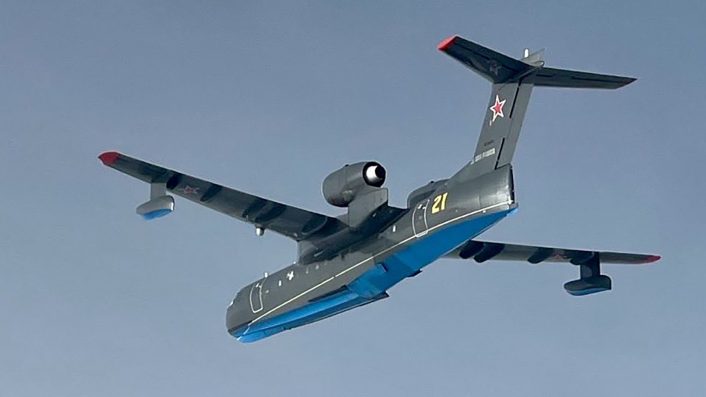
The intercepted aircraft was identified as a Be-200PS amphibious aircraft, tail number “21 Yellow,” operated by Russian Naval Aviation. The Be-200 is a relatively uncommon platform within Russia’s military inventory and was originally produced in limited numbers, mainly for civilian use, foreign customers, and specialized government missions rather than frontline combat roles.
In recent years, the Be-200 has been introduced into Russian military service for specific over-water operations. These roles reportedly include maritime support missions, evacuation tasks, and activities linked to vessels associated with Russia’s so-called shadow tanker fleet operating in international waters. Its ability to operate from both runways and open water gives the aircraft a specialized role in maritime environments where Russia maintains naval or logistical interests.
The Be-200PS variant is configured primarily for search and rescue and maritime patrol support missions, not combat. It is derived from the original Be-200 amphibious jet, which was developed for firefighting and emergency response. Although adapted for surveillance and support roles in military service, it remains rare compared to standard patrol aircraft used by Russia’s Aerospace Forces and Navy.
The future of the Be-200 fleet remains uncertain due to technical limitations. The aircraft relies on engines of Ukrainian origin, and Russia has yet to field a fully domestic replacement. This dependency has constrained production, limited modernization efforts, and created long-term sustainment challenges as existing engines near the end of their service life.
About The Author