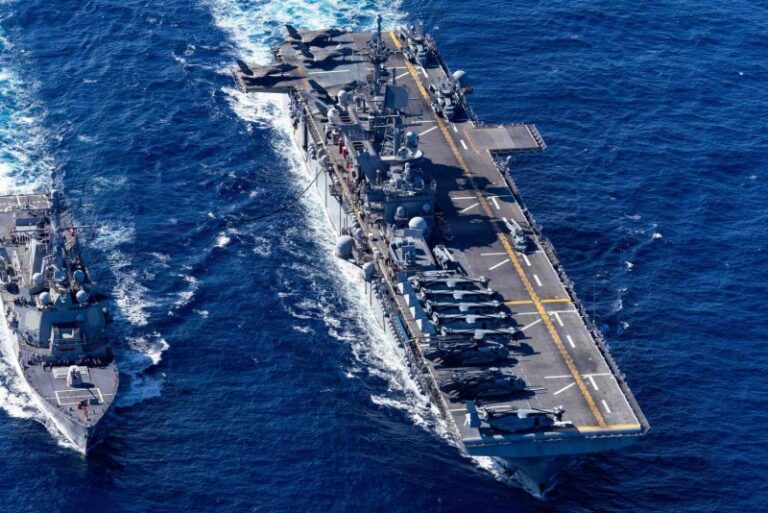
The United Kingdom has deployed six RAF F-35B Lightning stealth fighters from RAF Marham to RAF Akrotiri in Cyprus, reinforcing its Eastern Mediterranean air presence alongside Typhoon FGR4 jets. The deployment underscores a defensive yet ready posture amid heightened US-Iran tensions and ongoing nuclear negotiations.
On 7 February 2026, The Times reported that the United Kingdom has forward deployed six RAF F-35B Lightning fighters from RAF Marham to RAF Akrotiri in Cyprus. The move is framed as a defensive reinforcement amid heightened U.S.-Iran tensions, where nuclear diplomacy intersects with ongoing military signaling. The stealth jets will operate alongside existing RAF Typhoon FGR4 aircraft already conducting missions linked to Operation Shader over Iraq and Syria. Departing on 6 February, the F-35Bs are intended to strengthen base protection and secure the UK’s Sovereign Base Areas in the event of a sudden escalation.
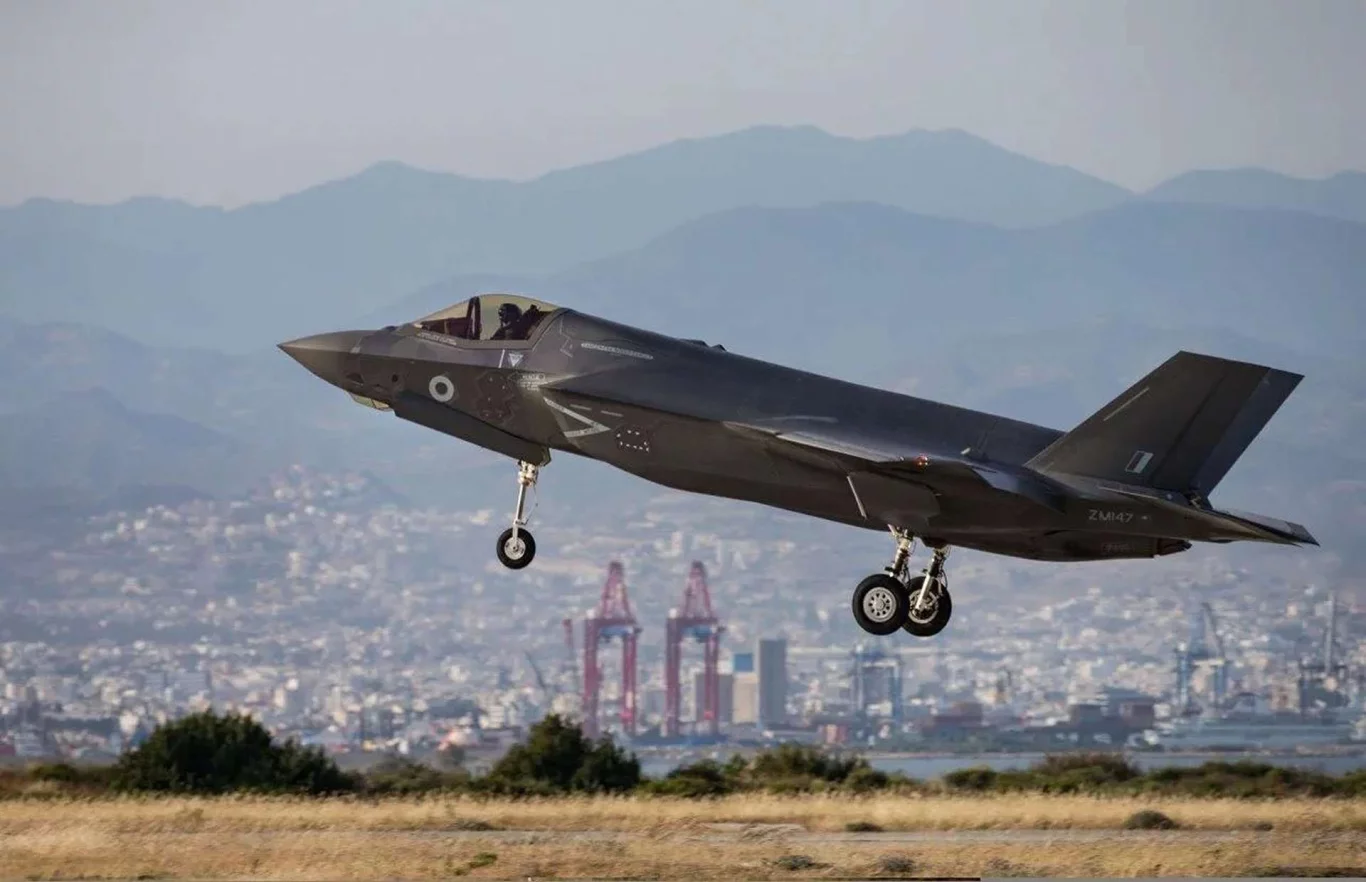
RAF Akrotiri is described as a Permanent Joint Operating Base that supports ongoing regional operations, protects UK strategic interests, and functions as a forward staging base for Middle East contingencies. This posture allows rapid surge operations, joint support, and operational flexibility while political decision-making adapts to a fluid crisis environment.
The F-35B brings capabilities distinct from the Typhoon force already in-theatre. Its Pratt & Whitney F135 engine produces around 40,000 pounds of thrust with reheat, enabling supersonic dash speeds of Mach 1.6 and operations up to 50,000 feet. More importantly, the aircraft is equipped with advanced sensor fusion, including the AN/APG-81 AESA radar, Distributed Aperture System, electro-optical targeting, and a dense electronic support suite. These systems allow pilots to detect, classify, and share comprehensive battlespace information via Link 16 and the Multi-Function Advanced Data Link, making the F-35B a low-observable forward node for identifying airborne and surface threats.
In RAF service, the F-35B’s current weapons fit prioritizes air defense and precision strike. The aircraft carries AMRAAM and ASRAAM missiles for beyond-visual-range and close combat, while Paveway IV bombs remain the primary air-to-ground option. Meteor integration is planned but not yet operational. The configuration allows the Lightning to conduct defensive counter-air patrols, suppress threats, and cue other assets without relying on high-volume strike.
Typhoon FGR4 jets complement the F-35B by providing multi-role capability. With a mature arsenal including Meteor, AMRAAM, ASRAAM, Paveway IV, Brimstone 2, and Storm Shadow cruise missiles, the Typhoon can conduct both air-to-air and air-to-ground operations. Its ECR 90 radar, PIRATE IRST system, and Litening V targeting pod enable detection, precision engagement, and real-world strike operations, including armed reconnaissance and overwatch in the Middle East.
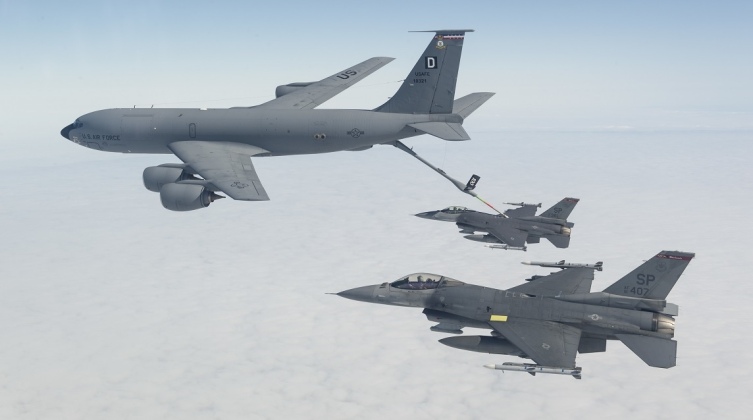
The arrival of F-35Bs enhances operational depth. The Lightning can penetrate higher-threat airspace, locate targets or hostile emitters, and relay intelligence to Typhoons positioned at safer standoff ranges. Operational experience confirms that Akrotiri-based Typhoons are conducting active missions rather than symbolic patrols, often coordinated with RAF Voyager tankers for extended endurance.
Despite its capabilities, the F-35B’s offensive potential is currently limited. Paveway IV lacks standoff range, and Meteor and SPEAR 3 integration delays mean full strike capability will not be realized until the early 2030s. In the Cyprus deployment context, the aircraft functions primarily as a defensive, deterrent asset—optimized for survivability, sensing, and command of the engagement rather than deep strike without coalition support.
Rising US-Iran tensions, marked by renewed nuclear negotiations and continued proxy, drone, and missile activity, underscore the strategic need for defensive readiness. RAF Akrotiri’s location provides rapid combat air patrol generation, high-value asset protection, and early threat interception while operating from UK sovereign territory, reducing reliance on host-nation approvals that could complicate response in a crisis. Forward deploying F-35Bs ensures the UK maintains a resilient and flexible airpower package capable of base defense, air policing, intelligence collection, and immediate response in the Eastern Mediterranean region.
About The Author