The U.S. State Department has approved a $185 million Foreign Military Sale to Ukraine for Class IX spare parts and sustainment support, aimed at keeping Abrams tanks, Bradley IFVs, HIMARS launchers, and M777 howitzers fully operational amid ongoing battlefield conditions.
On February 6, 2026, the U.S. Defense Security Cooperation Agency (DSCA) announced that the State Department has approved a potential Foreign Military Sale (FMS) to Ukraine for Class IX spare parts and related support, valued at approximately $185 million. Logged under DSCA case 25-105 and submitted to Congress, the package is not a new missile system or armored battalion but focuses on the critical sustainment of U.S.-provided platforms already in Ukrainian service. The sale aims to strengthen Ukraine’s repair and maintenance capabilities, ensuring higher operational readiness and prolonged battlefield effectiveness.
Class IX in U.S. Army logistics terminology covers repair parts and components essential for maintaining vehicles, weapons, and equipment. This includes engines, tires, radios, weapon components, and other hardware necessary to keep systems operational under constant wear and combat stress. On the battlefield, where fragmentation, mines, vibration, and drone attacks inflict frequent damage to optics, electronics, and mechanical systems, Class IX parts are as essential to combat power as ammunition or firepower. The DSCA notice emphasizes higher operational rates, improved logistics, and faster repair cycles, aiming to replace emergency cannibalization with predictable sustainment.
The scale of equipment to maintain is substantial. U.S. deliveries to Ukraine include 31 M1 Abrams tanks, over 300 Bradley IFVs, more than 400 Stryker APCs, and 900+ M113 armored vehicles, alongside stocks of 25mm rounds, tank ammunition, 40 HIMARS launchers, and 200+ M777 howitzers. Each platform has unique failure points and spare requirements that are not interchangeable with legacy Soviet-era systems, making dedicated parts essential for continued combat effectiveness.
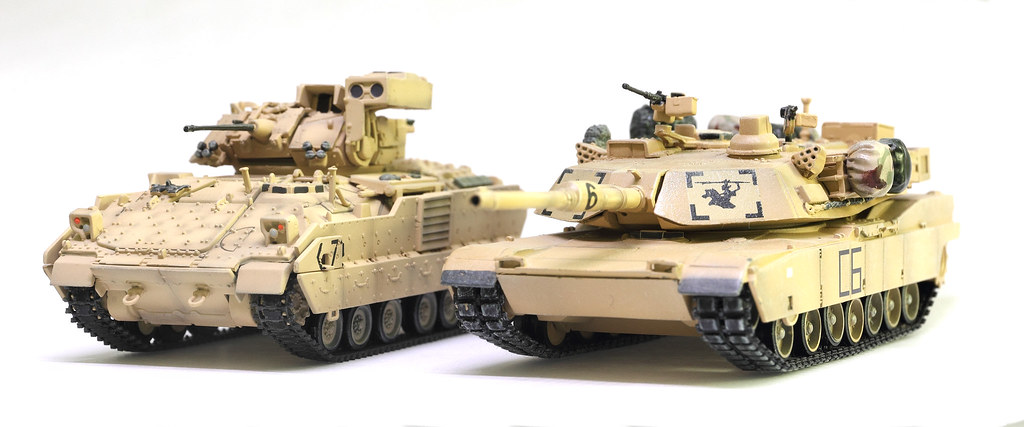
For Ukrainian brigades, operational success depends on maintaining mobility and firepower. The Abrams tank, for example, combines a 120mm M256 main gun with advanced stabilization and fire control, allowing crews to engage while on the move. Maintaining the turret drive, targeting systems, and automotive components is a spare-parts issue as much as a gunnery concern. Similarly, the Bradley IFV provides protected mobility and a versatile weapon suite—including a 25mm autocannon, 7.62mm machine gun, and TOW missiles—but its effectiveness relies on functional stabilization, sensors, tracks, and road wheels, all of which require routine replacement.
Artillery and rocket systems also depend on parts for sustained operations. HIMARS launchers need replacement components for pod handling, hydraulics, communications, and digital fire control, while M777 howitzers require spares for gun digitization, hydraulics, and sighting systems. A launcher or gun rendered inoperable due to minor component failures represents combat power removed from the battlefield regardless of available munitions.
Western systems’ sophistication adds logistical complexity. The Abrams’ 1,500 hp turbine engine demands specialized maintenance, fuel, and filtration, making specific spares and powerpack components mission-critical. DSCA’s plan to use approved contractors without sending additional personnel signals a clear intent: equip Ukrainian forces to maintain, repair, and operate systems independently.
In essence, the $185 million FMS is a bet on battlefield endurance. Ukraine’s tanks, IFVs, rocket artillery, and digitized howitzers can only maintain effectiveness if they remain operational day-to-day. By supplying critical Class IX spare parts, the U.S. aims to ensure these systems can continue firing, moving, and surviving long enough to influence combat outcomes, sustaining the power already delivered rather than adding new weapons.
About The Author