Taiwan is set to build ten new light frigates designed for air defense and anti-submarine warfare, with induction into service planned between 2028 and 2040.
According to USNI News (February 6, 2026), Taiwan is planning to build ten new light frigates focused on air defense and anti-submarine warfare as part of its long-term naval modernization program. These 2,500-ton-class ships are intended to replace aging surface combatants and support continuous patrol, escort, and monitoring operations in the Taiwan Strait and surrounding waters between 2028 and 2040. The project is a key pillar of Taiwan’s naval renewal strategy, with anti-air and anti-submarine initiatives receiving $7.8 billion from a total $9.9 billion shipbuilding budget.
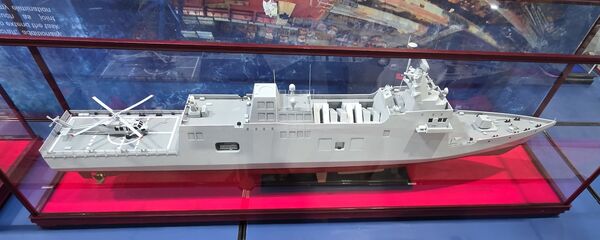
The ten frigates will be split into two variants: five optimized for air defense and five for anti-submarine warfare. Their development follows two prototype vessels—one for each configuration—whose construction began in November 2023 and January 2024. These prototypes are expected to be delivered by October 2026, after which authorities will decide on full-scale production. The broader naval plan also includes a submarine rescue ship, a fast combat support vessel, two rescue ships, and a 10,600-ton amphibious assault ship, reflecting a wider effort to strengthen logistics, combat, and support capabilities.
The frigates are based on an international design by Gibbs & Cox and adapted to Taiwan’s operational needs. The air-defense version features a 96-meter hull, while the anti-submarine variant is longer at 116 meters to accommodate sonar systems and quieter operations. Initial displacement targets of 2,500 tons have been revised upward to nearly 3,000 tons to allow for advanced sensors, weapons, and future upgrades. The final design visually resembles a smaller version of the U.S. Navy’s Constellation-class frigate.
This program is driven by the retirement of Cold War-era Knox-class ships and continued reliance on older Oliver Hazard Perry-class, La Fayette-class, and Kidd-class vessels. These platforms are frequently deployed to monitor Chinese naval activity, placing heavy strain on maintenance and availability. The new frigates are expected to handle routine missions while improving air defense coverage and anti-submarine capabilities. Debate continues over whether larger frigates or smaller missile corvettes provide better survivability, speed, and operational flexibility.
Missile corvettes such as the Tuo-chiang class will continue to play a complementary role, using hit-and-run tactics with domestically produced anti-ship missiles. The new frigates, however, are designed to provide endurance, command capabilities, and enhanced sensor reach. Close-range defense will include the XTR-102A2 20 mm remote weapon system, capable of engaging drones, fast boats, and low-level aerial threats with a firing rate of up to 1,200 rounds per minute.
The light frigate concept evolved from delays in the earlier Zhenhai Project, which aimed to produce a 4,500-ton frigate. The revised approach focuses on a smaller, more affordable platform with modern radar and weapons. Industrial work assigns combat system integration to the National Chung-Shan Institute of Science and Technology, while hull construction is handled by Jong Shyn Shipbuilding. The two prototypes are funded at NT$20 billion, with delivery expected in 2026. If approved for full production, the ten additional frigates will become a core element of Taiwan’s surface fleet through 2040, supporting patrol, escort, and deterrence missions.
About The Author