Belarus has reportedly initiated accelerated reserve activations in its western مناطق close to NATO frontiers, officially described as part of an unannounced combat readiness check.
Opposition representatives and local sources, however, characterize the move as a large-scale mobilization effort carried out with minimal warning and rapid deployment instructions.
Residents in western Belarus have described abrupt reserve call-ups and rapid deployment instructions near the borders with NATO member states, based on opposition statements and local testimonies released in February 2026. Critics argue the developments resemble an undeclared mobilization rather than routine military activity.
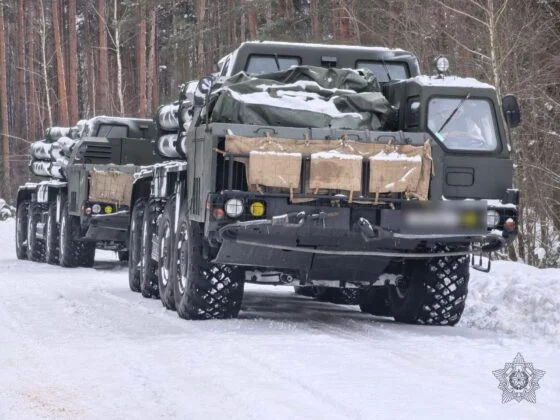
Accounts emerging from the Grodno and Slonim areas, as well as the village of Baranki, indicate that men received draft notices without prior warning and were ordered to report within hours. Social media posts from residents claim reserve units were assembled swiftly and transported to training sites on the same day the summonses were delivered.
Pavel Latushko, deputy head of the United Transitional Cabinet of Belarus, told Ukrainian broadcaster Kyiv24 that the tempo and execution of the call-ups differ significantly from previous reserve exercises. He described cases in which notices were delivered early in the morning with reporting deadlines set just one hour later, or late at night with instructions to appear in another city by dawn. According to him, those summoned were mobilized for one to two months, denied refusals, and had their mobile phones confiscated, limiting contact with family members.
Latushko stated that while authorities portray the measures as a sudden readiness inspection, in practice they function as concealed mobilization. He also alleged that social and medical exemptions were being overlooked and that individuals were transferred directly to military units upon arrival.
Independent outlet Zerkalo reported that its journalists, posing as relatives, contacted local enlistment offices and were told that summonses were indeed being issued and enforced the same day. Officials reportedly characterized the activity as a mobilization-readiness check rather than a standard training rotation.
The Belarusian Ministry of Defense has not declared a nationwide mobilization. However, Latushko suggested a disconnect between official messaging and on-the-ground reports, noting that Defense Minister Viktor Khrenin has publicly framed the reserve activities as routine and voluntary.
These developments come amid increased security focus along Belarus’ western frontier with Poland and Lithuania, both NATO members. While Belarus has previously conducted snap inspections, observers say the reported scale and speed of the current measures have triggered stronger domestic concern.
Belarus remains closely aligned with Russia in military affairs, and analysts continue to assess that Moscow maintains significant operational influence in the country. Western governments have previously voiced concern over military movements in the region, particularly following alleged airspace incidents near NATO borders.
Separately, discussions within Russia have touched on potential future mobilization steps linked to manpower shortages. Authorities there have also tightened restrictions on selected social media and messaging platforms, reportedly to prevent coordination of protests similar to demonstrations seen in 2022.
Although the present measures in Belarus have not been officially described as preparations for active combat, available information points primarily to readiness verification and reserve force inspections. Nonetheless, the sudden call-ups and their proximity to NATO territory have drawn heightened scrutiny from regional security observers monitoring developments in Eastern Europe.
About The Author