New footage released by Chinese state media has offered the clearest look yet at a previously unseen version of China’s DF-17 hypersonic missile. The images suggest the missile may now carry a redesigned hypersonic glide vehicle, possibly developed to reduce production costs while allowing Beijing to deploy the weapon in significantly larger numbers.
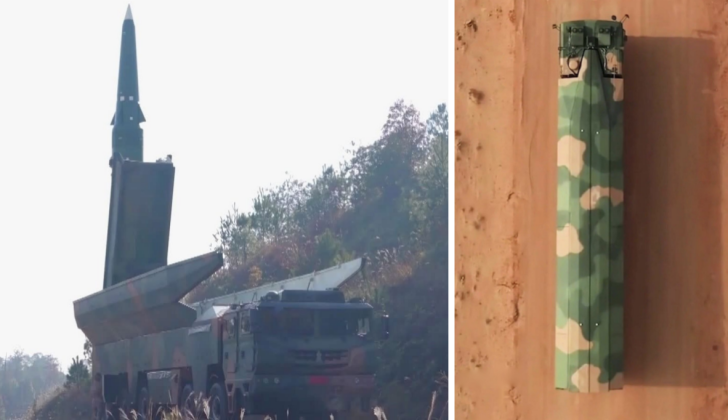
China’s rapidly expanding hypersonic missile program appears to have taken another step forward after newly released footage revealed a variant of the DF-17 medium-range ballistic missile equipped with a different type of hypersonic glide vehicle.
The DF-17 first attracted global attention when it was publicly unveiled during China’s National Day military parade in 2019. At the time, the missile was showcased as one of the most advanced conventional strike weapons in the People’s Liberation Army’s arsenal. Unlike traditional ballistic missiles, the DF-17 carries a hypersonic glide vehicle that detaches during flight and travels through the atmosphere at extremely high speeds while performing evasive maneuvers.
The latest footage suggests the glide vehicle used on the newly spotted variant differs from the one previously displayed in parades in both 2019 and 2025. Analysts studying the imagery believe the new design could represent a simplified and potentially cheaper version of the earlier glide vehicle.
If this assessment is correct, it would indicate that China may be shifting toward large-scale deployment of the DF-17 rather than relying solely on smaller numbers of highly complex systems. Lower production costs would allow the missile to be manufactured and fielded in greater quantities, strengthening China’s long-range strike capabilities.
Since the DF-17 was first introduced, the missile has reportedly undergone several upgrades. Multiple variants are believed to have entered operational service, each incorporating incremental improvements to performance and mission capability.
One of the most notable developments came in 2022 when Chinese state media described a new version of the DF-17 as an “aircraft carrier killer.” That description suggested the missile could be equipped with advanced sensors capable of detecting and tracking moving naval targets such as aircraft carriers at sea.
The DF-17 is estimated to have a range of roughly 900 kilometers, placing many key military facilities within reach if deployed near contested regions such as the Taiwan Strait or the South China Sea. Some reports also indicate that certain variants of the missile can carry specialized warheads designed to penetrate hardened underground structures.
Hypersonic glide vehicles offer several advantages compared to traditional ballistic missile warheads. After separating from the rocket booster, the glide vehicle travels through the atmosphere at speeds exceeding Mach 5 while maneuvering laterally and vertically.

These maneuvers make the weapon extremely difficult to track or intercept. Conventional missile defense systems are designed to intercept predictable ballistic trajectories, but hypersonic glide vehicles can change direction during flight, complicating interception attempts.
Recent conflicts have demonstrated the potential of hypersonic weapons to strike hardened targets. Russia’s use of advanced hypersonic systems in Ukraine, including the Oreshnik missile, has shown their ability to penetrate heavily fortified infrastructure. Meanwhile, Iran has reportedly employed its own hypersonic technology—believed by analysts to be the Fattah-2 missile—in strikes against Israeli targets.
Such capabilities highlight why hypersonic weapons are considered strategically important. Military bases, command centers, and underground facilities that were once thought relatively secure could now be vulnerable to these high-speed precision weapons.
For China, the DF-17 could play a particularly important role in potential conflicts in East Asia. U.S. military bases in Japan and South Korea fall within the missile’s estimated range, as do numerous strategic targets across the Taiwan Strait.
In areas like Taiwan, air defense systems supplied by the United States are heavily concentrated. Hypersonic glide vehicles capable of maneuvering at extreme speeds could significantly complicate efforts to intercept incoming missiles.
Another feature revealed in earlier reports about the DF-17 program is the missile’s unique launch system. In 2021, Chinese sources disclosed that newer transporter-erector-launcher vehicles used an integrated protective cover that fully encloses the missile during transport.
This design may serve several purposes. It could help disguise the missile from satellite surveillance while also protecting it from environmental conditions such as desert sand or freezing temperatures in remote deployment areas.
China’s growing expertise in hypersonic technology has drawn increasing attention from Western defense officials. In 2021, U.S. General John Hyten, then Vice Chairman of the Joint Chiefs of Staff, publicly expressed concern about a Chinese hypersonic test involving a long-range glide vehicle.
According to Hyten, the system was launched on a missile that traveled around the world before releasing a glide vehicle that returned toward China and struck a target there. He warned that such technology demonstrated the ability to strike targets almost anywhere on Earth with little warning.
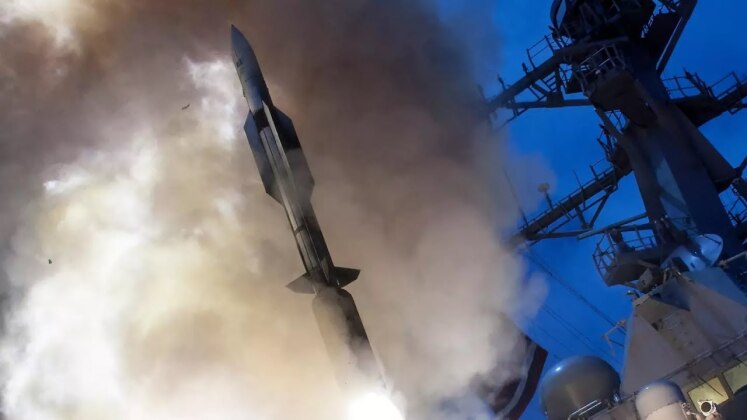
Concerns about China’s hypersonic arsenal were further reinforced by information reportedly included in a leaked Pentagon briefing in late 2025. The document, known as the “Overmatch Brief,” examined the potential impact of advanced Chinese missile systems on U.S. naval forces.
The briefing suggested that in a large-scale conflict, hypersonic missiles could pose a serious threat to even the most advanced U.S. Navy carrier strike groups. High-speed maneuvering weapons like the DF-17 could overwhelm defensive systems and cause significant losses.
While much about the new DF-17 variant remains unclear, the appearance of a redesigned glide vehicle indicates that China continues to refine its hypersonic strike capabilities. If the new design truly reduces costs while maintaining performance, it could allow the missile to become a much more common element of China’s strategic arsenal.
As hypersonic technology spreads and continues to evolve, weapons like the DF-17 are likely to remain at the center of global military competition for years to come.
About The Author