The United States military is taking a major step toward autonomous aviation as a new program aims to equip the C-130J Super Hercules transport aircraft with an advanced AI-powered flight system. The project, led by the technology company Merlin Labs in partnership with United States Special Operations Command, could eventually allow one of the world’s most widely used military cargo planes to operate with significantly reduced crew involvement—or even fly fully autonomously.
Efforts to introduce autonomous technology into military aviation have gained momentum in recent years, and the latest development suggests the transformation could soon reach large transport aircraft.
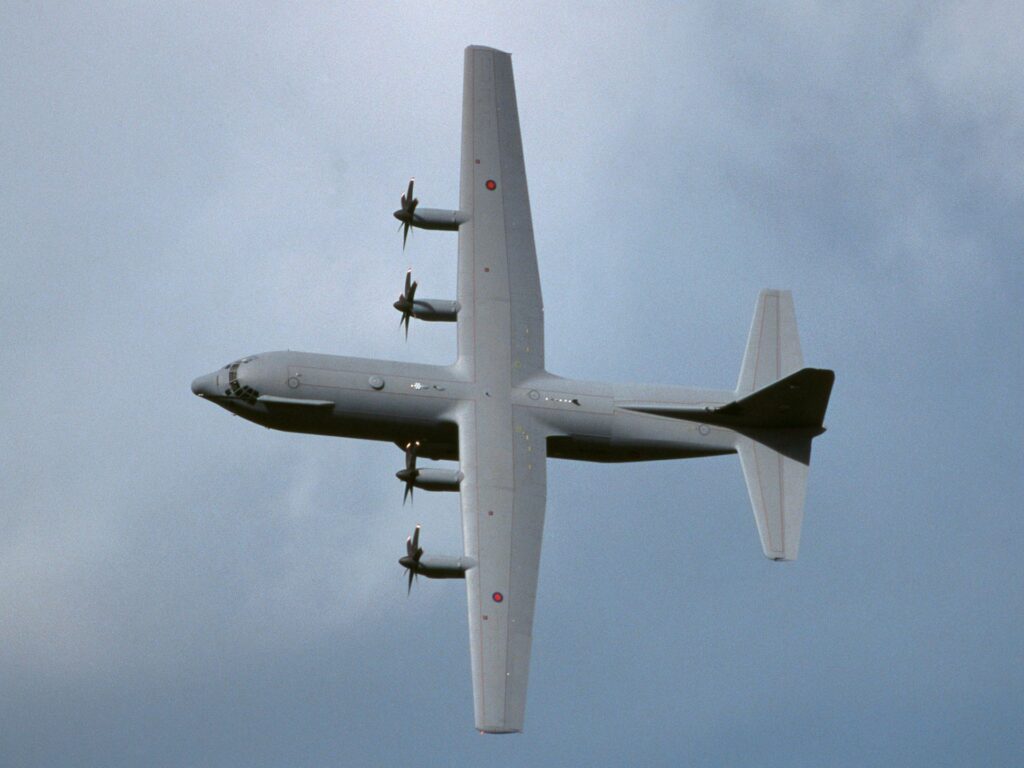
This week, Merlin Labs confirmed that it successfully completed the Preliminary Design Review (PDR) for its autonomous flight system designed for the Lockheed Martin C‑130J Super Hercules. The milestone represents an important step forward in the development of what could become one of the first large military aircraft capable of operating with advanced autonomy.
The announcement was made by the company’s chief executive officer, Matt George, who described the review as a key moment in the program’s progress.
According to the company, the successful review confirms that the aircraft integration concept, engineering architecture, and safety framework all meet the strict technical standards required for military aviation systems.
Passing this stage means the program can now advance into the Critical Design phase, where engineers begin developing the detailed system architecture needed for integration and testing.
At the center of the program is a system known as the Merlin Pilot, an autonomous flight platform designed to control aircraft operations from takeoff to landing. Unlike traditional autopilot systems—which mainly assist pilots with navigation and stability—the Merlin Pilot has been developed specifically for autonomous flight from the ground up.
This distinction is important because most current aviation automation systems still rely heavily on human oversight. The Merlin Pilot, by contrast, is intended to manage flight operations independently while still complying with aviation safety requirements.
The Lockheed Martin C‑130J Super Hercules is an ideal platform for such experimentation. The aircraft serves as the primary tactical airlift platform used by the United States military and is known for its reliability, versatility, and ability to operate from short or rough airstrips.
The aircraft is widely used for missions such as transporting troops and equipment, delivering humanitarian aid, performing medical evacuation operations, and supporting special operations forces in remote environments.
Because of its extensive operational role, integrating autonomy into the aircraft could significantly expand its capabilities.
For example, autonomous flight systems could allow cargo aircraft to perform missions in areas considered too dangerous for human crews. Aircraft could potentially deliver supplies into contested environments, operate in disaster zones, or conduct resupply missions where maintaining large flight crews is difficult.
The autonomy program itself is being developed under a contract awarded by United States Special Operations Command, which is responsible for overseeing specialized military capabilities used in unconventional operations.
The agreement is structured as an Indefinite Delivery Indefinite Quantity (IDIQ) contract valued at up to $105 million, allowing multiple phases of development and testing to be carried out over time.
One of the key technical challenges in building an autonomous flight system is certification. In both military and civilian aviation, safety standards require extremely rigorous testing before new technologies can be integrated into operational aircraft.
The company has emphasized that the ability to meet certification requirements is critical to making autonomy practical rather than experimental.
According to Matt George, an autonomous system that cannot meet certification standards remains little more than a technology demonstration. Achieving certification, however, opens the door to large-scale operational deployment.
Another interesting aspect of the program is how the system collects operational data.
Each autonomous flight is expected to generate detailed information about aircraft performance, environmental conditions, and operational parameters. This data can then be used to refine the algorithms that control the aircraft, allowing the system to continuously improve over time.
In effect, the aircraft becomes both a transport platform and a data-gathering system that contributes to the evolution of autonomous aviation.
Engineers believe the same core autonomy system could potentially be adapted for a wide range of aircraft beyond the C-130J.
For example, cargo turboprops, aerial refueling tankers, or even commercial freight aircraft could theoretically use the same underlying software architecture. Instead of developing a completely new system for each aircraft, engineers could modify the existing platform to fit different airframes.
This approach could dramatically accelerate the spread of autonomous aviation technology.
The next stages of the program will involve deeper system integration work. Engineers will begin combining the autonomous software with aircraft hardware systems before conducting extensive ground testing.
Following that phase, the program is expected to move into flight demonstrations in which the autonomous system will be tested under real operating conditions.
If these demonstrations are successful, the technology could mark a major turning point in military aviation.
Autonomous aircraft could reduce the number of crew members required for certain missions, extend operational endurance, and allow aircraft to operate in environments where human pilots face extreme risks.
While fully pilotless cargo aircraft may still be years away from routine use, the progress of this program suggests that the concept is steadily moving from research labs toward real-world military operations.
For the Lockheed Martin C‑130J Super Hercules, an aircraft that has served militaries around the world for decades, the integration of advanced autonomy could represent the beginning of an entirely new chapter in its operational history.
About The Author