A small island in the Persian Gulf has quietly become one of the most important strategic locations in the ongoing war involving Iran. Kharg Island, barely 20 square kilometers in size, handles the majority of Iran’s oil exports and acts as the backbone of the country’s energy economy — making it both a critical asset and a highly sensitive target.
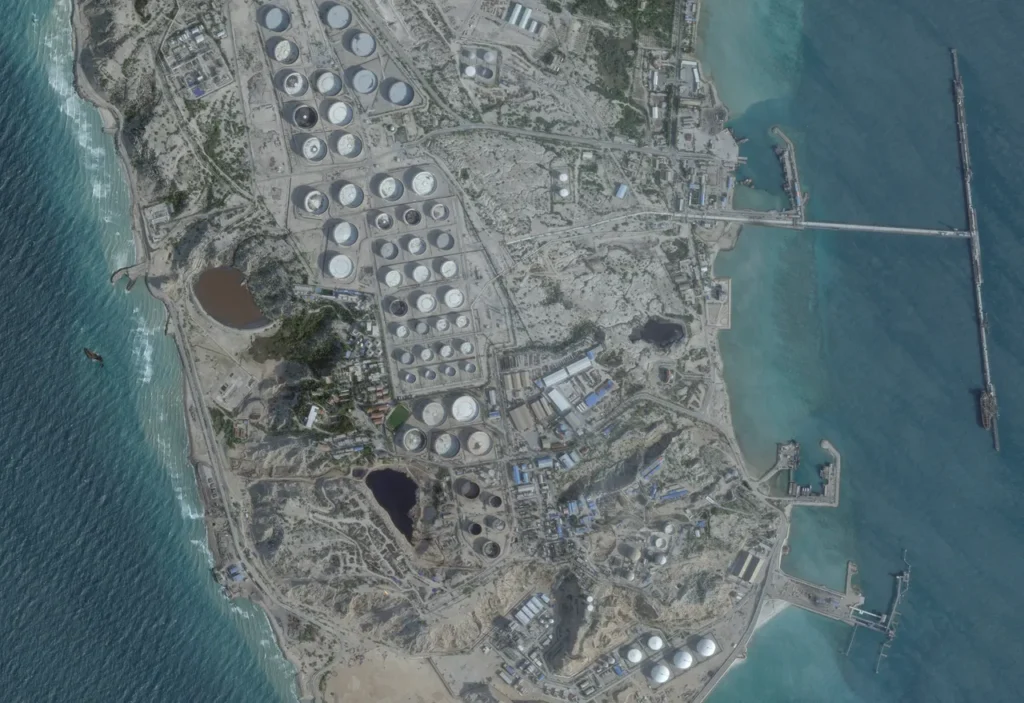
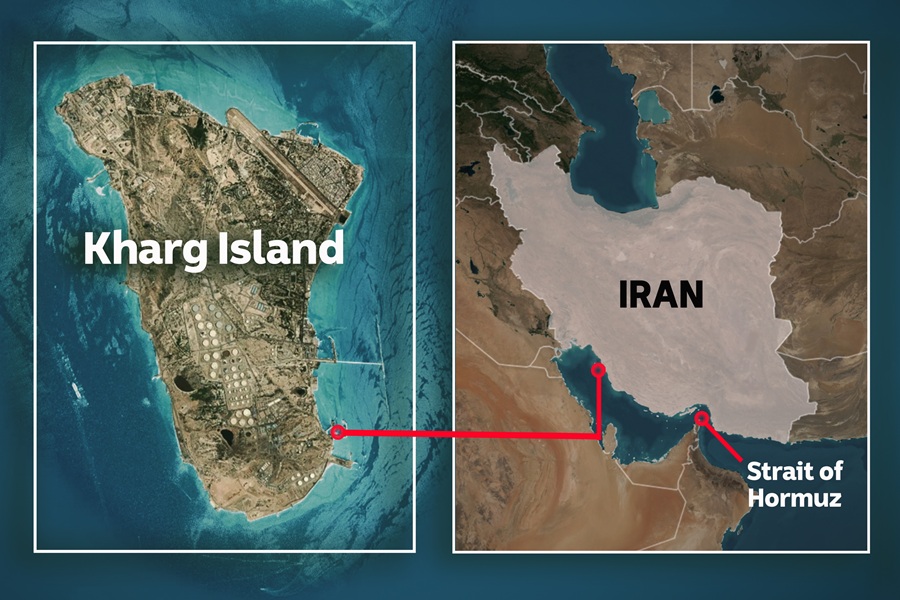
In the northern waters of the Persian Gulf lies Kharg Island, a small and largely barren stretch of land that carries enormous strategic importance for Iran. Despite its modest size, the island plays a central role in the country’s economy and energy industry, functioning as the main export hub for Iranian crude oil.
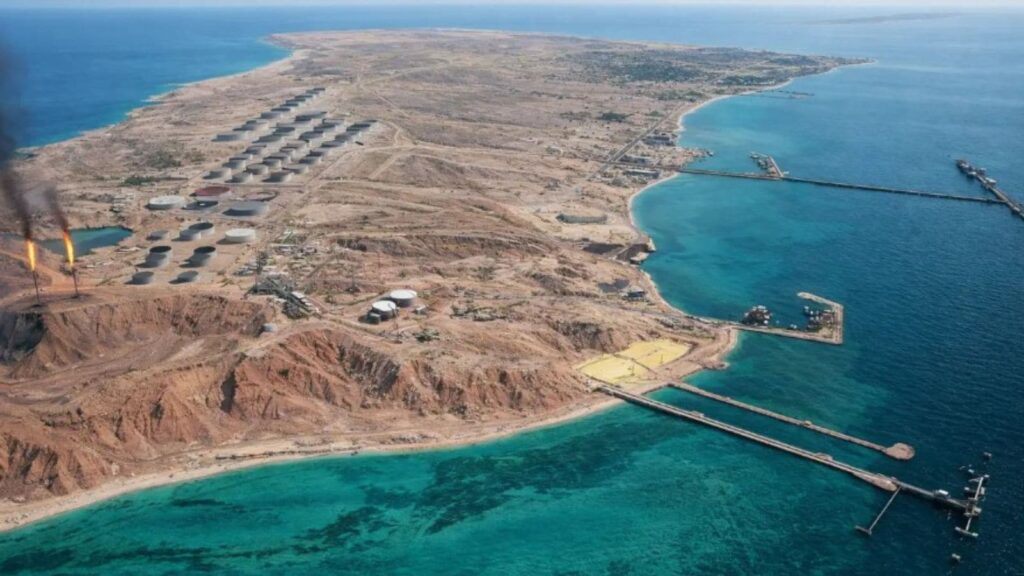
Located roughly 30 kilometers off the Iranian coastline in Bushehr province, Kharg Island serves as the destination point for pipelines transporting oil from some of Iran’s largest and most productive oil fields, including Ahvaz, Marun, and Gachsaran. These pipelines converge on the island, where crude oil is stored in massive tanks before being loaded onto tankers bound for international markets.
The island’s storage infrastructure is believed to hold around 30 million barrels of oil. Current estimates suggest that tens of millions of barrels are typically stored there at any given time, representing roughly ten days of export capacity under normal market conditions.
Because of this concentration of infrastructure, Kharg Island handles the overwhelming majority of Iran’s oil exports. Analysts estimate that about 90 percent of the country’s crude shipments pass through the facility before heading to global buyers.
For Iran, whose economy relies heavily on energy exports, the island functions as an economic lifeline. Revenue generated from oil exports provides a large portion of government income and supports major sectors of the national economy.
Despite its critical importance, Kharg Island has so far avoided direct military strikes during the current conflict involving Iran, the United States, and Israel. The absence of attacks on the facility has raised questions among analysts about why such a valuable strategic target has been left untouched.
One reason lies in the broader implications that a strike could have on global energy markets. Iran remains one of the world’s major oil producers and contributes a notable share of global crude supply. Any disruption to its exports could immediately affect international oil prices.
Energy analysts warn that damaging Kharg’s export infrastructure could cause a sudden shock to the global oil market. Prices could surge dramatically if Iranian exports were halted overnight, potentially triggering wider economic consequences for countries dependent on energy imports.
Beyond the economic impact, there are also serious military risks associated with attacking the island. Iran has repeatedly demonstrated its ability to respond to threats in the Persian Gulf, particularly around the Strait of Hormuz — one of the most important shipping routes for global energy supplies.
Roughly one-fifth of the world’s oil and liquefied natural gas passes through the narrow waterway each day. Any escalation in the region could threaten shipping routes and disrupt energy flows far beyond the Middle East.
Analysts believe that targeting Kharg Island could provoke a powerful response from Tehran, potentially including strikes on energy facilities in neighboring Gulf states or attacks on tanker traffic in the Strait of Hormuz.
Such a scenario could rapidly transform a regional conflict into a wider crisis affecting the global energy system.
Historical precedent also shows that even during periods of intense tension, major powers have often avoided striking Kharg Island directly. During the Iran-Iraq conflict in the 1980s, when oil tankers were frequently targeted in the Gulf, the island remained largely intact despite the ongoing violence.
Similarly, during the political turmoil following the 1979 Iranian revolution and the subsequent hostage crisis with the United States, Washington imposed economic sanctions but avoided military action against the facility.
The island’s infrastructure itself presents additional challenges for any potential military operation. Kharg is densely packed with pipelines, storage tanks, loading terminals, and other energy facilities, making it difficult to target specific installations without causing widespread damage.
Destroying or disabling the island’s oil infrastructure could also require extensive rebuilding efforts. Experts believe that restoring the facility after a major attack could take years due to the complexity of the pipelines, pumping systems, and export terminals located there.
Iran has attempted to reduce this vulnerability in recent years by expanding alternative export routes. In 2021, the country opened the Jask oil terminal on the Gulf of Oman, allowing some crude shipments to bypass the Strait of Hormuz entirely.
However, Kharg Island still remains the centerpiece of Iran’s oil export system.
Because so much of the country’s energy infrastructure is concentrated there, analysts often describe Kharg as a “single chokepoint” for Iran’s economy. If exports from the island were interrupted, the country’s oil shipments would likely fall dramatically.
Some political figures have argued that targeting Kharg could deliver a major economic blow to Iran. However, many security experts warn that such a move would carry unpredictable consequences.
An attack could spark retaliation across the Gulf region, potentially placing oil fields, refineries, and shipping lanes in multiple countries at risk.
For now, that risk appears to be one of the main reasons why the island remains untouched despite the intensifying conflict. Military planners on all sides understand that striking Kharg Island could trigger a chain reaction with global repercussions.
In a region already facing rising tensions and ongoing hostilities, the small island has become one of the most sensitive strategic locations in the Middle East.
As the conflict continues, Kharg Island remains both a symbol of Iran’s economic strength and a reminder of how fragile the global energy system can be when geopolitics and oil infrastructure collide.
About The Author