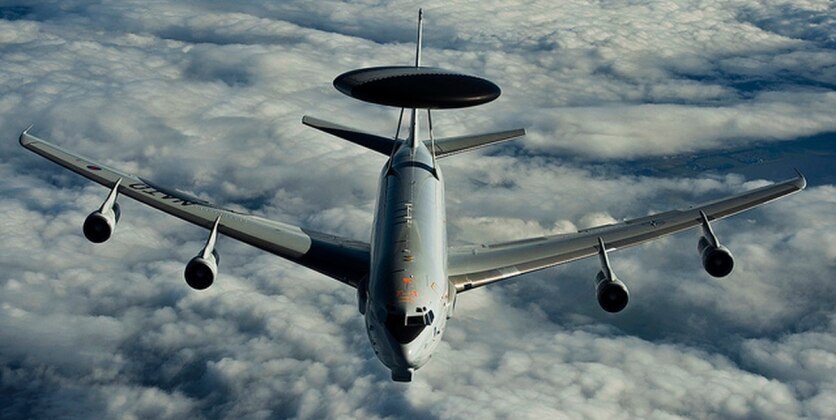
The United States Air Force has dramatically increased the deployment of its E-3 Sentry airborne early warning aircraft across the Middle East after Iranian strikes reportedly destroyed several critical ground-based radar systems used by U.S. and allied air defenses. The large radar aircraft—often described as “flying command centers”—are now playing a key role in detecting drones and missiles aimed at regional targets including Israel and Jordan.

The United States Air Force has significantly expanded operations of its Boeing E-3 Sentry airborne warning and control system aircraft across the Middle East, as tensions between Iran and Western forces continue to escalate.
Defense observers report that the aircraft have been flying frequent surveillance missions over key air corridors stretching across Jordan, northern Saudi Arabia, southern Iraq, and parts of the eastern Mediterranean Sea. These operations are intended to provide persistent radar coverage capable of detecting Iranian drones and missile launches targeting allied forces and infrastructure in the region.
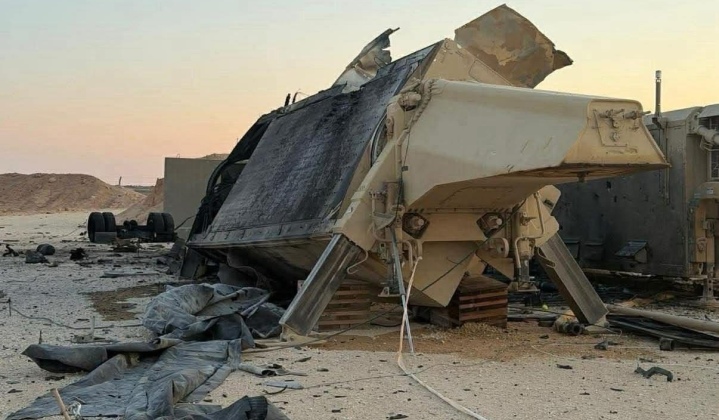
The surge in airborne radar patrols comes after Iran reportedly destroyed several high-value radar installations belonging to the United States and its partners. According to defense assessments, the strikes eliminated approximately $2.7 billion worth of advanced radar systems during attacks on multiple military facilities.
Among the most significant losses was an AN/FPS-132 early warning radar previously deployed in Qatar—the only system of its type stationed outside the United States. In addition, two AN/TPY-2 radar systems associated with Terminal High Altitude Area Defense batteries were reportedly destroyed at sites in Jordan and the United Arab Emirates.

These radar systems normally serve as a critical part of the region’s missile detection architecture, providing early warning data for air-defense networks tasked with intercepting ballistic missiles and drones.
With much of that ground-based radar coverage compromised, airborne surveillance aircraft are now being used to partially fill the gap. The E-3 Sentry, easily recognizable by its large rotating radar dome mounted above the fuselage, carries one of the largest airborne radar systems ever built. The aircraft is capable of tracking hundreds of aerial targets simultaneously and coordinating defensive responses through advanced data links.
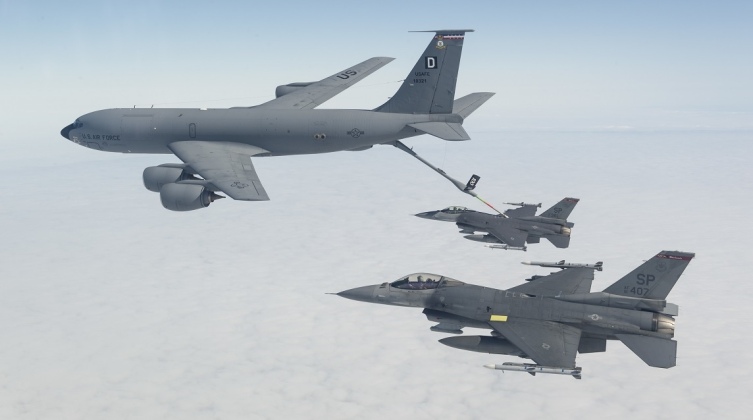
However, maintaining these airborne radar patrols requires extensive logistical support. Each E-3 aircraft must refuel in the air approximately every four to six hours, making continuous tanker support essential for keeping the aircraft on station.
Despite their powerful radar systems, the aging aircraft are not considered an ideal replacement for modern ground-based early warning radars. Many defense experts note that the E-3 fleet’s sensors were designed decades ago and are not optimized for detecting ballistic missile threats or advanced stealth platforms.
Concerns about the aircraft’s effectiveness have grown in recent years as availability rates have declined and the fleet has aged. The radar and avionics systems aboard the aircraft are widely considered outdated compared to newer airborne early warning platforms.
These limitations may be particularly relevant when confronting newer Iranian systems such as the Shahed-191 stealth drone, which is designed with reduced radar visibility and advanced electronic warfare capabilities.
The debate surrounding the future of the AWACS fleet has intensified after plans to replace the aircraft with the modern Boeing E-7 Wedgetail were delayed due to budget pressures within the U.S. defense establishment. Critics argue that retiring aging aircraft without immediately fielding replacements could create serious gaps in early-warning capabilities.
During the 1991 Gulf War, E-3 aircraft maintained near-continuous surveillance coverage over regional battlefields. But maintaining similar levels of operational presence today requires far greater maintenance efforts due to the aircraft’s age and limited numbers.
Meanwhile, allied nations have begun contributing additional surveillance resources to support regional air defense efforts. The Royal Australian Air Force recently deployed an Boeing E-7A Wedgetail early warning aircraft to the Gulf region to assist with monitoring potential missile and drone threats.
In parallel, the United States Army has reportedly redeployed air defense assets—including radar systems—from other strategic regions such as South Korea in order to strengthen defenses in the Middle East.
Regional early-warning capabilities have also benefited from data provided by Turkey, which operates an AN/TPY-2 radar installation designed to track ballistic missile launches across the region.
Some analysts also speculate that tracking data from Turkey’s S-400 air defense system may contribute additional information to the broader missile-tracking network supporting allied forces.
As the conflict environment grows more complex, the surge in airborne early warning operations highlights how control of the electromagnetic and surveillance domain has become a decisive factor in modern warfare.
About The Author