The future of naval logistics may no longer depend solely on helicopters, landing craft, or human pilots. The U.S. Marine Corps has taken a major step toward autonomous resupply operations at sea with successful shipboard testing of the TRV-150C Tactical Resupply Unmanned Aircraft System—signaling a shift in how modern forces may sustain themselves in distributed warfare environments.
On April 14, 2026, the U.S. Marine Corps confirmed the successful completion of shipboard testing for the TRV-150C Tactical Resupply Unmanned Aircraft System aboard a San Antonio-class amphibious transport dock. Conducted by the Naval Air Warfare Center Aircraft Division alongside the Portfolio Acquisition Executive for Robotics and Autonomous Systems Aircraft Management Program Office and Air Test and Evaluation Squadron 24, the trial demonstrated that autonomous cargo delivery at sea is no longer theoretical—it is becoming operational reality.
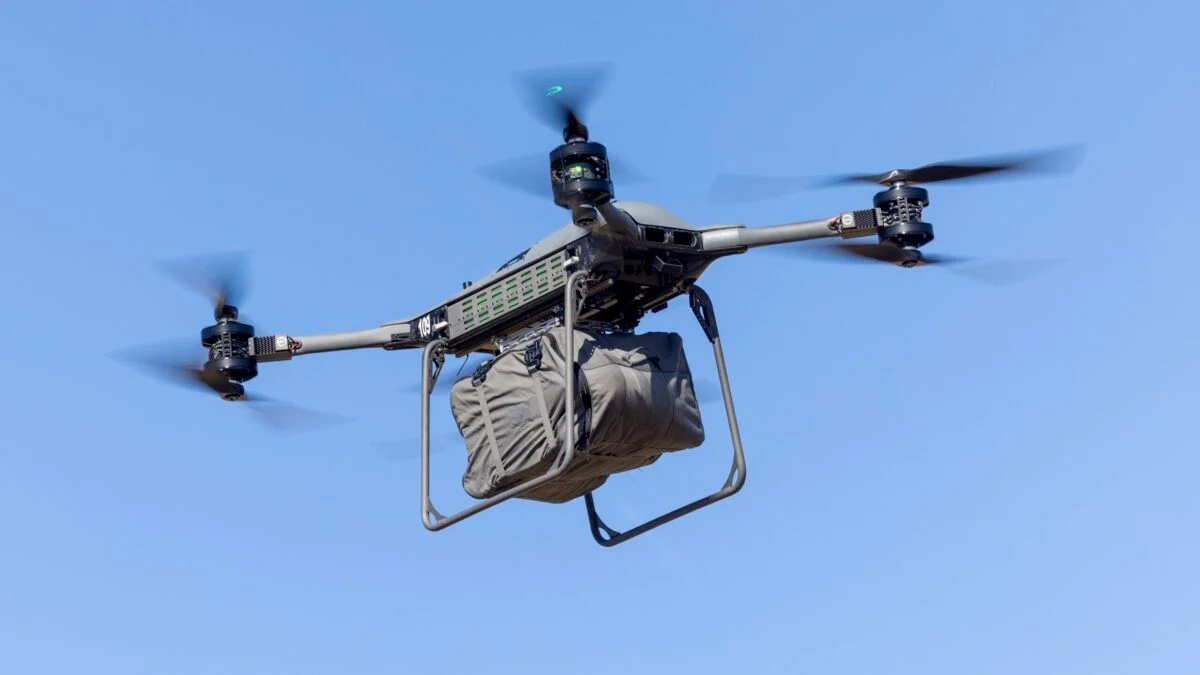
Unlike traditional flight testing on land, this evaluation focused on one of the most challenging environments in military aviation: a fully operational amphibious warship. Over a two-week period, the TRV-150C completed multiple launches and recoveries from the ship’s flight deck, operating in conditions that demand precision coordination between flight crews, deck handlers, and ship systems. This phase was not just about flight performance, but about integration—how an unmanned system behaves inside the tightly synchronized ecosystem of a naval vessel.
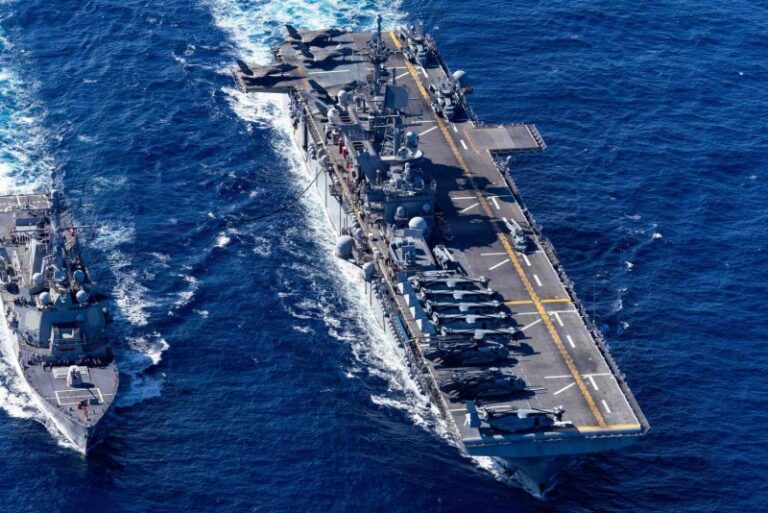
The San Antonio-class amphibious transport dock itself is designed as a multi-mission logistics and assault platform, capable of deploying Marines, vehicles, landing craft, and aircraft such as the MV-22 Osprey and CH-53E Super Stallion. Introducing an unmanned cargo aircraft into this environment is significant because it places autonomous logistics directly into the heart of amphibious operations rather than isolating it as an experimental concept on the sidelines.
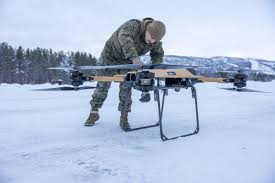
The TRV-150C, developed in collaboration with Malloy Aeronautics and SURVICE Engineering, is an electric vertical take-off and landing (eVTOL) unmanned aircraft designed for tactical resupply missions. With a payload capacity of approximately 150 pounds, it is not meant to replace heavy lift aircraft but to complement them by handling urgent, small-scale deliveries. These can include spare parts, medical supplies, batteries, communication equipment, and mission-critical tools—items that can determine operational success in contested or remote environments.
The real value of the system lies in speed and flexibility. In modern distributed operations, Marine Corps units may be spread across islands, coastlines, or contested littoral zones where traditional logistics chains become slow, vulnerable, or unavailable. A small autonomous aircraft capable of moving supplies between ships and shore without risking pilots or tying up larger aircraft could significantly enhance operational tempo and reduce logistical strain.
According to Marine Corps officials, the demand for such a capability has come directly from Combat Logistics Battalions responsible for sustaining expeditionary forces. Leaders such as Lt. Col. Zacharias Hornbaker emphasized the need for faster, safer, and more flexible supply movement between ships and shore-based units, particularly in scenarios where manned aviation assets are limited or prioritized for higher-risk missions.
However, the successful trial is only the beginning. The Marine Corps has classified the demonstration as a proof-of-concept phase, meaning significant work remains before such systems become standard fleet equipment. Future development will focus on refining operational procedures, training ship crews, integrating safety protocols, and ensuring seamless coordination with existing aviation and logistics systems. Military adoption depends as much on doctrine and certification as it does on technology performance.
What makes this milestone particularly important is its alignment with broader U.S. military strategy. As naval forces prepare for potential high-intensity conflicts in dispersed maritime environments, resilience and adaptability in logistics are becoming as critical as firepower. Autonomous cargo systems like the TRV-150C could reduce dependency on vulnerable supply chains and free manned assets for more complex missions.
If further testing proves successful, small unmanned cargo aircraft may soon become a regular feature of amphibious warships—quietly shuttling essential supplies across contested waters, extending the reach and endurance of forward-deployed forces without putting additional personnel at risk.
About The Author