Iran Unleashes Massive Missile and Drone Barrage Across Middle East, Deploys Khorramshahr-4 Against U.S. Bases
A dramatic escalation in Middle Eastern tensions has reportedly unfolded after Iran launched one of the largest coordinated missile and drone assaults ever seen in the region. The operation, attributed to Iranian forces, involved hundreds of missiles and thousands of unmanned aerial systems aimed at targets across Israel while also striking strategic U.S. military installations in Gulf states.
Defense observers say the scale and complexity of the operation signal a major shift in the conflict, expanding beyond Israel and directly threatening the American military presence across the Persian Gulf.
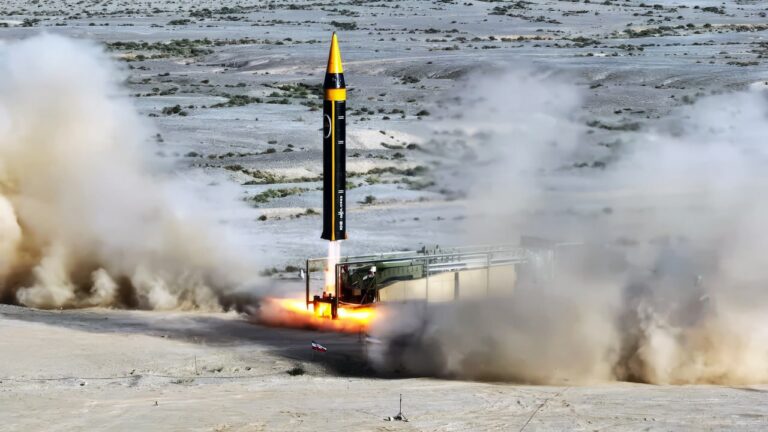
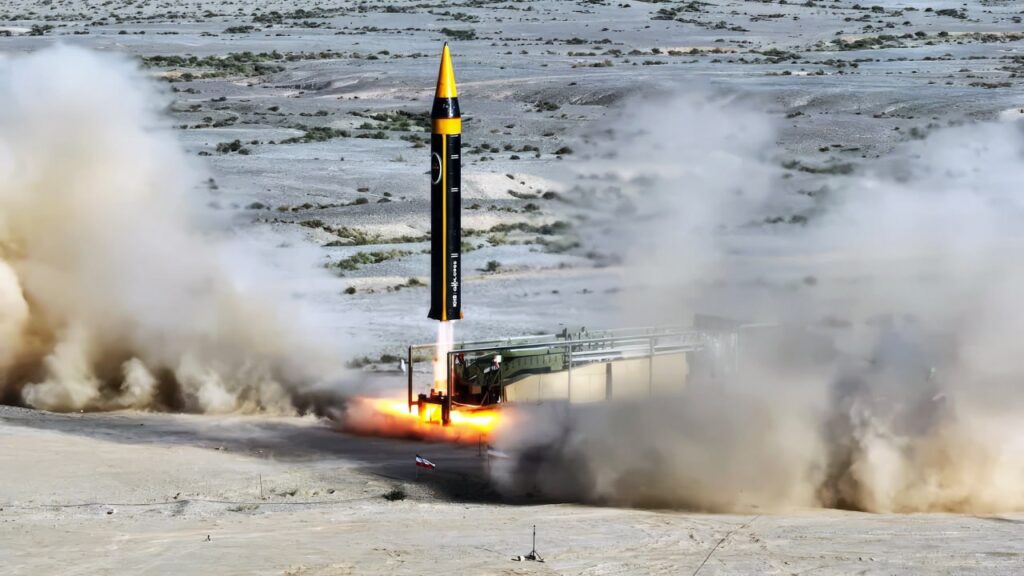
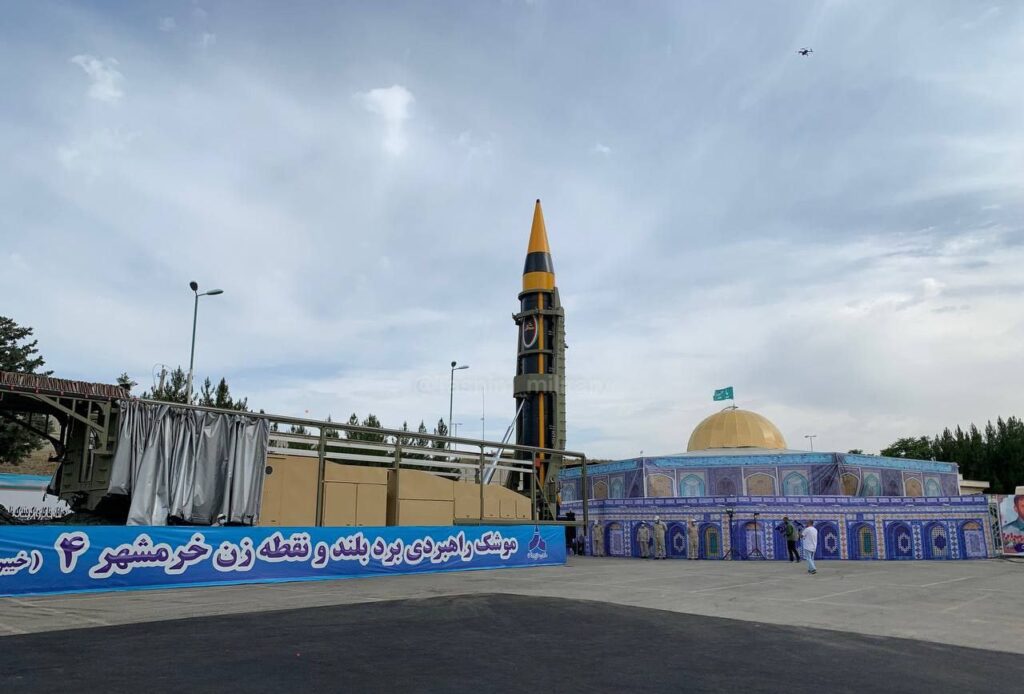
According to emerging reports, Iranian forces deployed their most powerful ballistic missile, the Khorramshahr-4, also known as the Kheibar missile, against military facilities in Qatar and Bahrain—two locations that host some of the most important American bases in the region.
The strikes reportedly targeted sites connected to U.S. operational infrastructure. Qatar hosts the massive Al Udeid Air Base, widely considered the largest American military installation in the Middle East and a key operational hub for U.S. Central Command’s air missions across the region. Bahrain, meanwhile, houses the headquarters of the U.S. Navy’s Fifth Fleet, responsible for securing maritime routes across the Persian Gulf, the Red Sea, and surrounding waters.
Military analysts say striking these locations represents a bold signal from Tehran that its missile forces are capable of threatening the very backbone of U.S. regional military logistics.
At the heart of the reported operation is the Khorramshahr-4 ballistic missile, one of the newest and most powerful weapons in Iran’s strategic arsenal. The missile is believed to have an operational range approaching 2,000 kilometers, allowing it to reach targets across nearly the entire Middle East.
This range places Israel, Gulf states, and numerous American bases within striking distance.
Unlike many earlier Iranian missile designs, the Khorramshahr-4 is built to carry an extremely heavy payload. Estimates suggest the missile can deliver a warhead weighing between 1,500 and 1,800 kilograms, making it one of the most destructive conventional ballistic missiles developed by Iran.
Such a heavy warhead is particularly suited for attacks against hardened targets such as airfields, military command facilities, radar installations, and logistics infrastructure.
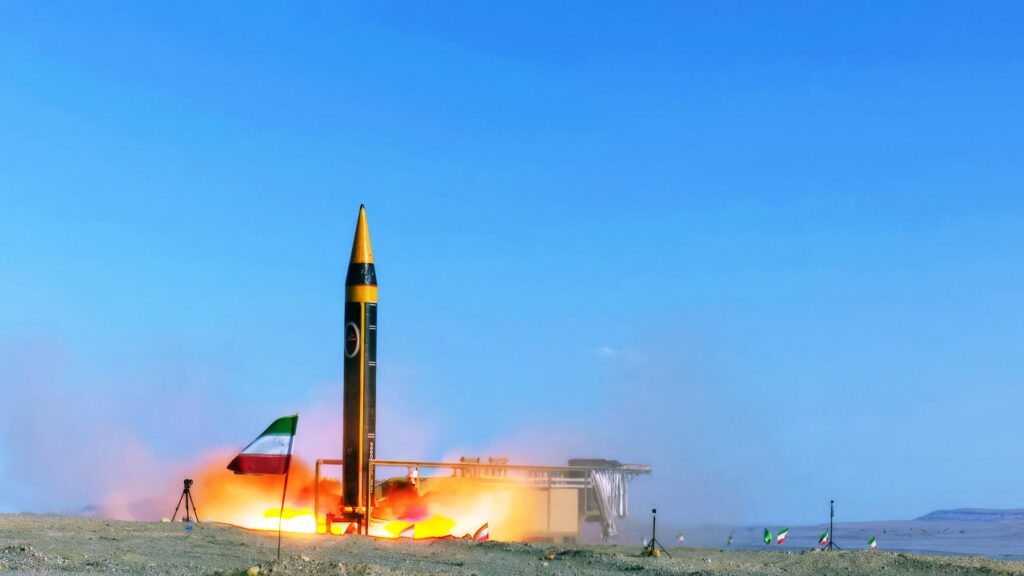
Experts believe the missile incorporates several technological improvements over earlier Iranian systems. These enhancements reportedly include more efficient propulsion systems, upgraded guidance packages, and improved survivability features designed to help the missile penetrate modern missile defense systems.
One of the most significant capabilities associated with the Khorramshahr-4 is the potential use of a maneuverable re-entry vehicle. This technology allows the warhead to alter its trajectory during the final stage of flight, making interception significantly more difficult for defensive systems.
Modern missile defense networks deployed across the Middle East—including Patriot batteries, THAAD interceptors, and Israel’s multi-layered defensive shield—are designed to track and destroy incoming ballistic threats. However, maneuverable warheads can complicate interception calculations and reduce the probability of a successful intercept.
Alongside the ballistic missile strikes, Iran reportedly launched a massive wave of drones and additional missiles toward Israeli targets.
Initial reports indicate that approximately 600 missiles and as many as 2,000 unmanned aerial systems were fired in successive waves, creating one of the largest combined missile-drone attacks ever directed at Israel.
Such a massive volume of incoming threats places enormous pressure on air defense networks.
Israel operates one of the most advanced layered missile defense systems in the world, combining several different technologies designed to intercept threats at various ranges and altitudes. These include systems capable of intercepting rockets, cruise missiles, ballistic missiles, and unmanned aerial vehicles.
However, saturation attacks—where large numbers of projectiles arrive simultaneously—can strain even the most sophisticated defensive networks. Each interceptor missile is costly and limited in number, meaning defenders must carefully allocate their resources to intercept the most dangerous incoming threats.
By combining ballistic missiles with swarms of drones, Iran appears to be employing a strategy designed to overwhelm defensive systems through sheer volume.
The scale of the operation highlights the depth of Iran’s missile arsenal, which is widely believed to be the largest ballistic missile force in the Middle East.
According to various defense assessments, Iran currently maintains an inventory exceeding 3,000 ballistic missiles of different types and ranges. These systems are operated primarily by the Aerospace Force of the Islamic Revolutionary Guard Corps.
Iran’s missile inventory includes a wide range of systems designed for different operational roles.
Short-range missiles such as the Fateh-110 family, Fateh-313, Zolfaghar, Dezful, and Qiam-1 are typically used for regional strike missions against nearby military targets. These weapons generally have ranges between 300 and 1,000 kilometers and are often mounted on mobile launch vehicles that can quickly relocate after firing.
For longer-range missions, Iran operates several medium-range ballistic missile systems capable of reaching targets across the Middle East. These include missiles such as the Shahab-3, Ghadr, Emad, Sejjil, Haj Qassem, and Kheibar Shekan.
The Khorramshahr missile family sits among the most powerful of these systems due to its large payload capacity and potential penetration capabilities.
Another key element of Iran’s missile strategy is the extensive network of underground facilities used to store and launch these weapons.
Often referred to as “missile cities,” these installations consist of vast tunnel systems built deep inside mountains or reinforced underground structures. Inside these facilities, missiles can be stored, fueled, and prepared for launch while remaining protected from air strikes.
Iran has occasionally released footage showing transporter-erector-launcher vehicles moving through these tunnels, highlighting the scale and sophistication of the network.
The purpose of these underground complexes is to ensure the survivability of Iran’s missile forces. By dispersing weapons across numerous hidden locations, the country reduces the risk that a single pre-emptive strike could destroy its entire arsenal.
Even if several facilities were destroyed, many others would likely remain operational, allowing Iran to continue launching missiles in retaliation.
This strategy forms the backbone of Iran’s deterrence doctrine. Instead of relying on a large air force capable of projecting power across long distances, Tehran has invested heavily in missile technology and unmanned systems to create a powerful asymmetric capability.
Missiles and drones can be produced in large numbers, launched quickly, and used to strike strategic targets far beyond Iran’s borders.
If confirmed, the reported strikes on U.S. military facilities in Qatar and Bahrain would represent a significant escalation in the regional conflict. Targeting the infrastructure that supports American military operations would send a clear message that Iran is willing to challenge U.S. presence across the Gulf.
At the same time, the massive drone and missile assault against Israel demonstrates Iran’s ability to conduct large-scale saturation attacks designed to overwhelm even the most advanced air defense networks.
As the situation continues to unfold, defense analysts will closely examine interception rates, damage assessments, and the exact types of weapons used in the operation.
These details will provide critical insight into both the effectiveness of Iran’s missile forces and the resilience of the region’s defensive systems.
Whether this operation represents a one-time demonstration of capability or the beginning of a broader regional escalation remains one of the most urgent questions now facing military planners across the Middle East.
About The Author