In a demonstration of ongoing commitment to Taiwan’s self-defense capabilities, the US Department of State has officially approved a potential sale valued at $330 million. This significant package focuses on providing non-standard spare parts, essential repairs, and crucial technical support to Taiwan’s de facto embassy in Washington, the Taipei Economic and Cultural Representative Office (TECRO). The notification to Congress meticulously frames this package not as a dramatic leap in Taiwan’s combat power, but rather as a vital sustainment measure designed to ensure the continued operational readiness of its existing F-16, C-130, and Indigenous Defense Fighter (IDF) fleets. Routed through the well-established Foreign Military Sales (FMS) system and firmly justified under the provisions of the Taiwan Relations Act, this case primarily addresses the provision of hard-to-source components, specialized repair-and-return services, and critical engineering support, much of which will be drawn from US Department of Defense stocks. US officials have been careful to emphasize that no additional US personnel will be permanently deployed as a result of this transaction, and that the move is not intended to fundamentally alter the delicate military balance in the Taiwan Strait.
TECRO’s specific request encompasses a comprehensive range of non-standard components, spare parts, consumables, accessories, and a crucial repair-and-return arrangement. This is further complemented by essential technical and logistics support from both the US government and relevant American industries. Within this FMS framework, the majority of the items originate from Department of Defense stocks, feeding vital supply chains for complex systems such as radar units, aircraft engines, mission computers, and structural sub-assemblies that are notoriously difficult to source through standard commercial or military catalogues. The Defense Security Cooperation Agency (DSCA), in its formal notification, explicitly states that no permanent increase in US personnel is anticipated, that the associated workload remains entirely manageable for US forces, and that the overriding intent of this transaction is not to fundamentally alter the basic military balance across the Taiwan Strait. This careful framing is a diplomatic and strategic balancing act, designed to support Taiwan without overtly provoking Beijing.
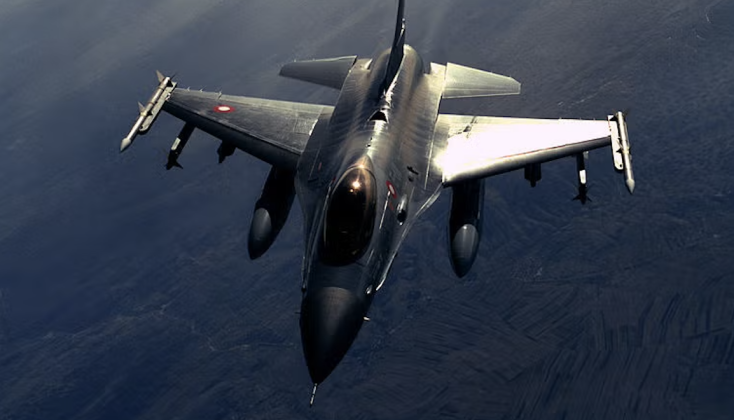
In the intricate tapestry of Taiwan’s air defense posture, the F-16 fighter jet remains an absolutely critical asset for both air policing missions and conventional strike operations. Airframes that have undergone upgrades to the advanced F-16V standard receive the state-of-the-art AN/APG-83 Scalable Agile Beam Radar (SABR), an active electronically scanned array (AESA) system. This cutting-edge radar provides significantly longer detection ranges, vastly improved simultaneous target tracking capabilities, and enhanced resistance to sophisticated electronic jamming, effectively bringing the fighter closer to fifth-generation performance levels. The specialized power units, complex processing modules, and intricate cooling elements associated with this AESA radar form a dedicated and highly sensitive supply chain. Any disruption to this critical chain can rapidly lead to the cannibalization of existing airframes (using parts from one aircraft to repair another) and a subsequent decline in overall aircraft availability rates. This explains the precisely targeted nature of this non-standard package, aimed specifically at shoring up these vulnerable links in Taiwan’s F-16 readiness.
The C-130 Hercules transport aircraft plays a distinctly different but equally vital role in bolstering the island’s logistical depth and resilience. This robust four-turboprop tactical transport aircraft is capable of carrying a substantial military payload over approximately 3,800 kilometers and, crucially, can operate from short or semi-prepared runways. This makes it an indispensable tool for resupplying Taiwan’s outlying islands, moving vital detachments of personnel and equipment, and supporting airdrop operations in potentially degraded or contested environments. Non-standard spare parts related to complex hydraulic circuits, specific wing components, or older avionics sets often require access to protected technical data and highly specialized repair capabilities. These requirements do not always align easily with fully standardized supply chains, necessitating the tailored support provided in this package to keep these workhorse aircraft flying.
Completing this essential trio is the Indigenous Defense Fighter (IDF) Ching-Kuo, an aircraft embodying a more indigenous design and sustainment logic. Developed by Taiwan’s Aerospace Industrial Development Corporation (AIDC), the IDF relies on a GD-53 Golden Dragon multimode radar, a system derived from the AN/APG-67. This radar is capable of tracking multiple targets, guiding beyond-visual-range air-to-air missiles, and providing crucial short-range maritime surveillance capabilities. The aircraft’s relaxed-stability airframe, combined with a sophisticated digital fly-by-wire flight control system, imposes specific and complex requirements for actuators, onboard computers, and specialized software maintenance. This inherent complexity increases dependence on contractual repair chains and precisely explains the prominent place of these non-standard subsystems within the FMS notification, highlighting the deep technical support needed for Taiwan’s unique homegrown fighter.
At the crucial operational level, while a batch of spare parts never appears directly in an order of battle, its availability critically determines how much airpower is actually combat-ready and available. By ensuring a more consistent and reliable flow of these critical components, Taiwan can significantly reduce the need for cannibalization within its F-16V and IDF fleets. This, in turn, allows a larger number of fully mission-capable aircraft to maintain crucial combat air patrol lines over the Taiwan Strait, often operating under challenging emission control (EMCON) constraints to avoid detection. The advanced AESA radars of the F-16Vs and the GD-53 of the IDFs are vital for feeding a recognized maritime picture (RMP) and a common operational picture (COP) that can be shared with US and allied forces. This interoperability is crucial for seamlessly integrating command and control (C2) chains and data links, enhancing collective situational awareness. Simultaneously, a well-maintained C-130 fleet preserves essential tactical airlift capacity, enabling the rapid repositioning of munitions, surface-to-air defense detachments, critical maintenance teams, or even MALE (Medium-Altitude Long-Endurance) drones in direct response to the tempo of increasing Chinese military activities.
On the industrial side, DSCA has stated that no offset arrangement has been identified at this stage, but notably has not ruled out the later establishment of such a scheme between US and Taiwanese firms. The continuous flow of technical data, retrofits, and repair work inherently contributes to structuring and strengthening Taiwan’s defense industrial and technological base (BITD), specifically around AIDC, its network of subcontractors, and the air force’s maintenance units. Simultaneously, this arrangement allows US industry to retain valuable expertise on older platforms that remain highly relevant for managing mixed fleets globally, fostering a symbiotic relationship.
From a broader geopolitical perspective, this notification meticulously reflects the underlying logic of the Taiwan Relations Act. This foundational legislation provides for the provision of defense articles that enable Taiwan to maintain a credible self-defense capacity, while deliberately leaving open the precise nature of any US response in the event of a crisis. By specifically focusing on the sustainment of existing fleets rather than announcing a highly visible capability leap, Washington signals continuity and reliability to its regional partners. Concurrently, it sends a carefully controlled message to Beijing by measurably improving the material resilience of the island’s defense forces. While mainland China is almost certain to describe this decision as an unwarranted interference in its internal affairs, the practical and enduring impact lies, above all, in enhancing the durability of Taiwan’s defense efforts. This package ensures that Taiwan’s air forces will be able to remain on station longer, generate sorties in greater depth, and maintain a high operational tempo, should tensions regrettably persist in the dynamic and strategically vital Indo-Pacific region.
About The Author