A groundbreaking disclosure by NBC News on November 3, 2025, has sent shockwaves through the geopolitical landscape, revealing that the Trump administration has embarked on detailed planning for a highly sensitive and covert mission. This audacious plan would involve deploying US troops and intelligence officers into Mexico with the explicit aim of striking drug cartels, relying heavily on targeted drone attacks against fentanyl laboratories and key cartel leadership figures. If implemented, this initiative would see forces primarily drawn from the Joint Special Operations Command (JSOC) operating under the expansive authorities of Title 50 intelligence operations, alongside CIA officers. This would mark the first acknowledged US kinetic military campaign on Mexican soil in the modern drug war, representing a dramatic and potentially perilous escalation of bilateral relations.
The strategic imperative driving this controversial shift is the escalating fentanyl crisis, which Washington has now unequivocally reframed as a direct national security threat, moving beyond its previous categorization as solely a law-enforcement problem. Synthetic opioids, predominantly fentanyl, have been implicated in the overwhelming majority of US overdose deaths in recent years. Despite a historic decline in 2024 compared to 2023, approximately 80,000 Americans tragically still succumbed to overdoses. Congressional and executive-branch reports consistently identify Mexico-based transnational criminal organizations (TCOs) as the dominant producers and cross-border traffickers of illicit fentanyl into the United States, skillfully leveraging small, high-value loads that prove notoriously difficult to interdict. Earlier this year, the White House further solidified this hawkish stance by issuing an order that designated several prominent cartels, alongside the notorious MS-13 gang and Venezuela’s Tren de Aragua, as foreign terrorist organizations. This designation explicitly intertwines the ongoing drug war with counterterrorism authorities, signaling a significant broadening of the legal and operational framework for US intervention.
This pronounced turn toward a militarized approach stands in stark contrast to more than a decade of US-Mexico security cooperation. This cooperation was primarily built around the Mérida Initiative, which focused on funding training programs, providing equipment, and fostering joint intelligence efforts, rather than on overt American combat operations. While the CIA has quietly assisted Mexico in establishing vetted army and navy special units and sophisticated joint intelligence centers in Mexico City and Monterrey—modeled on the highly effective fusion hubs previously utilized in Iraq to hunt cartel leadership—the current proposal represents a qualitative leap. Mexican President Claudia Sheinbaum has publicly acknowledged ongoing US drone surveillance flights over Mexican territory as part of cooperative efforts to expose fentanyl labs. However, she has repeatedly and emphatically warned that any unilateral US strikes would constitute a “red line” and a severe violation of Mexican sovereignty, underscoring the extreme political sensitivity of such operations.
As of now, there are no publicly acknowledged US combat units permanently stationed on Mexican soil. American involvement remains meticulously anchored in CIA-backed vetted Mexican units, law-enforcement liaison teams, and intelligence sharing facilitated through fusion cells and the recently established US-Mexico Security Implementation Group. The kinetic edge of the Trump administration’s anti-cartel campaign has, until now, been largely confined to maritime operations. Under “Operation Southern Spear,” US aircraft have been deployed to destroy alleged drug-smuggling vessels in the Caribbean and eastern Pacific, actions that have reportedly resulted in dozens of fatalities and triggered sharp criticism from human rights experts and the United Nations. Moving this operational model inland, onto sovereign Mexican territory, would signify a dramatic escalation, even when compared to past covert CIA and JSOC campaigns in geographically distant and politically distinct theaters like Pakistan or Yemen.
The covert mission currently under consideration would specifically target fentanyl production facilities and high-value cartel figures. These targets would be concentrated in the northern and Pacific-coast states of Mexico, areas that have been identified as forming the core of a new “golden triangle” for synthetic opioids and gun trafficking. US planners appear to be operating under a “decapitation and disruption” concept: aiming to find, fix, and finish critical nodes within the cartels’ complex supply chains, while simultaneously degrading the command-and-control networks that link Mexican production to US distribution cells. Any such mission would likely necessitate highly restrictive rules of engagement to mitigate civilian casualties, particularly in densely populated urban areas such as Culiacán or Tijuana. This presents an immense operational challenge, one that already troubles legal scholars as they assess the legality of the current maritime strikes under both international humanitarian law and human rights law.
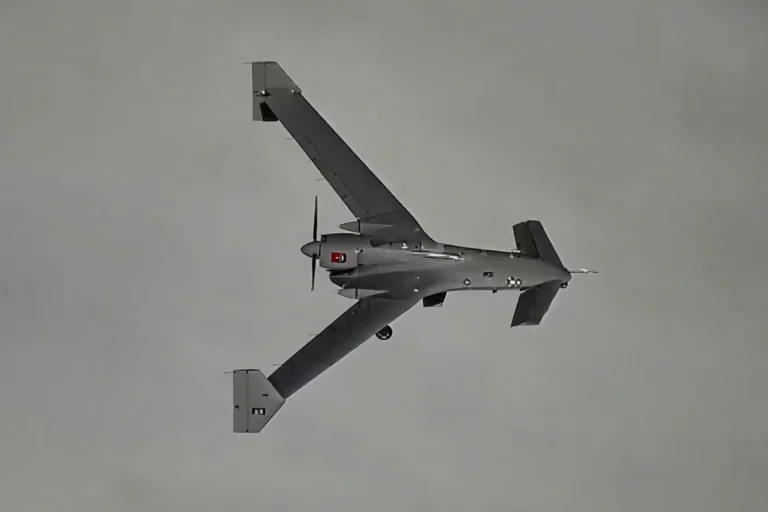
If this ambitious plan proceeds, the primary workhorses for cross-border strikes would almost certainly be the MQ-9 Reaper and MQ-1C Gray Eagle medium-altitude drones, both already in widespread US service. The MQ-9 Reaper offers exceptional long endurance in an intelligence role and can carry Hellfire missiles alongside laser- or satellite-guided bombs. This formidable payload provides it with the crucial ability to loiter for extended periods above remote sierras and then engage fleeting targets with meter-level accuracy. The Army’s MQ-1C Gray Eagle, with endurance comparable to the Reaper, boasts a payload that includes advanced electro-optical and infrared sensors, synthetic aperture radar, and up to four Hellfire missiles. This platform provides a similar, albeit ground-force-tuned, capability, ideally suited to support ground forces and manned-unmanned teaming with AH-64E Apache helicopters. Crucially, both platforms can orbit well above small-arms range, an essential requirement when operating against cartels that are known to field .50-caliber rifles and even shoulder-fired anti-air systems.
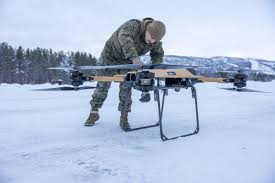
Closer to the ground, any JSOC presence in Mexico would almost certainly leverage the small tactical unmanned systems and loitering munitions that special operations forces already deploy globally. Hand-launched RQ-20 Puma and RQ-11 Raven drones provide platoon-level teams with silent electro-optical and infrared surveillance capabilities out to tens of kilometers. This proven toolset is invaluable for meticulous “pattern-of-life” collection on rural safe houses and clandestine airstrips. These compact systems can be launched from vehicles or discreet hide sites, recovered quickly, and rapidly redeployed, a profile that perfectly fits intelligence-heavy raids rather than large-scale occupation. In parallel, Switchblade 300 and 600 loitering munitions, already integrated into U.S. Army and SOCOM inventories, provide backpackable precision strike capabilities. These munitions offer relatively low collateral effects against vehicles, boats, or small compounds, utilizing directional fragmentation or anti-armor warheads with critical operator-in-the-loop control, ensuring targeted impact.
Officials directly involved in the planning have indicated that some of these sophisticated systems would still necessitate US operators on Mexican soil to ensure their safe and effective operation, even if strike authority were to flow through US intelligence channels under Title 50. This is precisely where the legal and political stakes escalate dramatically. The US Congress is currently debating new legislation that would explicitly authorize the president to employ US armed forces against designated cartels and their affiliated groups, effectively formalizing a non-international armed conflict against criminal organizations. Critics in both countries are issuing stark warnings that blurring the critical line between crime and war risks normalizing extraterritorial targeted killings, potentially inviting retaliation on US soil, and further destabilizing Mexican regions where homicide rates already tragically exceed those of many conventional conflict zones.
For the Pentagon’s planners and the defense industry responsible for building these advanced drones, the underlying logic is clear: to re-task battle-proven ISR (Intelligence, Surveillance, and Reconnaissance) and strike platforms from distant counterterrorism theaters to an acute crisis unfolding on America’s immediate doorstep. This shift promises shorter supply lines and familiar rules of engagement, offering a seemingly efficient solution. However, for Mexico, the picture looks profoundly different. President Sheinbaum’s government has already deployed troops to the northern border and significantly increased fentanyl seizures and high-level extraditions, all while steadfastly insisting that cooperation with the US cannot, and will not, devolve into subordination. Analysts at West Point’s Combating Terrorism Center caution that cartels are inherently fragmented and highly adaptive organizations, capable of absorbing losses, patiently waiting out a short US air campaign, or, most alarmingly, responding with spectacular acts of violence against American interests on both sides of the frontier. The proposed covert drone war in Mexico, therefore, represents a gamble with potentially immense and unpredictable consequences.
About The Author