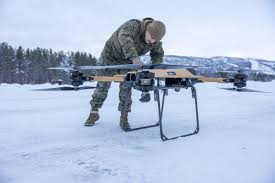
In a move set to profoundly reshape the tactical landscape for dismounted warfighters, the U.S. Marine Corps recently inked a significant $17 million deal for Archer Strike First Person View (FPV) drones. This isn’t just another procurement; it represents a paradigm shift in how small units, from infantry squads to special operations teams, will acquire targets, engage threats, and fundamentally alter the lethality and survivability of forces at the very edge of the battlespace. The acquisition, finalized in early 2025, underscores the Marine Corps’ relentless drive to integrate cutting-edge, asymmetric capabilities that empower the individual Marine and redefine the concept of “small unit fires.”
For decades, the challenge for small, dispersed units has been the inherent limitation of their organic firepower and sensing capabilities. Calling in artillery or air support often takes time, relies on complex communication networks, and might not always be available or precise enough for immediate, localized threats. The Archer Strike FPV drone promises to bridge this gap, providing an immediate, over-the-horizon, precision strike capability directly into the hands of the Marines who need it most.
Archer Strike: A New Breed of Precision
The FPV drone revolution, initially driven by hobbyists and competitive racers, has rapidly evolved into a formidable military tool. Unlike larger, more complex reconnaissance drones, FPV drones are designed for extreme maneuverability, speed, and the immersive “first-person” perspective they offer the operator. This allows for incredibly precise navigation in complex environments – urban terrain, dense forests, or fortified positions – where traditional line-of-sight systems struggle.
The Archer Strike system, specifically tailored for military applications, is more than just a drone; it’s an integrated precision strike platform. While exact specifications remain classified, it’s understood to combine:
- High-Speed, Agile Airframe: Capable of rapid acceleration and intricate flight paths, making it exceptionally difficult for adversaries to detect and neutralize.
- Integrated Warhead: Designed for precision engagement against a range of targets, from lightly armored vehicles to enemy personnel in defilade. The “strike” in Archer Strike signifies its lethal capability, moving beyond mere observation.
- Intuitive FPV Control System: Operators wear goggles that provide a live, immersive video feed from the drone’s perspective, allowing them to “fly” the drone as if they were inside it. This provides unparalleled situational awareness and targeting accuracy.
- Ruggedized and Deployable Design: Built to withstand the rigors of combat environments, easily carried and launched by a single Marine or a small team.
This combination allows a Marine to effectively extend their lethal reach far beyond the range of their carbine or grenade launcher, neutralizing threats before they can even become a direct danger.
Reshaping Small Unit Fires: The Tactical Revolution
The $17 million Archer Strike deal isn’t just about adding a new gadget; it’s about fundamentally rethinking tactical doctrine for small units:
- Immediate Precision Strike: Marines will no longer be solely reliant on calling for external support for complex engagements. An FPV drone can be launched within moments to identify, track, and engage specific threats with pinpoint accuracy. This drastically reduces response times and increases operational tempo.
- Enhanced Situational Awareness and Reconnaissance: Before a direct engagement, an Archer Strike drone can provide invaluable real-time intelligence, scouting ahead, identifying enemy positions, and revealing ambush points without exposing personnel to direct fire. This is a game-changer for force protection.
- Overmatch in Urban and Complex Terrain: FPV drones excel in navigating cluttered environments where traditional optics or larger drones might be hampered. They can fly into buildings, peek around corners, and engage targets with surgical precision, minimizing collateral damage.
- Reduced Risk to Personnel: By engaging threats remotely, Marines can maintain a safer standoff distance, reducing the risk of casualties during direct engagements. This is particularly crucial in high-risk scenarios.
- Suppression of Enemy Air Defenses (SEAD) at the Small Unit Level: While not a full-scale SEAD platform, an FPV drone could potentially be used to identify and suppress localized enemy air defense assets (like anti-drone systems or even heavy machine guns) before a main assault.
- Asymmetric Advantage: Against a peer or near-peer adversary, the widespread deployment of affordable, lethal FPV drones provides an asymmetric advantage, allowing small units to inflict outsized damage and disrupt enemy operations with minimal investment compared to traditional weapon systems.
The Marine Corps’ Vision: Force Design 2030 in Action
This acquisition is a clear manifestation of the Marine Corps’ “Force Design 2030” initiative, which emphasizes distributed operations, smaller and more agile units, and the integration of advanced technologies to gain an edge in future conflicts, particularly in the Indo-Pacific theatre. Archer Strike fits perfectly into this vision, enabling dispersed Marine Expeditionary Units (MEUs) and Marine Littoral Regiments (MLRs) to operate with greater independence, lethality, and survivability in contested environments.
The $17 million investment signifies a strong commitment to this emerging technology. It’s likely just the beginning, with further procurements and doctrinal integration expected as Marines gain operational experience with these transformative systems. The FPV drone isn’t just a weapon; it’s a force multiplier that promises to make every Marine a more capable, survivable, and lethal force on the future battlefield.
About The Author