In the dynamic and often unpredictable realm of international security, the ability of allied forces to operate seamlessly and effectively is paramount. This principle was recently showcased with remarkable clarity as Spain embarked on a significant mission along NATO’s Eastern Flank, demonstrating its unwavering commitment to collective defense. For the first time, a Spanish A400M transport aircraft, configured as a tanker, conducted vital air-to-air refueling operations with Spanish Eurofighter jets while performing air policing duties in the region. This landmark event underscores Spain’s evolving capabilities and its crucial role in strengthening NATO’s deterrent posture.
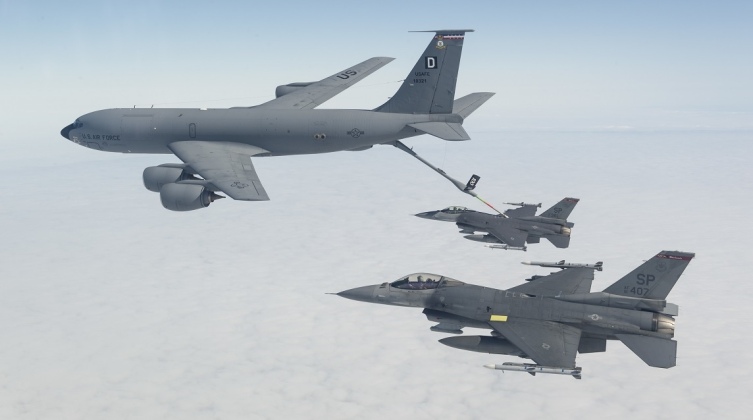
The integration of the A400M into tanker operations marks a considerable leap forward for the Spanish Air Force. Traditionally known for its strategic airlift capabilities, the A400M “Atlas” has proven its versatility by successfully undertaking the complex task of aerial refueling. This dual functionality transforms the aircraft into an even more indispensable asset, providing extended reach and endurance for fighter fleets operating far from their home bases. In a theatre as expansive and strategically critical as NATO’s Eastern Flank, the ability to refuel mid-air significantly enhances the operational range and effectiveness of fighter jets like the Eurofighter.
The Eurofighter Typhoons, formidable multi-role combat aircraft, are the spearhead of Spain’s air policing contributions to NATO. Their deployment along the Eastern Flank is a clear signal of solidarity with alliance members who share borders with potential adversaries. These jets are tasked with patrolling designated airspace, intercepting unauthorized aircraft, and ensuring the integrity of NATO’s air boundaries. The demanding nature of these missions often requires extended flight times, making air-to-air refueling a critical enabler. Without it, the “loiter time” of fighter jets in their patrol areas would be severely limited, potentially creating gaps in coverage.
The successful execution of this joint operation highlights the advanced training and interoperability within the Spanish Air Force and, by extension, within NATO. Air-to-air refueling is a delicate and high-precision maneuver, requiring immense skill and coordination between the tanker and receiver aircraft. The fact that Spain conducted this with its own assets, the A400M and Eurofighters, speaks volumes about the maturity of its aerial capabilities. It also reinforces the idea that European nations are increasingly investing in and deploying sophisticated military assets to shoulder a greater share of the collective security burden.
The context for this mission is undeniably shaped by the ongoing geopolitical tensions in Eastern Europe. NATO’s Eastern Flank has become a focal point of increased military activity and vigilance. Nations like Romania, Bulgaria, and the Baltic States rely heavily on the collective defense guarantees provided by the alliance. Spain’s deployment, leveraging its A400M tanker, directly contributes to strengthening the air defense architecture in this sensitive region. It provides reassurance to frontline allies and sends a clear message of deterrence to any potential aggressors.
Furthermore, this exercise demonstrates the tangible benefits of investing in modern, multi-role platforms. The A400M, a collaborative European project, was designed with versatility in mind, and its successful conversion into a tanker platform validates that vision. It’s not just about transporting troops and cargo; it’s about extending the reach and power of an entire air force. For Spain, this capability means greater independence in conducting long-range air operations and a more robust contribution to international missions.
Looking ahead, this initial success with the A400M as a tanker for Eurofighters will undoubtedly pave the way for more such operations. It will allow the Spanish Air Force to refine its tactics, techniques, and procedures for air-to-air refueling, further integrating this crucial capability into its operational doctrine. It also serves as a powerful example of how NATO allies are continually adapting and enhancing their combined capabilities to meet evolving security challenges. Spain’s aerial guardians, with their new-found tanker support, are flying high, securing the skies, and reinforcing the bedrock of collective defense along NATO’s vital Eastern Flank.
About The Author