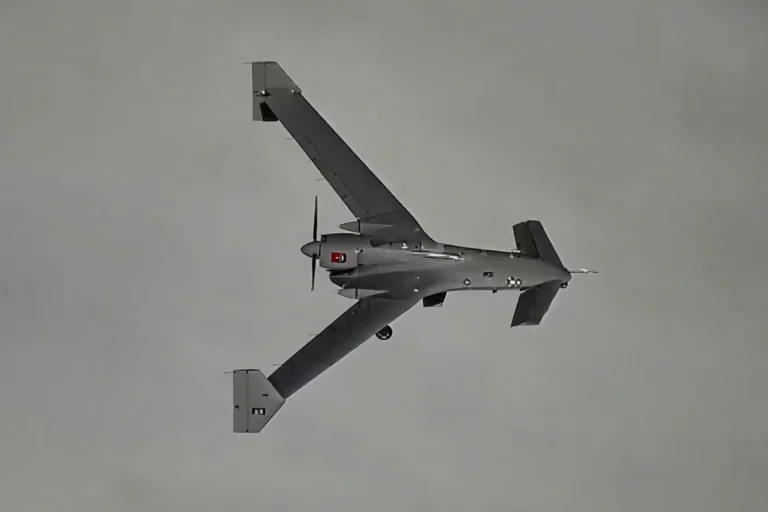
A new era of persistent aerial surveillance and intelligence gathering has quietly dawned over the Middle East as the United Kingdom’s cutting-edge Protector RG Mk1 uncrewed aerial vehicle (UAV) has officially commenced its first operational missions in the region. This pivotal deployment marks a significant milestone for the Royal Air Force (RAF), ushering in a new chapter of advanced capabilities that will undoubtedly enhance the UK’s ability to monitor, understand, and respond to complex security challenges across a crucial geopolitical landscape.
The Protector RG Mk1, known in its commercial variant as the MQ-9B SkyGuardian, represents a substantial upgrade from its predecessor, the MQ-9A Reaper. While the Reaper has been a workhorse for the RAF in various theaters for over a decade, the Protector brings with it a suite of enhanced features that redefine what a Medium Altitude Long Endurance (MALE) UAV can achieve. Its extended endurance, vastly improved sensor package, and enhanced resilience make it a true game-changer for intelligence, surveillance, and reconnaissance (ISR) operations.
One of the most critical advancements of the Protector is its “detect and avoid” technology. This sophisticated system allows the UAV to operate safely in unsegregated airspace, meaning it can fly alongside commercial aircraft without the need for restrictive air traffic control measures. This capability is not just a technical marvel; it dramatically increases the operational flexibility of the Protector, allowing it to be deployed more readily and effectively in diverse environments, from congested air corridors to vast maritime expanses. This is particularly relevant in the Middle East, where airspace can be complex and busy.
The deployment to the Middle East underscores the enduring security interests of the UK in the region. From counter-terrorism operations to safeguarding vital shipping lanes and monitoring regional stability, the need for persistent, high-fidelity intelligence is constant. The Protector’s ability to loiter for over 40 hours, combined with its advanced electro-optical/infrared (EO/IR) cameras, synthetic aperture radar (SAR), and ground moving target indicator (GMTI) capabilities, provides an unparalleled “eye in the sky.” This allows commanders to gather critical information over vast areas, tracking potential threats, monitoring activities, and providing real-time situational awareness to ground forces and decision-makers.
Furthermore, the Protector is designed to be highly interoperable with allied forces, a key consideration for coalition operations in the Middle East. Its ability to seamlessly share data and integrate into existing command and control networks ensures that the intelligence it gathers can be disseminated efficiently, enhancing the collective security efforts of the UK and its partners. This collaborative aspect is vital in addressing transnational threats that often require a multi-national response.
While the primary role of the Protector is ISR, it also retains a precision strike capability, allowing it to engage targets with guided munitions when necessary. This dual-role functionality provides commanders with a flexible tool, capable of both gathering intelligence and, if authorized and required, acting decisively. However, the emphasis with the Protector remains firmly on its unparalleled ability to maintain a silent, persistent watch, gathering the crucial information needed to prevent conflicts and protect lives.
The introduction of the Protector RG Mk1 also represents a significant investment by the UK in its future defense capabilities. It reflects a strategic vision that recognizes the increasing importance of uncrewed systems in modern warfare and security operations. As technology continues to evolve, platforms like the Protector will play an even more central role in shaping how nations project power, protect their interests, and contribute to global stability. The Middle East, with its complex security dynamics, serves as an ideal proving ground for this next-generation asset, where its capabilities will be rigorously tested and its value undoubtedly proven as the UK’s silent watcher takes to the skies.
About The Author