The Raid at Cabanatuan, also known as The Great Raid, is remembered as one of the most daring and successful rescue missions in American military history. Conducted during World War II, this operation involved U.S. Army Rangers, Alamo Scouts, and Filipino guerrillas working together to liberate over 500 Allied prisoners of war (POWs) and civilians from a Japanese-run camp near Cabanatuan City in the Philippines. The mission became a lasting symbol of courage, planning, and international cooperation.
The Fall of the Philippines and the POW Crisis
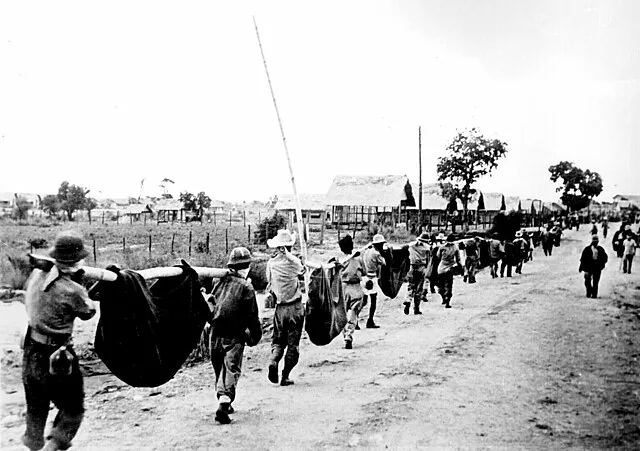
In 1942, the Philippines fell under Japanese control, resulting in thousands of U.S. and Filipino soldiers becoming prisoners of war. Many endured the brutal Bataan Death March, where countless prisoners died from exhaustion, disease, or execution. Those who survived were imprisoned in various camps, with the Cabanatuan camp being among the most infamous. By late 1944, it held over 5,000 Allied POWs, including Americans, British, Dutch, and Australians.
The Threat of Execution and the Decision to Rescue
When General Douglas MacArthur returned to the Philippines in October 1944, Japanese forces began retreating. In response, they implemented a “kill-all policy” to prevent the liberation of POWs, executing prisoners mercilessly. Fearing for the lives of those held at Cabanatuan, U.S. Army leaders decided that immediate action was necessary.
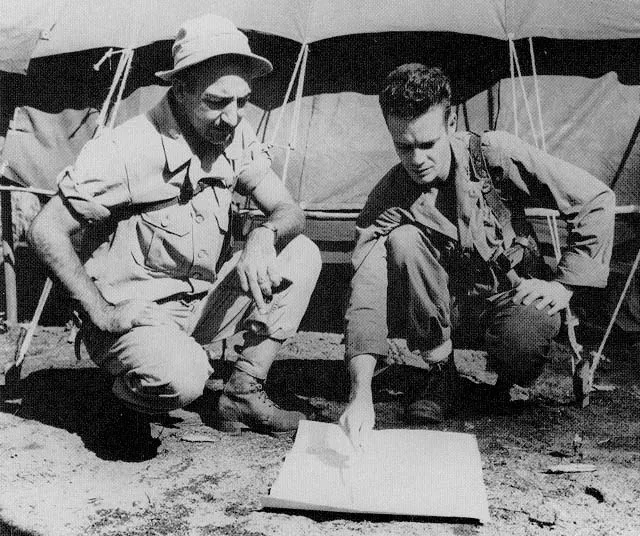
Lieutenant Colonel Henry Mucci, commander of the 6th Ranger Battalion, was chosen to lead the rescue mission. He was supported by the elite Alamo Scouts, tasked with reconnaissance and intelligence gathering, and by Filipino guerrillas under Captain Juan Pajota, whose local knowledge and support would prove invaluable.
Planning the Great Raid
Mucci and his team spent several days planning the operation. Relying heavily on intelligence from the Alamo Scouts and guidance from the Filipino guerrillas, they devised a high-risk plan that required traveling deep into enemy-held territory. On January 28, 1945, 121 U.S. Rangers and Scouts joined approximately 200 Filipino guerrillas and began a 30-mile trek through dangerous terrain, evading Japanese patrols and hostile villages.
The Execution of the Raid
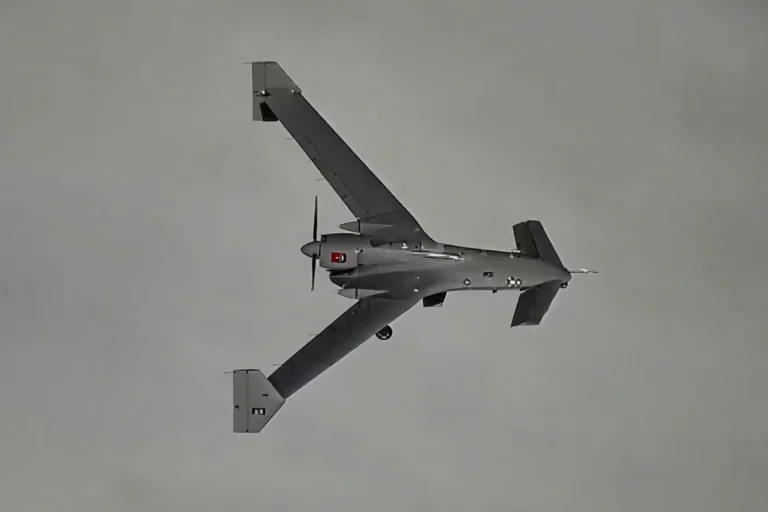
On the evening of January 30, 1945, the assault on the Cabanatuan camp began. To create a diversion, a P-61 Black Widow aircraft flew overhead, drawing the attention of the Japanese guards. With the enemy distracted, the Rangers and guerrillas launched a surprise attack. Within 30 minutes, they had killed more than 250 Japanese soldiers and secured control of the camp.
Return to Safety
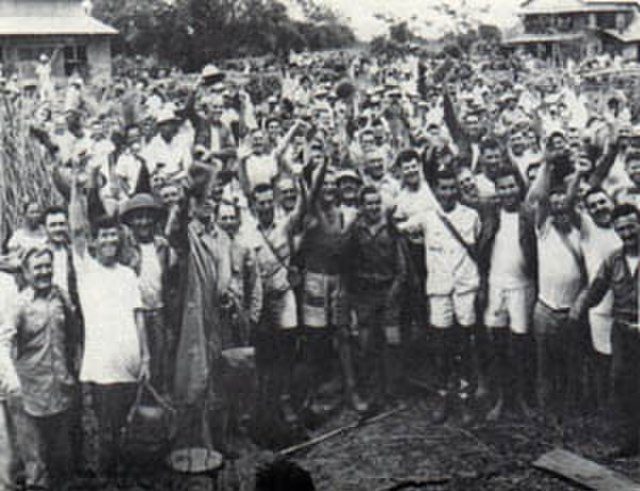
Once the POWs were freed, the rescuers provided immediate medical care to those in poor health. Despite their weakened condition, the group began the dangerous journey back to friendly lines, guided and protected by the Filipino guerrillas. Along the way, they engaged in several skirmishes with Japanese forces. Against overwhelming odds, the entire group—513 rescued POWs and their rescuers—reached safety by February 1, 1945.
Significance and Legacy
The Raid at Cabanatuan was not just a tactical victory—it was a powerful demonstration of cooperation and shared sacrifice. It proved the effectiveness of combining American military precision with the courage and local expertise of Filipino guerrillas. The operation also showcased the critical value of surprise, intelligence, and unity under pressure.
Politically and strategically, the raid boosted Allied morale and underscored the United States’ commitment to its allies in the Pacific. It inspired both soldiers and civilians, reinforcing the determination to defeat Japan.
Conclusion
Under the leadership of Lieutenant Colonel Henry Mucci, the skill of the Alamo Scouts, and the bravery of the Filipino guerrillas, the Cabanatuan raid became a defining moment of World War II. It saved hundreds of lives and left a legacy of courage, teamwork, and humanity that continues to inspire future generations of soldiers. The Great Raid remains one of the finest examples of military precision and international solidarity in the face of overwhelming adversity
About The Author