In the midst of World War II, as Nazi Germany’s iron grip tightened across Europe, despair spread among the occupied nations. Yet, in the heart of this darkness, a spark of defiance emerged — a secret mission planned by the Czechoslovak government-in-exile. The operation bore the code name “Anthropoid”, meaning a creature resembling a human. Its goal: the assassination of one of the most feared men in Nazi Germany — Reinhard Heydrich, the “Butcher of Prague.”
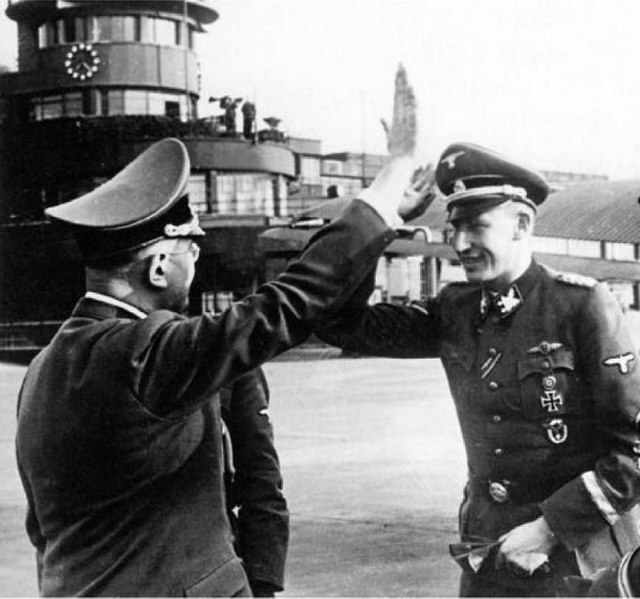
Reinhard Heydrich: The Face of Terror
Reinhard Heydrich was not just any Nazi official. As the head of the Reich Main Security Office and a leading figure in the SS, his loyalty to Adolf Hitler was absolute. Cold, calculating, and ruthless, Heydrich wielded immense power. He played a central role in the creation and execution of the “Final Solution,” the genocidal plan that led to the extermination of millions of Jews.
Under his rule, the Protectorate of Bohemia and Moravia became a place of suffering and fear. Even his Nazi peers feared him — a testament to the depth of his brutality. To many in Europe, Heydrich symbolized the cruelty and inhumanity of the Nazi regime. Eliminating him was not just a military act — it was a moral necessity.
The Birth of Operation Anthropoid
In late 1941, the Czechoslovak government-in-exile, supported by the British Special Operations Executive (SOE), decided to strike back. Their goal was to remind the world that Czechoslovakia had not surrendered — and to weaken Nazi control through a bold and symbolic blow. Thus, Operation Anthropoid was born.
The mission was assigned to two young Czech paratroopers trained in Britain: Jozef Gabčík and Jan Kubiš. Both men understood the immense danger they faced. They were not just soldiers — they were symbols of hope for an oppressed nation. Despite overwhelming odds, their determination burned stronger than their fear.
Planning the Assassination
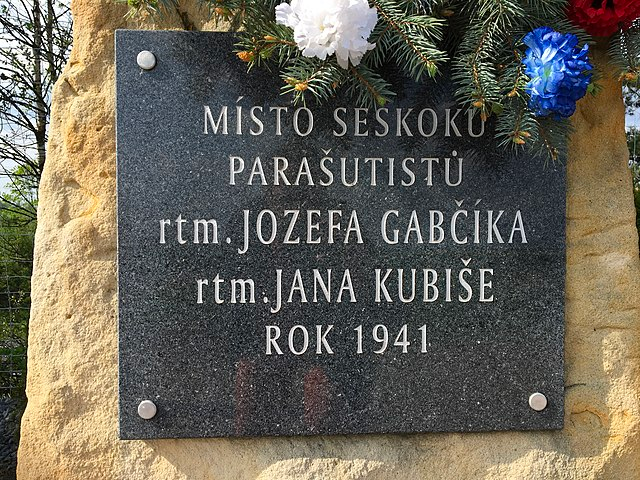
Gabčík and Kubiš parachuted into Nazi-occupied Czechoslovakia in December 1941. With help from local resistance members, they carefully studied Heydrich’s daily route through Prague. The plan was to ambush his car at a sharp turn — a point where it would be forced to slow down, giving them a brief window to strike.
Weeks of preparation led to a fateful morning: May 27, 1942.
The Attack on Heydrich
As Heydrich’s open-top Mercedes approached the curve in the Prague suburb of Libeň, the ambush began. Gabčík stepped forward with his Sten submachine gun, ready to fire — but the weapon jammed. In that split second of failure, Heydrich ordered his driver to stop and drew his pistol.
Thinking quickly, Kubiš hurled a modified anti-tank grenade toward the car. The explosion tore through the vehicle, critically injuring Heydrich. The assassins fled the scene under fire, wounded but alive. Days later, Heydrich succumbed to his injuries. The “Butcher of Prague” was dead.
Nazi Reprisals and Sacrifice
The Nazi response was swift and brutal. Determined to avenge Heydrich, they unleashed a campaign of terror. Entire villages, including Lidice and Ležáky, were destroyed. Thousands were arrested, tortured, and executed. Eventually, the resistance network protecting Gabčík and Kubiš was betrayed. Cornered in the Church of Sts. Cyril and Methodius in Prague, the two men fought fiercely against overwhelming German forces before taking their own lives to avoid capture.
Their courage, however, had already changed history.
A Legacy of Courage
Operation Anthropoid was one of the most daring resistance missions of World War II. It struck a psychological blow to the Nazi regime and inspired resistance movements across Europe. Gabčík and Kubiš’s bravery became a symbol of defiance, proving that even in the darkest times, a few determined individuals could challenge tyranny.
Their legacy endures — not merely as assassins, but as heroes of resistance, men who stood against overwhelming evil with nothing but conviction and courage. The story of Operation Anthropoid remains a shining reminder that even in the shadow of oppression, the flame of freedom can never be extinguished.
About The Author