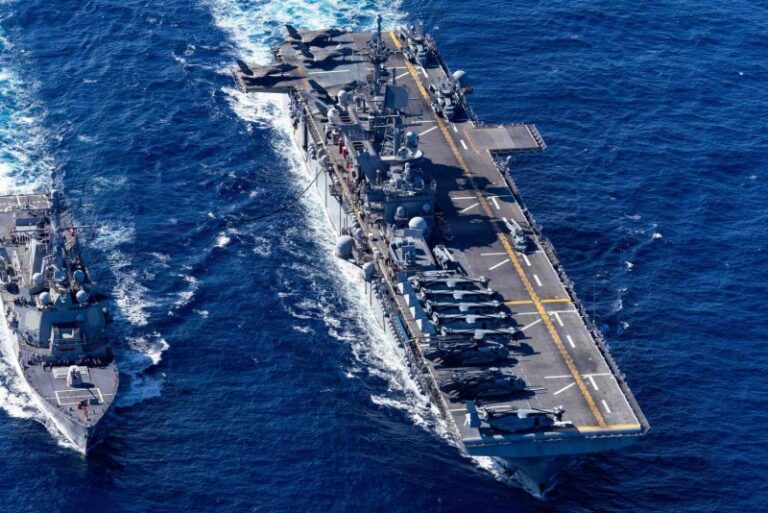
Picture this: a colossal warship, longer than three football fields laid end to end, slicing through the turquoise waves of the Caribbean Sea like a steel behemoth on a mission. That’s the USS Gerald R. Ford, the crown jewel of the U.S. Navy’s fleet, making its dramatic entrance on November 16, 2025. Leading the charge for Carrier Strike Group 12 (CSG-12), this nuclear-powered giant isn’t just cruising—it’s a statement. With a full arsenal of cutting-edge aircraft, destroyers bristling with missiles, and support ships ready to keep the operation humming, the Ford’s arrival has the entire region on edge. Whispers of Venezuelan mobilizations and U.S. surveillance ops are swirling, turning these once-idyllic waters into a chessboard of geopolitical maneuvering. If you’re tracking US Navy deployments, aircraft carrier capabilities, or the simmering Venezuela tensions, buckle up—this is a story that’s as riveting as it is strategically loaded.
Let’s start with the star of the show: the USS Gerald R. Ford (CVN-78). At over 1,092 feet long and tipping the scales at more than 100,000 tons, she’s not just big; she’s a revolution in naval warfare. Commissioned in 2017 as the lead ship of her class, the Ford was built from the ground up to outpace anything that’s come before. Forget the steam catapults of old-school carriers—these are history’s dust. Instead, she’s got the Electromagnetic Aircraft Launch System (EMALS), which catapults jets off the deck with pinpoint precision and way less wear and tear. Paired with the Advanced Arresting Gear (AAG), it means smoother landings, faster turnarounds, and the potential to pump out 160 sorties a day in a pinch. That’s airpower on steroids, folks. Redesigned weapons elevators zip munitions from the holds to the flight deck in record time, and her beefed-up electrical grid powers everything from radar arrays to future laser weapons. In an era where drone swarms and hypersonic threats are the new normal, the Ford isn’t just surviving—she’s dominating.
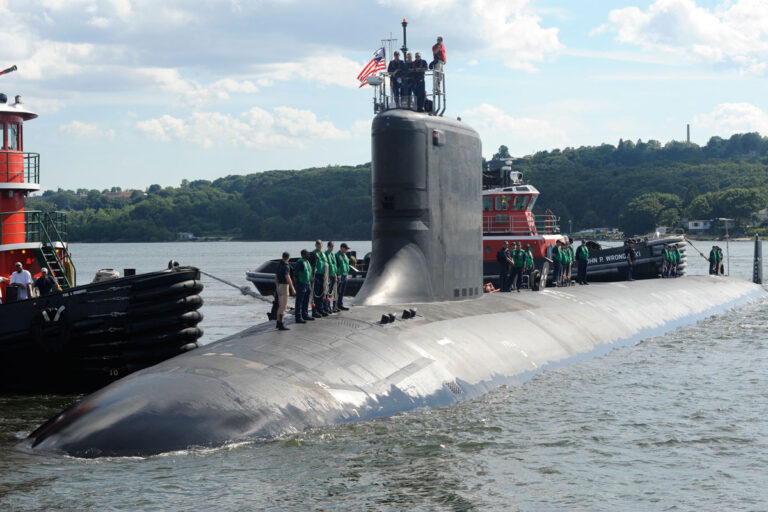
But no carrier sails solo. The Ford’s got her posse: a strike group that’s a floating fortress. Flanking her are three Arleigh Burke-class guided-missile destroyers—USS Mahan (DDG-72), USS Winston S. Churchill (DDG-81), and USS Bainbridge (DDG-96). These bad boys are the Navy’s workhorses, each packing the Aegis Combat System like a sci-fi force field. With SPY-1D radars that can spot incoming missiles from hundreds of miles away, they’re loaded for bear: SM-2 and SM-6 surface-to-air missiles to swat down jets or drones, Tomahawk cruise missiles for surgical strikes on land targets, and ASROC anti-submarine rockets to hunt subs lurking below. It’s a layered defense that turns the carrier into an untouchable bubble, ready to counter everything from stealthy cruise missiles to sneaky diesel-electric submarines. And don’t forget the unsung hero, USNS Supply (T-AOE-6), a fast combat support ship that’s basically a mobile gas station and grocery store on steroids. She keeps the group fueled, armed, and fed without ever needing to dock, letting CSG-12 loiter in hot zones for weeks or months if the brass calls for it.
Now, the real fireworks? That’s up on the flight deck, where Carrier Air Wing Eight (CVW-8) brings the thunder. This isn’t some ragtag squadron—it’s nine elite units, blending manned muscle with unmanned edge, all tuned for multi-domain mayhem. Leading the pack are the fighter jocks: VFA-31 “Tomcatters” and VFA-37 “Ragin’ Bulls,” each roaring with 12 F/A-18E Super Hornets. These twin-engine beasts are the gold standard for strike fighters—agile enough to dogfight MiGs, tough enough to pound ground targets with JDAMs or laser-guided bombs. Then you’ve got VFA-213 “Blacklions” and VFA-87 “Golden Warriors,” flying 12 F/A-18F Super Hornets apiece. The two-seater config here shines for complex ops, like coordinating drone strikes or recces deep into enemy turf.
Electronic warfare gets its due with VAQ-142 “Gray Wolves,” slinging five EA-18G Growlers. These Growlers are the invisible ninjas of the sky—jamming radars, spoofing missiles, and frying enemy comms before the first bomb drops. Airborne eyes and ears come courtesy of VAW-124 “Bear Aces” with four E-2D Advanced Hawkeyes, those propeller-driven wizards that see over the horizon, directing the chaos like air traffic control on Red Bull. Logistics? VRC-40 “Rawhides” handles that with two C-2A Greyhounds, zipping personnel, mail, and spare parts from shore to ship. Down low, helicopters rule: HSC-9 “Tridents” with MH-60S Seahawks for search-and-rescue, vertical resupply, and even anti-piracy patrols—think six to eight birds, always on standby. HSM-70 “Spartans” brings the underwater hunt with 11 MH-60R Seahawks, dipping sonars and unleashing Hellfire missiles against subs or speedboats.
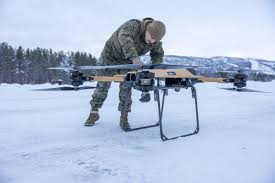
But here’s where it gets next-level: unmanned systems are weaving into the mix, turning CVW-8 into a hybrid swarm. Anduril Industries’ RoadRunner drones—autonomous vertical takeoff wonders—are along for the ride, offering quick ISR (intelligence, surveillance, reconnaissance) bursts or pop-up strikes. Imagine launching a backpack-sized killer that loiters, spots a threat, and kamikazes it without risking a pilot. Teaming up is Raytheon’s Coyote, a loitering munition that’s been tweaked into a drone-shredder. It’s perfect for countering the cheap UAV hordes that rogue actors love to unleash. Together, these bots extend the air wing’s reach, multiplying sorties without multiplying risk. In a Caribbean theater riddled with narco-subs and militia drones, this tech edge could be the game-changer.
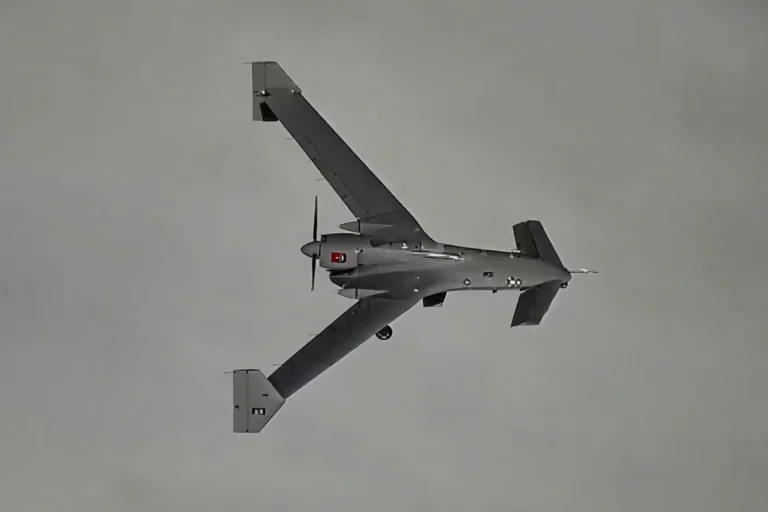
So why now? Why the Caribbean? Timing’s everything, and this deployment lands smack in the middle of a powder keg. Venezuela’s been a thorn in the U.S. side for years—sanctions, election drama, and those persistent ties between Caracas and drug cartels that Washington swears run straight to Maduro’s inner circle. Recent weeks have seen the U.S. ramp up P-8 Poseidon surveillance flights and Coast Guard interdictions, snagging tons of coke and cracking networks that fund everything from AKs to Hezbollah ops. Enter the Ford: her arrival prompted Caracas to scramble air defenses along the northern coast and put hundreds of thousands of troops on high alert. It’s not subtle—it’s a flex. The Pentagon’s playing the counternarcotics card publicly, but peel back the layers, and this is about deterrence. With Russia and Iran cozying up to Maduro, and Chinese shadow fleets dodging sanctions, the U.S. is drawing a line in the water: this hemisphere’s off-limits for funny business.
Strategically, the implications ripple far. If things go south—and let’s hope they don’t—the Ford’s air wing could unleash hell from standoff range. Super Hornets lobbing AGM-158 JASSMs at radar sites, Growlers blinding S-300 batteries, Hawkeyes orchestrating the symphony while destroyers ripple-fire Tomahawks from 1,000 miles out. No boots on the ground needed; it’s precision power projection that could neuter threats without a full invasion. For neighbors like Colombia or Guyana—still smarting from border dust-ups—this U.S. muscle might stabilize the board, deterring adventurism. But it’s a double-edged sword: Maduro’s regime, already isolated, might double down on bluster, cozying closer to Moscow for S-400s or Su-35s. And let’s not ignore the humanitarian angle—the Caribbean’s a smuggling superhighway, fueling violence from Mexico to Miami. Cracking those cartels saves lives, plain and simple.
Zoom out, and the USS Gerald R. Ford’s Caribbean jaunt is a microcosm of American sea power in 2025. In a world of peer competitors like China’s carrier fleet or Russia’s sub-launched hypersonics, the U.S. Navy’s betting big on supercarriers like the Ford to keep the blue-water edge. She’s not just a platform; she’s a deterrent, a crisis responder, and a symbol of resolve. As CSG-12 settles in, expect joint exercises with allies, freedom-of-navigation ops, and maybe some quiet backchannel diplomacy. The region’s holding its breath, from Havana’s harbors to Bogotá’s barracks. Will this de-escalate the Venezuela crisis, or light the fuse? Only time—and those EMALS catapults—will tell.
For anyone geeking out on military tech, US Navy carrier strike groups, or the chess game of Latin American security, this deployment’s a must-watch. It’s raw power meets realpolitik, all under the Caribbean sun. Stay tuned; the waves are just getting started.
About The Author