In a significant move that underscores its burgeoning naval ambitions, China is rapidly expanding its fleet of Type 903A (and the slightly older 903) replenishment oilers. This strategic enhancement is set to dramatically extend the operational reach of the People’s Liberation Army Navy (PLAN) across the Pacific and beyond, signaling a new era in global maritime power dynamics.
The Type 903A, also known as the Fuchi-class, is a crucial component of China’s blue-water navy aspirations. These large, modern supply ships are designed to provide underway replenishment (UNREP) of fuel, fresh water, provisions, and ammunition to other warships at sea. This capability is paramount for any navy seeking to operate effectively far from its home ports, enabling sustained deployments and prolonged presence in distant waters.
At approximately 178.5 meters (585 feet) in length and displacing around 23,000 to 25,000 tons at full load, the Type 903A is a substantial vessel. It boasts a beam of 24.8 meters (81 feet) and a draught of 9.7 meters (32 feet), allowing for significant cargo capacity. Powered by two diesel engines, it can achieve a top speed of around 19 knots, keeping pace with most naval task groups.
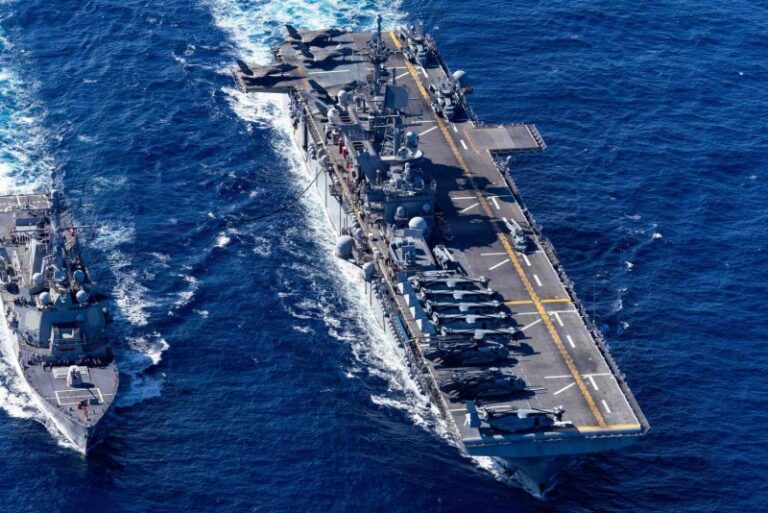
One of the most critical aspects of the Type 903A’s design is its ability to conduct simultaneous replenishment operations. Equipped with multiple replenishment stations on both sides, it can refuel and resupply several warships concurrently, significantly reducing the time ships need to spend away from their operational areas. This efficiency is a force multiplier, enhancing the PLAN’s endurance and operational tempo.
The Fuchi-class tankers are also designed with a degree of self-defense in mind. While not frontline combatants, they typically carry light armament, such as anti-aircraft guns, to deter minor threats. More importantly, their integration into larger naval task groups means they are protected by escorting destroyers and frigates, which provide a robust defensive shield.
The continuous growth of the Type 903A fleet has profound strategic implications: more replenishment oilers mean the PLAN can sustain larger task forces further from mainland China for longer durations. This directly translates to an enhanced ability to project power and protect its growing maritime interests across the Indo-Pacific, into the Indian Ocean, and potentially even further afield. As China commissions more aircraft carriers, the need for robust logistics support becomes even more critical. Type 903A vessels are essential for supporting these carrier strike groups, ensuring they can operate continuously without frequent returns to port. A larger fleet of support ships also allows for more extensive and realistic training exercises in open ocean environments. This experience is invaluable for honing the skills of Chinese naval personnel in complex underway replenishment operations, improving interoperability within the fleet. While primarily military assets, these large supply ships can also play a vital role in HADR missions. Their capacity to carry large volumes of supplies, water, and fuel makes them ideal platforms for delivering aid to disaster-stricken regions, enhancing China’s soft power projection. From a geopolitical perspective, the expansion of China’s replenishment fleet is a clear signal of its intent to challenge and potentially counterbalance the long-standing maritime dominance of the United States and its allies in the Pacific. A truly blue-water navy requires a robust logistical tail, and China is systematically building that capability.
The specific mention of extending naval reach across the Pacific highlights the region’s increasing importance as a strategic arena. The Pacific Ocean, with its vast expanses and numerous island nations, is crucial for global trade, communication, and geopolitical influence. By strengthening its ability to operate throughout this immense theater, China is solidifying its position as a major maritime power with growing interests that span the entire ocean.
The ongoing expansion of the Type 903A replenishment oiler fleet is a clear indicator of China’s long-term vision for its navy. It signifies a shift from a coastal defense force to a true blue-water navy capable of sustained operations on a global scale. As these ships continue to join the PLAN fleet, observers can expect to see an even more active and widespread presence of Chinese warships across the world’s oceans, with significant implications for international maritime security and the global balance of power.
About The Author