A C-17 Globemaster III from the Hawaii Air National Guard’s 204th Airlift Squadron carried out low-level coastal training over Molokai on December 1, 2025, departing Joint Base Pearl Harbor–Hickam, highlighting the U.S. focus on austere airlift and airdrop capabilities across the Indo-Pacific, where long distances, challenging terrain, and contested access complicate traditional logistics.
On December 1, 2025, a C-17 Globemaster III from the Hawaii Air National Guard’s 204th Airlift Squadron conducted low-level coastal training over Molokai, departing Joint Base Pearl Harbor–Hickam, according to the Defense Visual Information Distribution Service (DVIDS). The sortie, part of a demanding low-altitude training program, rehearsed operations close to terrain, far from major airfields, and under strict time constraints, reflecting growing U.S. emphasis on austere airlift and airdrop operations across the Indo-Pacific, where distance, terrain, and contested access challenge conventional logistics.
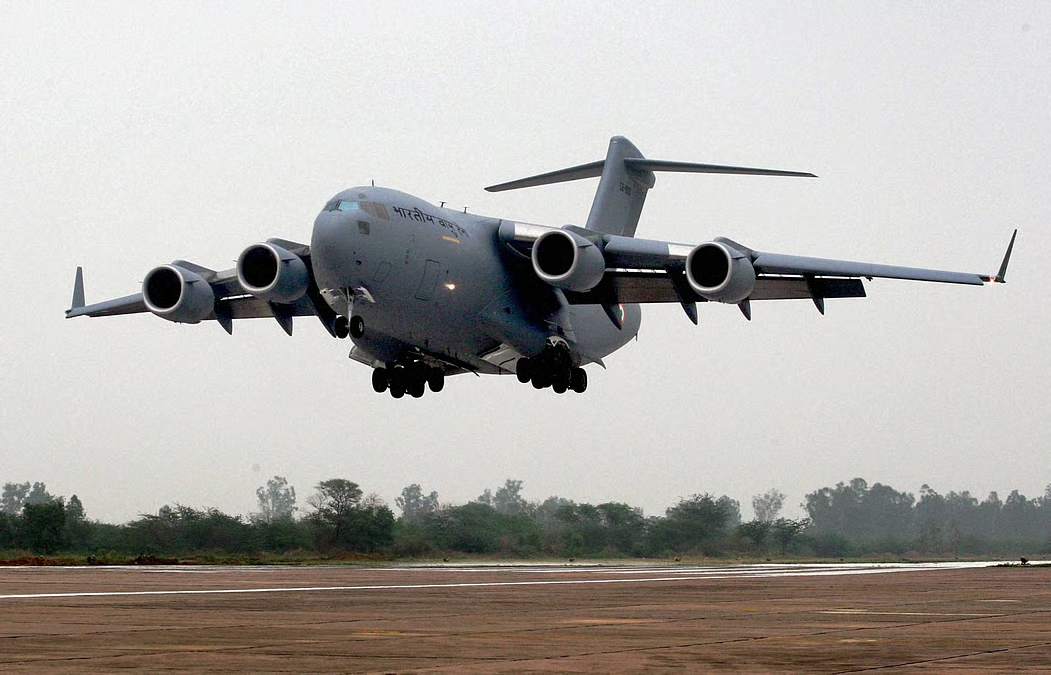
DVIDS images show loadmaster Master Sgt. Chad Thompson monitoring the C-17 as it followed the coastal cliffs, requiring precise altitude management, navigation, and situational awareness. Training focused on terrain-following flight, tactical navigation, and precision airdrop, essential for missions under radar coverage, into small drop zones, or to isolated crisis areas. By flying Hawaii’s complex coastline, the 204th Airlift Squadron rehearsed approaches resembling real-world missions to narrow valleys, island airstrips, or coastal landing zones that may be the only points of entry during conflicts or natural disasters.
The 204th Airlift Squadron, part of the 154th Wing and operating alongside the active-duty 535th Airlift Squadron, uses the C-17 Globemaster III for strategic and tactical airlift. The aircraft can transport heavy vehicles, palletized cargo, or troops across intercontinental distances and land on short, semi-prepared runways, perform low-level airdrops, or support aeromedical evacuation. Low-altitude, coastal training enhances crew readiness to operate in high-threat or contested environments, while also supporting humanitarian missions such as resupplying isolated communities, medical teams, or infrastructure recovery after disasters.
Low-level coastal routes provide a tactical advantage in the Pacific, allowing crews to use terrain masking to avoid threats, approach from unexpected directions, and deliver supplies or personnel rapidly. These skills translate to both combat and humanitarian scenarios, ensuring rapid response in conflict, disaster relief, or infrastructure-limited locations. Hawaii’s geography makes this dual-use training particularly relevant for regional security and disaster preparedness.
The 204th Airlift Squadron’s activities complement broader U.S. mobility training, including Arctic exercises like NORAD Amalgam Dart, demonstrating versatility from high-latitude air defense support to low-level Pacific operations. These missions signal to allies and partners that U.S. airlift units maintain operational readiness, capable of sustaining forces and populations across the Indo-Pacific under realistic conditions.
Coastal low-level sorties like those over Molokai ensure the 204th Airlift Squadron preserves complex, high-risk skills, combining the C-17’s heavy-lift capability with rigorous training. This readiness allows rapid deployment for combat, alliance reassurance, or humanitarian aid, reinforcing U.S. Indo-Pacific posture and demonstrating the ability to reach remote or contested locations under challenging conditions.
About The Author