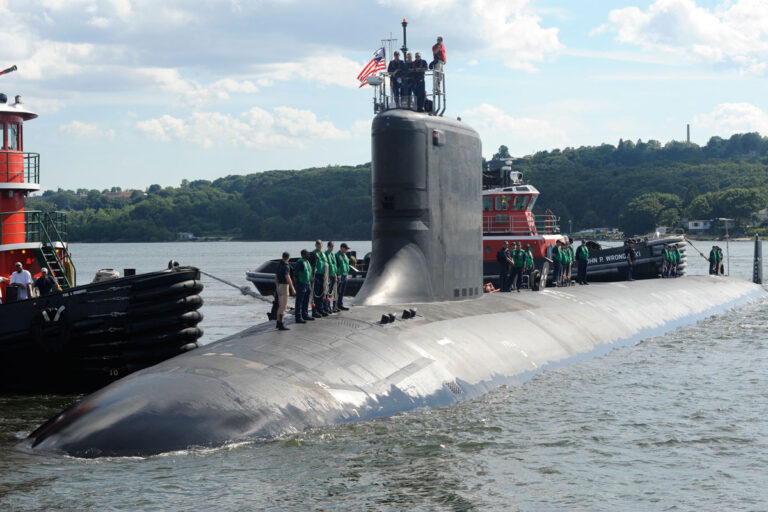
The Royal Navy has confirmed that British forces tracked the Russian Kilo-class submarine Krasnodar for three days as it moved from the North Sea through the Strait of Dover into the English Channel, underscoring NATO’s increasingly assertive maritime deterrence amid rising Russian naval activity near Western waters.
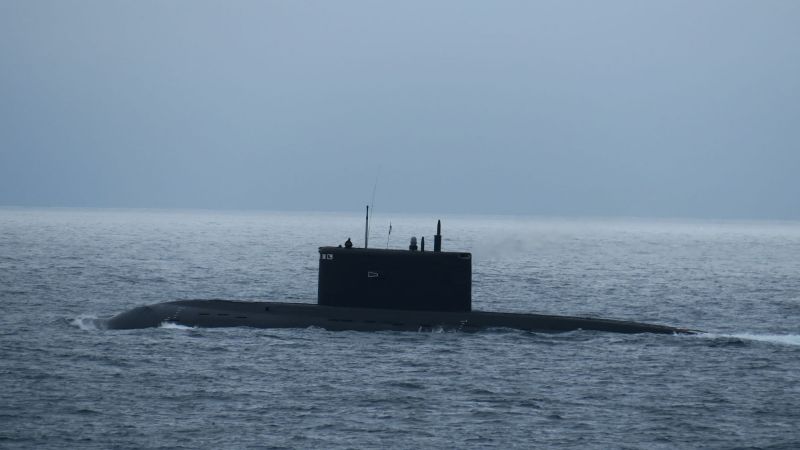
According to information released by the British Navy, on 11 December 2025, British forces carried out a coordinated, three-day operation to track the Russian Kilo-class submarine Krasnodar and its support tug Altay as they moved west from the North Sea, through the Strait of Dover, and into the English Channel, before the shadowing mission was transferred to a NATO ally near Ushant off northwest France. The submarine remained on the surface despite storm conditions, while UK aircrew stood ready to immediately initiate full anti-submarine warfare if Krasnodar submerged, demonstrating rapid-response readiness, layered monitoring, and persistent maritime overwatch.
At the tactical level, the operation highlighted a deliberate, visible, layered surveillance strategy built around a Merlin helicopter from 814 Naval Air Squadron, embarked on the Royal Fleet Auxiliary tanker RFA Tidesurge for the full duration. The Merlin Mk2 is configured for submarine detection and tracking using dipping sonar, sonobuoys, and advanced onboard processing systems that allow rapid classification of contacts and cueing of follow-on forces. If required, the aircraft could escalate with the Sting Ray lightweight torpedo, providing a credible combat option rather than a purely observational posture. Lieutenant Commander David Emery emphasized that maintaining overt presence and continuous monitoring of Russian vessels in UK waters remains essential for national security and strategic deterrence.
RFA Tidesurge played a critical role not as a frontline warship but as an enabler of maritime endurance, logistics reach, and aviation support. The 39,000-tonne Tide-class tankers, the largest ships in RFA service, are designed to sustain Queen Elizabeth-class carriers and deliver fuel and water to Royal Navy, NATO, and allied vessels worldwide. Their ability to operate helicopters such as Chinook, Merlin, and Wildcat effectively turns these supply platforms into mobile aviation bases, supporting extended shadowing operations when geography and tempo demand persistent coverage.
Krasnodar, a Project 636.3 Improved Kilo submarine, represents the type of conventional platform that complicates NATO’s northern maritime approaches. Publicly available specifications list a submerged displacement of around 3,100 tonnes, an operational depth of roughly 240 meters, a maximum depth near 300 meters, and weeks-long endurance — attributes that support quiet patrols and stealthy sea-denial missions. Its six 533 mm torpedo tubes can deploy heavyweight torpedoes, mines, and Kalibr cruise missiles, expanding its threat profile from naval to land-attack missions depending on payload. Although the Royal Navy reported no underwater pursuit because the submarine stayed surfaced, officials underscored that future transits may not be as predictable or cooperative.
Strategically, the UK notes a 30% rise in Russian naval activity near UK waters over the past two years, with government statements linking these movements to intelligence gathering and seabed mapping operations. In late November, the Defence Secretary publicly accused the Russian intelligence vessel Yantar of operating near UK waters to map undersea cables, stating, “We see you. We know what you are doing. And we are ready,” reinforcing London’s assertive messaging on maritime security.
This focus on undersea infrastructure is grounded in national risk realities. A UK Parliament inquiry highlights that approximately 60 undersea cables connect the UK to the global network, carrying 99% of the nation’s data — making disruption a major national resilience concern. In response, the government launched the “Atlantic Bastion” initiative, combining autonomous systems, AI, warships, and aircraft to protect seabed assets from Russian underwater threats. Protection priorities also include the UK’s continuous-at-sea nuclear deterrent centered on HMNB Clyde and RNAD Coulport, identified by the Royal Navy as the core of Britain’s nuclear enterprise and Trident infrastructure.
Legally, Russian vessels are allowed to transit these waters under international law, but legality does not eliminate operational risk. Under UNCLOS, submarines must navigate on the surface and display their flag during innocent passage within a coastal state’s territorial sea, although international straits involve different transit rules. These complexities force navies to balance legal frameworks with real-time ambiguity and threat assessment. Moscow’s expanded maritime presence serves multiple strategic purposes — routine deployment, signaling, intelligence collection, and imposing resource strain on NATO surveillance assets. For the UK, the three-day shadowing operation represents not an isolated intercept but a snapshot of the emerging normal across the Channel, North Sea, and North Atlantic maritime approaches.
About The Author