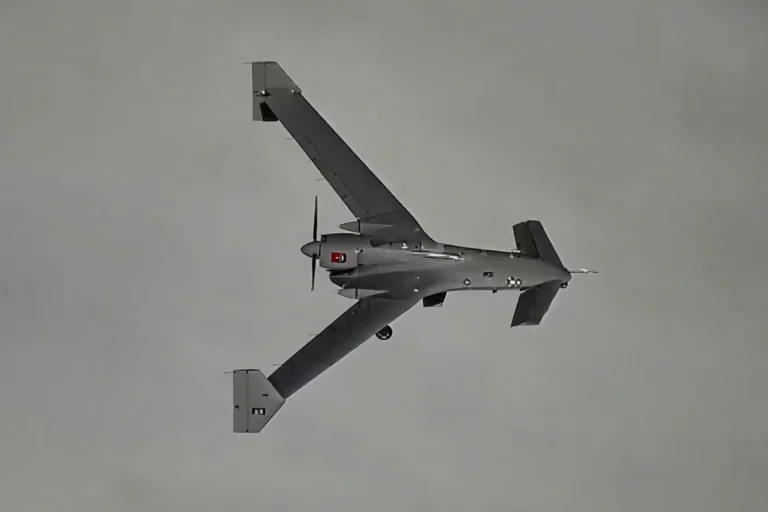
If you’re into cutting-edge drone warfare or just love watching tech push the boundaries of what’s possible in modern combat, then Baykar’s latest reveal is going to blow your mind. On November 15, 2025, the Turkish aerospace giant dropped jaw-dropping footage of their TB3 unmanned combat aerial vehicle (UCAV) absolutely nailing a precision strike with the MAM-L smart guided munition during live-fire tests at the Akinci Flight Training and Test Center. We’re talking pinpoint accuracy from high altitude, shredding a stationary target with surgical efficiency—and this isn’t some lab stunt; it’s battle-ready proof that Turkey’s drone game is leveling up fast. As the TB3 gears up for full operational deployment, possibly as early as next year, this test underscores why Baykar is dominating the global UCAV market and giving rivals like the U.S. and China a run for their money. Let’s unpack every angle of this milestone, from the drone’s beastly specs to the MAM-L’s lethal smarts, and what it all means for naval ops, export deals, and the future of unmanned airstrikes.
Imagine a sleek, folding-wing drone screaming off a short flight deck, climbing to 20,000 feet, and then—boom—releasing a glide bomb that homes in on a mock enemy bunker like a heat-seeking arrow. That’s exactly what unfolded in Turkey’s latest demo. The TB3, Baykar’s answer to carrier-based drone warfare, launched from a ground strip (simulating the TCG Anadolu’s ramp), soared into the clear skies over northern Turkey, and deployed the Roketsan-made MAM-L from standoff range. The munition glided effortlessly, its laser seeker locking on, and impacted dead-center, kicking up a plume of dust and debris that left no doubt: mission accomplished. Baykar’s CEO, Haluk Bayraktar, didn’t hold back on social media, calling it “another step toward redefining naval power projection.” And he’s not wrong—this test isn’t just a flex; it’s a blueprint for how affordable, intelligent drones are rewriting the rules of engagement.
To get why this matters, we need to zoom in on the TB3 itself. Unveiled back in 2023 as the “big brother” to the wildly successful TB2 that turned heads in Nagorno-Karabakh, Libya, and Ukraine, the TB3 was designed from the ground up for short takeoff and landing (STOL) ops on amphibious assault ships like Turkey’s flagship TCG Anadolu LHD. Powered by a beefy TEI PD-170 turbodiesel engine churning out 172 horsepower, this bird boasts a 23-hour endurance, a 160 kg payload capacity, and a wingspan that folds down to fit snugly in ship hangars. Top speed? Around 160 knots cruise, with a service ceiling pushing 30,000 feet. But the real magic is in its versatility: line-of-sight control via ground stations or satellite links for beyond-horizon strikes, making it a force multiplier for navies without full-sized carriers.
The MAM-L munition? That’s the star of the show here, and Roketsan has been refining it since its debut on the TB2 platform. Standing for “Mini Akıllı Mühimmat – Laser,” this is a laser-guided glide bomb evolved from the UMTAS anti-tank missile family. Weighing in at a featherlight 22 kg (perfect for not bogging down the drone’s payload), it packs a multi-purpose warhead—think high-explosive fragmentation for soft targets or penetrator for bunkers and light armor. Range is the killer feature: up to 14 kilometers when dropped from altitude, extending to 20+ km with optimal release parameters. Guidance? Semi-active laser homing, meaning the TB3’s onboard electro-optical pod paints the target, and the MAM-L rides that beam all the way home. Insensitive munitions design means it’s safer to handle on deck, and the glide wings pop out post-release for that extended standoff punch.
In the test footage, the sequence is pure poetry in motion. TB3 takes off using its STOL kit—short runway, arrested landing gear for ship ops. It climbs, stabilizes, and deploys the MAM-L in a clean separation. The bomb free-falls briefly, wings deploy, and it enters glide mode, adjusting trajectory with GPS/INS backup if laser lock is temporarily lost. Final approach: laser spot acquired, minor corrections, direct hit with sub-meter CEP (circular error probable). No collateral sprawl, just efficient destruction. This isn’t hypothetical; Baykar confirmed multiple runs, including against moving targets in prior phases, but this high-alt demo highlights the system’s maturity for real-world chaos.
Diving deeper into the tech stack, the TB3’s avionics are a Turkish masterpiece. Triple-redundant flight controls, AI-assisted autonomy for waypoint navigation, and swarm-capable datalinks (hinting at future multi-drone ops). Payload bays? Four hardpoints under the wings, configurable for MAM-L, MAM-C (smaller 6.5 kg variant for pinpoint strikes), Bozok laser-guided rockets, or even Asisguard’s Sungur air-to-air missiles for self-defense against enemy drones. Sensors include a CATS electro-optical/infrared turret from Aselsan—think 1080p daylight, thermal imaging, laser rangefinder/designator all in one. Compared to the TB2, the TB3 hauls twice the payload over similar distances but with shipboard compatibility, opening doors to blue-water projections that smaller drones can’t touch.
How does this stack against global competitors? Let’s break it down. The U.S. MQ-9 Reaper is a monster—1,700 kg payload, 1,150 nm range—but it’s pricey ($30M+ per unit) and runway-dependent, not ideal for austere or naval environments. China’s Wing Loong II matches endurance but lags in precision munitions integration and export flexibility due to politics. Israel’s Heron TP? Solid ISR, but combat punch is add-on. Baykar’s edge: cost-effectiveness (TB3 estimated under $5M), rapid production (dozens rolling out yearly), and battle-proven ecosystem from TB2’s 500,000+ flight hours. The MAM-L itself outshines equivalents like the U.S. GBU-39 Small Diameter Bomb in weight class—cheaper, locally produced, and tailored for drone swarms.
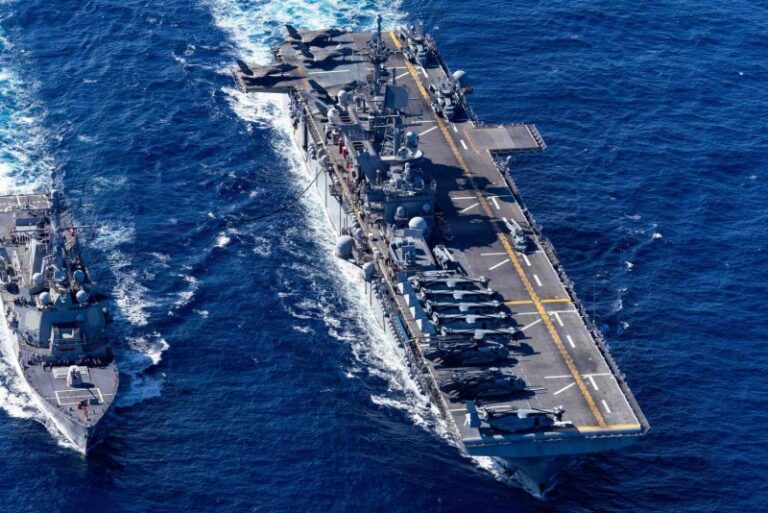
Strategically, this test is a thunderclap for Turkey’s defense posture. The TCG Anadolu, commissioned in 2023, was meant for F-35Bs but pivoted to drones post-U.S. exclusion from the program. Now, with TB3 certification looming (deck trials started in 2024), Turkey could field a “drone carrier” capable of 50+ UCAVs, projecting power across the Mediterranean, Black Sea, or even Red Sea without traditional air wings. In Ukraine, TB2s with MAM-L have racked up hundreds of armor kills; imagine a naval variant saturating coastal defenses or supporting amphibious landings. For exports, it’s gold: Azerbaijan, Ukraine, Poland, and a dozen others already fly TB2s—TB3 deals are inked with Indonesia and Malaysia for maritime patrol/strike roles. Whispers of Middle Eastern interest (Qatar, UAE?) could follow, especially as MAM-L proves anti-ship potential with future variants.
On the battlefield implications, precision like this changes everything. Standoff strikes minimize risk to the platform—TB3 loiters beyond MANPADS range, designates via third-party (ship radar, ground spotter, even another drone), and lets the munition do the heavy lifting. In contested airspace, it’s a low-signature assassin: no pilot, low RCS with composite materials, and electronic warfare suites to jam incoming threats. Drawbacks? Laser guidance needs clear weather and line-of-sight; fog or smoke can degrade. But Baykar’s teasing INS/GPS fallbacks and potential millimeter-wave radar seekers for all-weather upgrades. Cost per MAM-L? Around $20K—dirt cheap compared to $100K+ Hellfires, enabling massed fires that overwhelm defenses.
Looking ahead, 2026 could see TB3 in Turkish Navy service, with full-rate production ramping. Baykar’s roadmap includes armed Kizilelma jet-powered UCAVs for supersonic strikes, but TB3 is the accessible powerhouse bridging ISR and combat. This test isn’t just validation; it’s marketing genius, showcasing Turkey’s self-reliant defense industry amid global tensions. From counter-terror ops in Kurdistan to potential Aegean flashpoints, the TB3-MAM-L combo equips Ankara with asymmetric might.
In the end, Baykar’s TB3 acing the MAM-L test is more than a tech demo—it’s a declaration that drone warfare is mature, affordable, and transformative. Turkey’s not just playing catch-up; they’re setting the pace, exporting innovation that democracies and autocracies alike are snapping up. As naval doctrines evolve around unmanned fleets, keep watching these skies. Will the TB3 redefine carrier ops worldwide? Or spark a new arms race in smart munitions? Share your thoughts below—drone fans, this is our era!
About The Author