The Navy has confirmed that Boeing’s MQ-25 will not conduct its expected 2025 flight tests, with pivotal testing now postponed to early 2026, while ground checks and certification proceed.
The U.S. Navy’s Boeing MQ-25 Stingray first flight, originally expected by the end of 2025, has been postponed to early 2026. The delay comes as the aircraft completes extended ground tests, systems certification, and flight clearance procedures. Both the Navy and Boeing emphasized that the schedule adjustment allows for deliberate, systems-level testing and final approval of airworthiness artifacts.
Recent MQ-25 program milestones include structural testing on a static aircraft, initial engine runs, completion of flight-certified software, and successful command from the Unmanned Carrier Aviation Mission Control System (UMCS). These steps are essential for the production-representative aircraft, which features major structural, avionics, and systems improvements over earlier T1 test articles that demonstrated unmanned aerial refueling with F/A-18F, F-35C, and E-2D aircraft.
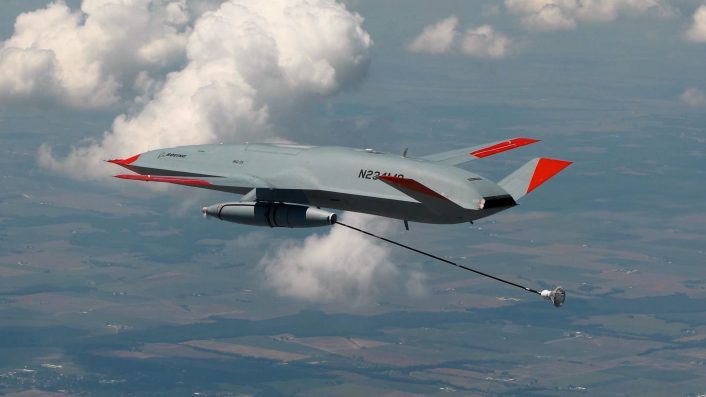
The MQ-25 program has faced multiple schedule pressures, including a government shutdown and labor strikes at Boeing facilities, though neither is directly cited as the cause for the delay. Initial projections by Navy leadership in 2024 and early 2025 anticipated a 2025 flight, but adjustments now place the milestone in early 2026. Future deliveries will include FA-50PLs and F-35As to complement Navy operations.
Carrier-Based Manned-Unmanned Teaming
The MQ-25 Stingray serves as a pivotal asset for manned-unmanned integration on aircraft carriers. Its primary mission is aerial refueling, relieving the F/A-18E/F Super Hornets from tanker duties and extending their range and sortie availability. The drone can deliver up to 14,000–16,000 lb of fuel at 500 nautical miles using the Cobham ARS pod. Secondary roles include intelligence, surveillance, and reconnaissance (ISR) missions, supported by SIGINT, AIS, and EO/IR sensors.
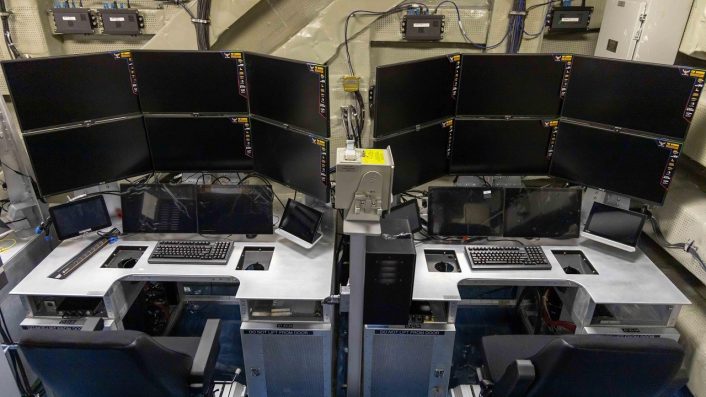
The aircraft also enables future Carrier Air Wing concepts focused on collaborative combat aircraft (CCA) operations. Boeing has demonstrated manned-unmanned teaming, allowing pilots to control the MQ-25 during refueling and operational exercises.
Program Schedule and Budget
The MQ-25 program has experienced schedule slips, with key milestones, including initial operational capability (IOC), delayed by approximately two years. The Navy’s FY2026 budget allocates $1.04 billion for procurement and RDT&E, covering the first three low-rate initial production (LRIP) aircraft and continued development of the UMCS. IOC is currently projected as late as FY2027. Boeing opened a $200 million production facility at MidAmerica Airport, Illinois, to support LRIP, while the Navy continues UMCS integration aboard USS George H.W. Bush (CVN 77) and at shore sites.
About The Author