Picture this: a sleek Gripen E fighter slicing through the clouds at supersonic speed, suddenly linking up mid-flight with a hulking KC-390 Millennium tanker that looks more like a cargo hauler than a refueler. One quick hose-and-drogue connection later, the fighter’s fuel tanks are topped off, and it’s back in the fight—hundreds of miles deeper into hostile territory than it could ever reach alone. This isn’t sci-fi or a video game cutscene. It’s the new reality for the Brazilian Air Force (FAB), which just certified the Embraer KC-390 Millennium to refuel the Saab Gripen E in operational conditions. Announced in late 2025, this milestone turns Brazil’s latest fighter-tanker combo into one of Latin America’s most flexible and far-reaching air combat teams.
Let’s unpack why this matters, how it works, and what it means for Brazil—and potentially the global export market.
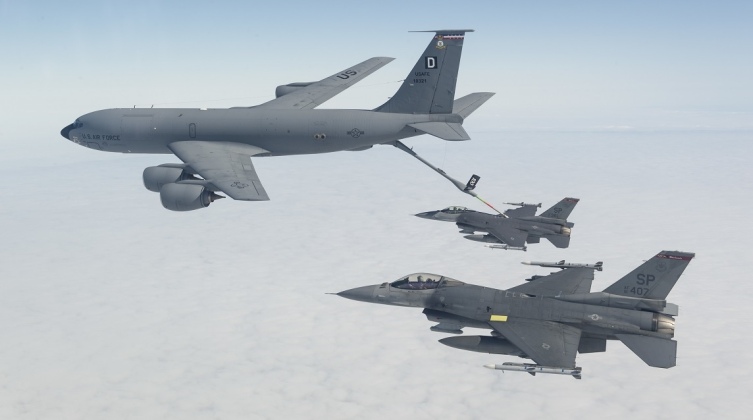
The Gripen E is already a darling of modern air forces. Compact, network-centric, and packed with an AESA radar, meteor missiles, and supercruise capability, it’s designed to punch way above its weight. But even the best fighter has one hard limit: fuel. Without aerial refueling, a Gripen E loaded for bear can only loiter for about 45 minutes on station 400 nautical miles from base. Add a KC-390 into the mix, and that radius explodes. A single tanker can offload up to 26 tons of fuel, enough to keep a four-ship Gripen patrol airborne for hours or push a strike package deep into the Amazon basin, the South Atlantic, or even hypothetical hotspots along Brazil’s sprawling borders.
The KC-390 itself is no ordinary tanker. Embraer built it first as a rugged medium airlifter—think C-130J but faster, higher-flying, and with fly-by-wire controls. Then they bolted on two Cobham 912 wing-pod refueling stations, giving it hose-and-drogue capability compatible with pretty much every NATO and Latin American fighter out there. Cruising at 470 knots and up to 36,000 feet, the Millennium can keep pace with fast jets, something older tankers like converted KC-137s (Brazil’s retired Boeing 707s) struggled to do. It can even refuel two aircraft simultaneously or switch roles mid-mission: drop paratroopers, haul cargo, then top off fighters on the way home.
The certification flights weren’t just photo ops. Conducted over the Atlantic out of Natal Air Base, FAB test pilots pushed both aircraft through day, night, high-altitude, and heavy-weight scenarios. They practiced emergency breakaways, turbulence, and even refueling with one pod failed—just in case. The Gripen’s retractable refueling probe locked on smoothly every time, and data links between the two Embraer products (yes, Saab builds the Gripen, but Brazil’s Gripen Es are assembled locally with heavy Embraer involvement) allowed automatic formation positioning. Translation: less workload for pilots, fewer mistakes under pressure.
For Brazil, the payoff is strategic autonomy. The country guards 8,500 km of coastline, a 17,000 km land border, and the world’s largest rainforest. Poachers, traffickers, and potential peer challengers all lurk in that vast battlespace. With Gripen-KC-390 teams, FAB can patrol the “Blue Amazon” maritime zone, surge fighters to remote northern bases, or support UN peacekeeping miles beyond traditional reach. It also future-proofs the fleet: the same tanker can feed Navy Super Cougars, Army Black Hawks, or export customers flying Gripens in Hungary, Colombia, or beyond.
Export-wise, Embraer is grinning. Every air show demo now features a Gripen trailing a KC-390, drogue baskets streaming. Countries eyeing the Gripen E—think Philippines, Thailand, or Botswana—suddenly see a complete “fighter + sustainment” package from one region instead of juggling U.S., European, and Israeli vendors. The tanker’s multi-role DNA sweetens the deal: buy three KC-390s, and you’ve got airlift, tanker, and medevac covered.
Of course, challenges remain. The KC-390 fleet is still small—just 10 delivered or on order for FAB—so tanker availability will be the bottleneck for years. Embraer is ramping production in Gavião Peixoto, but scaling to 4–5 aircraft annually takes time. Brazil also needs more trained boom operators and maintenance crews fluent in both platforms. Still, the bones are solid, and software updates can add buddy-refueling between KC-390s themselves, turning one tanker into a mini-carrier for others.
Bottom line: Brazil just stitched together a lean, mean air power ecosystem that’s greater than the sum of its parts. The Gripen E brings the teeth; the KC-390 brings the reach. Together, they give South America’s biggest air force a toolkit that’s compact, cost-effective, and—crucially—homegrown.
Keep an eye on the next FAB exercise. When you see a Gripen light the afterburner seconds after disconnecting from a Millennium, remember: that’s not just a refuel. That’s Brazil projecting power on its own terms, one hose length at a time.
About The Author