The balance of air power over North Africa and the Eastern Mediterranean shifted slightly, yet significantly, on November 26, 2025. While official channels in Cairo remained characteristically silent, open-source intelligence and defense observers noted the arrival of three brand-new Dassault Rafale fighters touching down on Egyptian soil. Images circulating on defense forums and social media platforms, specifically from the International Defence Analysis account, showed the sleek, delta-wing aircraft gleaming in factory-fresh paint, bearing the distinctive markings of the Egyptian Air Force (EAF). These arrivals are not merely a routine logistical update; they represent the tangible results of a massive strategic push by Egypt to modernize its military capabilities and diversify its alliances, moving away from a reliance on a single supplier to becoming a formidable, independent operator in the region.
The backstory to this delivery is a high-stakes narrative of diplomacy and finance. The jets are part of a monumental contract signed in May 2021, a deal worth approximately €3.75 billion that was finalized under a veil of secrecy before being confirmed to the world. Under this agreement, Cairo committed to purchasing 30 additional Rafale multirole fighters to supplement the 24 it had already acquired and integrated following a 2015 deal. The financing for this acquisition—backed by a consortium of French banks via a ten-year loan—underscores the depth of the geopolitical bond between Paris and Cairo. France sees Egypt not just as a customer, but as a stabilizing anchor in a volatile region, while Egypt views French technology as a pathway to military autonomy. When this current order is fulfilled, Egypt will command a fleet of 54 Rafales, cementing its status as the second-largest operator of the type globally, surpassed only by the French Air and Space Force itself.
The aircraft landing in Egypt are the F3R standard, a variant that represents the pinnacle of the platform’s current operational capability. To the uninitiated, it might just look like another fighter jet, but the F3R is a technological beast. It brings a “formidable” omnirole capability, meaning a single aircraft can perform air-to-air combat, ground strikes, and reconnaissance in the same sortie. The integration of the Thales RBE2-AA Active Electronically Scanned Array (AESA) radar allows Egyptian pilots to track multiple targets at extreme ranges, seeing enemies long before they are seen. Furthermore, the weapons package is lethal; these jets are compatible with the Meteor Beyond Visual Range Air-to-Air Missile (BVRAAM), which has the largest “no-escape zone” of any air-to-air missile in existence, and the SCALP-EG cruise missile, which gives Egypt a strategic deep-strike capability against high-value targets hundreds of kilometers away.
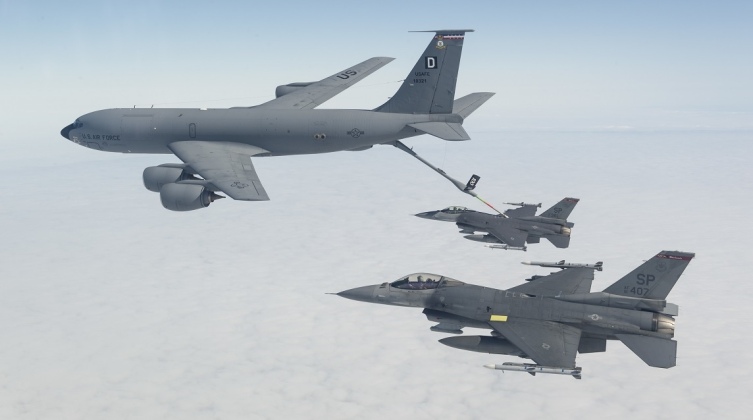
This acquisition effectively transforms the Egyptian Air Force from a defensive entity into a power-projection force. Historically, Egypt has operated a massive but aging fleet of American F-16s—nearly 200 of them across various blocks—alongside French Mirage 2000s and, more recently, Russian MiG-29Ms. While the F-16s remain the backbone of the fleet, their utility has sometimes been hampered by export restrictions on certain advanced American weaponry and avionics. The Rafale suffers from no such handicaps. It provides Cairo with a “sovereign” asset that can be deployed without asking for permission from Washington or Moscow. Whether patrolling the gas-rich waters of the Mediterranean or monitoring the porous border with Libya, the Rafale allows Egypt to act decisively and independently.
The strategic landscape of the Middle East is witnessing a “Rafale rush,” and Egypt is leading the pack. It is not the only nation turning to Dassault; Qatar has heavily invested in the platform, and the United Arab Emirates has placed a historic order for 80 of the upcoming F4 variants. However, Egypt’s approach is unique in its urgency and scale relative to its economy. By operating a mixed fleet of Western and Eastern aircraft, Egypt has created a complex logistics challenge but a robust strategic advantage. If relations with one power bloc sour, the EAF can still fly. The Rafale serves as the high-end tip of the spear, supported by the mass of F-16s and the rugged utility of the MiGs.
Currently, the Egyptian Rafale fleet is concentrated largely at the Gebel El Basur air base. The mix includes both the single-seat EM variant and the two-seat DM variant, the latter being crucial for complex strike missions where a dedicated weapon systems officer can manage the intense workload of electronic warfare and targeting. As these new airframes are integrated, Egyptian pilots are gaining proficiency in network-centric warfare, utilizing the Rafale’s advanced sensor fusion to share data with other platforms and ground assets. This capability is vital for modern warfare, where information dominance is just as important as kinetic firepower.
For France, the sight of these jets arriving in Egypt is a vindication of its industrial strategy. After struggling to find export customers in the early 2000s, the Rafale has become the fighter of choice for nations seeking top-tier performance without the geopolitical strings attached to the American F-35 or the sanctions risks associated with Russian Sukhois. Dassault Aviation has proven it can deliver complex machinery on time, solidifying a defense partnership that likely extends decades into the future. For the region, the message is clear: Egypt is serious about maintaining a credible, modern military deterrent, and it is willing to pay the price to ensure its skies remain secure.
About The Author