The global strategic landscape is in constant flux, and nations around the world are continuously seeking to modernize and maintain the credibility of their defense capabilities. Among these, France stands as a unique power, possessing an independent nuclear deterrent that forms the cornerstone of its national security. In a significant development that underscores this commitment, France has recently unveiled its latest technological marvel in the realm of strategic weaponry: the M51.3 Submarine-Launched Ballistic Missile (SLBM). This isn’t just an incremental upgrade; it represents a substantial leap forward, solidifying France’s position as a formidable nuclear power and ensuring the long-term viability of its strategic autonomy.
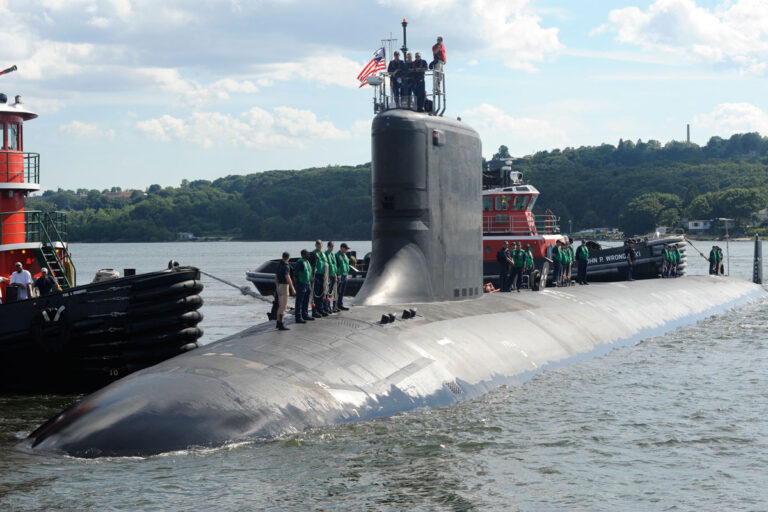
The M51.3 is the latest iteration of France’s venerable M51 family of SLBMs, designed to be deployed aboard the nation’s fleet of nuclear-powered ballistic missile submarines (SSBNs), known as the Triomphant-class. These submarines are the silent guardians of France’s nuclear deterrent, operating stealthily beneath the ocean’s surface, ready to deliver a devastating retaliatory strike should the need ever arise. The successful test flight of the M51.3, which took place without its nuclear warhead, marks a critical milestone in its development and integration into the French arsenal. Such tests are not merely technical exercises; they are powerful demonstrations of a nation’s resolve and its capacity to project power, sending a clear message to potential adversaries.
What makes the M51.3 such a pivotal development? While precise technical specifications remain classified – as is standard practice for strategic weapons systems – it is understood to incorporate significant advancements over its predecessors. These improvements likely encompass several key areas:
- Extended Range and Payload Capacity: Modern SLBMs strive for greater reach, allowing submarines to patrol larger areas of the ocean and remain undetected for longer periods. An increased payload capacity also means the ability to carry more advanced or a greater number of warheads, enhancing the destructive potential and penetration capabilities against sophisticated missile defense systems.
- Enhanced Evasion Capabilities: The battlefield of the future will be dominated by advanced anti-missile technologies. The M51.3 is expected to feature improved penetration aids and maneuverable re-entry vehicles (MaRVs) to evade potential interceptors. This ensures that even in the face of evolving defense systems, France’s deterrent remains credible and capable of reaching its targets.
- Improved Accuracy: While nuclear weapons are often associated with broad area destruction, accuracy remains a critical factor in targeting specific hardened silos or command and control centers. Advances in guidance systems would further enhance the precision of the M51.3, making it an even more potent tool in a strategic strike scenario.
- Increased Survivability and Reliability: The reliability of a nuclear deterrent is paramount. The M51.3 likely incorporates new materials, propulsion systems, and digital avionics that contribute to its overall robustness and operational longevity. This ensures that the missile can withstand the harsh conditions of submarine deployment and perform flawlessly when called upon.
The development of the M51.3 is not an isolated event; it is part of a broader, continuous effort by France to modernize its entire nuclear enterprise. This includes not only the missiles themselves but also the submarines that carry them, the land-based command and control infrastructure, and the highly specialized personnel who operate and maintain these complex systems. The strategic rationale behind this continuous modernization is clear: to ensure that France’s “force de frappe” (strike force) remains credible and effective in deterring any aggression against its vital interests.
In the intricate dance of international relations and security, an independent nuclear deterrent offers a nation unparalleled strategic autonomy. For France, this means the ability to make its own defense decisions without being overly reliant on allies, particularly in situations where their interests might diverge. It provides a supreme guarantee against existential threats and reinforces France’s voice on the global stage. The M51.3, therefore, is more than just a piece of advanced military hardware; it is a symbol of French sovereignty and its unwavering commitment to safeguarding its national interests.
The successful test of the M51.3 also sends a powerful message about France’s technological prowess and its ability to innovate in highly demanding fields. Developing such a complex system requires immense scientific, engineering, and industrial capabilities. It represents a significant investment in research and development, fostering high-skilled jobs and maintaining a leading edge in critical technologies.
Looking ahead, the integration of the M51.3 into the operational fleet will mark a new chapter in France’s nuclear strategy. It reinforces the nation’s resolve to maintain a robust and credible deterrent for decades to come. As the world navigates an increasingly uncertain future, with geopolitical tensions on the rise and the proliferation of advanced weaponry, France’s continued investment in its nuclear capabilities, exemplified by the M51.3, serves as a powerful reminder of its enduring commitment to national security and its role as a significant player in the global power balance. The silent launch of an M51.3 from the depths of the ocean represents not just a technical achievement, but the very essence of France’s strategic independence.
About The Author