In the evolving strategic landscape of the Western Pacific, the United States Air Force is quietly rewriting the playbook on how it deploys its most iconic unmanned assets. On a humid October day at Kadena Air Base, a shift in doctrine took physical form not on the main runway, but on a stretch of pavement known as Taxiway Lima. There, the 319th Expeditionary Reconnaissance Squadron successfully launched and recovered an MQ-9 Reaper, a trial that signals a profound move away from reliance on massive, vulnerable infrastructure toward a more gritty, dispersed style of warfare. This initiative, dubbed Project Lima BEAN, was detailed in a public release by the 18th Wing in late November 2025, confirming that the US military is actively preparing for scenarios where full-length runways might not be an option.
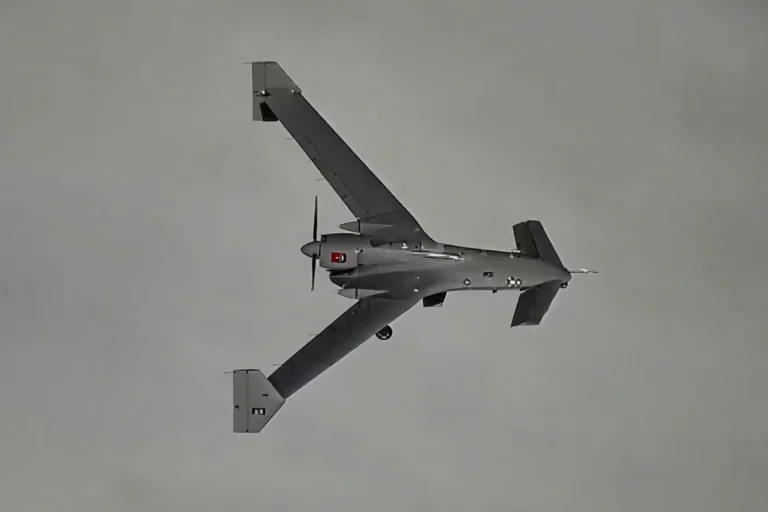
For years, the MQ-9 Reaper has been the workhorse of American counter-insurgency efforts, a platform synonymous with loitering over permissive environments from established bases. It is a Medium Altitude Long Endurance aircraft that typically demands long, pristine runways to operate its 20-meter wingspan and heavy payload safely. Powered by a Honeywell TPE331-10 turboprop engine generating roughly 900 horsepower, the Reaper is an engineering marvel capable of staying airborne for over 24 hours and cruising at altitudes near 15,000 meters. However, in the Great Power competition of the Indo-Pacific, the luxury of secure, large-scale airfields is disappearing. Recognizing this, the Air Force is stripping away the logistical heavy lifting usually required to fly these drones, proving that they can operate from the cramped confines of a taxiway just as effectively as a commercial runway.
The mechanics of the October 8 trial offer a fascinating glimpse into the future of air combat operations. The mission began with local crews at Kadena handling the most friction-heavy phases of the flight—the taxi, the takeoff, and the initial climb—directly from the taxiway. Once the aircraft was stable and airborne, control was seamlessly handed off via satellite link to a crew stationed thousands of miles away in the continental United States to execute the primary mission profile. This “remote-split” operations concept does more than just save travel costs; it proves that a small, forward-deployed team can maintain a lethal presence with a minimal footprint. By the time the aircraft returned for recovery, again handled by the local experts on the ground, the point had been made: the Air Force can project power from the margins of its bases, and potentially, from austere locations scattered across the island chains.
This experiment is the physical embodiment of Agile Combat Employment, or ACE, a strategic concept that has become the North Star for US planners in the region. The logic is simple but urgent. In an era where competitors like China are expanding their arsenal of ballistic and cruise missiles designed to crater large airfields, concentrating fleets on a few main operating bases is a recipe for disaster. By validating that the MQ-9 can fly from shortened surfaces like Taxiway Lima, the Air Force effectively multiplies the number of potential launch points an adversary must monitor. First Lieutenant Wesley Fulford, a pilot with the 319th ERS, described the test as using “nonstandard procedures in the effort of building standard procedures.” It is a phrase that perfectly captures the current mood: experimenting with chaos now to ensure order and capability when the heat is turned up later.
The tactical implications of this shift are significant. A Reaper is not just a camera in the sky; when fitted with its standard loadout, it carries a potent mix of AGM-114 Hellfire missiles and GBU-12 or GBU-38 guided bombs, alongside a suite of electro-optical and infrared sensors. If these armed platforms can operate from dispersed, unexpected locations—perhaps a damaged airfield or a remote island strip—they become infinitely harder to target. An adversary looking to neutralize US airpower can no longer simply target the main runways and assume the sky is clear. Furthermore, by adhering to strict Emission Control (EMCON) protocols, these small detachments can “shoot and scoot,” launching assets before being detected and relocating before a counter-strike arrives.
For the 18th Wing, Project Lima BEAN is about building muscle memory for a harder fight. The unit is learning how to refuel, rearm, and turn around these complex machines with skeleton crews and limited ground support. It is about rewriting the checklists for securing a taxiway, coordinating with air defense systems, and managing the delicate dance of satellite handovers under pressure. This capability provides commanders with graduated options; rather than facing a binary choice of “all in” or “grounded,” they can keep intelligence flowing and strike capabilities active even if their main operating hubs are degraded.
Ultimately, the sight of a Reaper roaring off a taxiway in Okinawa is a signal directed at both allies and competitors. To allies, it demonstrates that American security commitments are resilient and not tied to the survival of a strip of concrete. To competitors, specifically regarding the growing Anti-Access/Area Denial (A2/AD) challenge in East Asia, it is a statement of intent. It suggests that the US military is adapting its posture to ensure that, even under the shadow of a massive missile threat, it retains the mobility, endurance, and freedom of action necessary to hold the line in the Pacific.
About The Author