In late November, the waters stretching across the Mediterranean and the approaches to the Black Sea became the stage for a massive display of modern naval warfare capabilities as NATO commanders orchestrated a complex, high-stakes maneuver during Exercise Neptune Strike 25-4. In a move that observers are calling a definitive shift in European maritime strategy, two full-strength Carrier Strike Groups—one British and one Italian—were brought under a single operational umbrella. This wasn’t just a standard drill; it was a synchronized demonstration of lethal force and logistical mastery, proving that the alliance’s European members are increasingly capable of projecting power without solely relying on American heavy lifting. For the naval officers and planners involved, the dual deployment of the Royal Navy’s HMS Prince of Wales and the Italian Navy’s ITS Cavour represented the maturation of years of interoperability training, transforming theoretical alliance doctrines into a tangible, floating reality of steel and stealth technology.
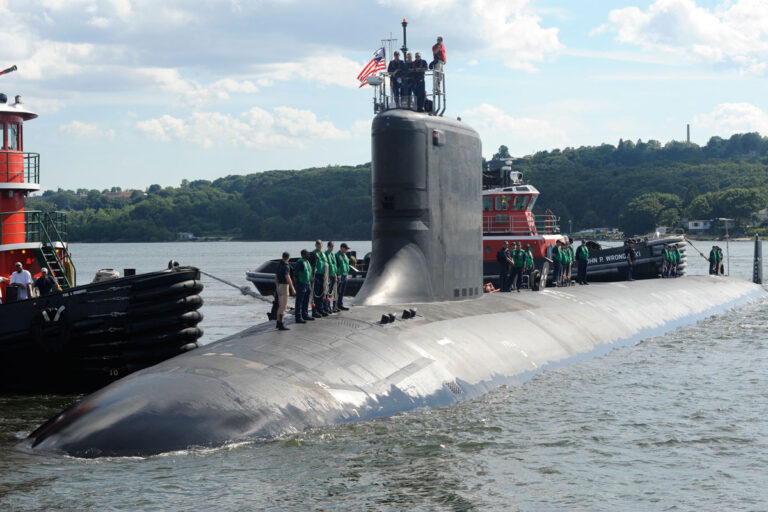
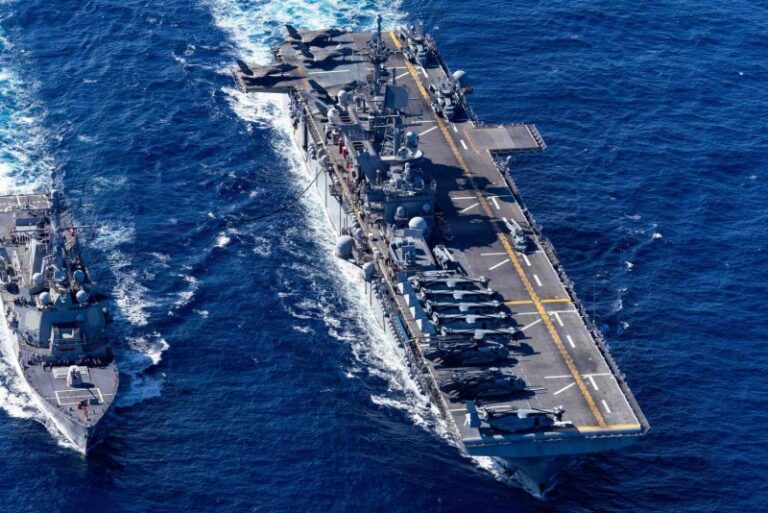
The centerpiece of this maritime evolution was undoubtedly the Royal Navy’s contribution, led by the colossal HMS Prince of Wales. Designated to serve as NATO’s maritime strike flagship for 2025, the 65,000-ton behemoth prowled the waters as the command hub of UK Carrier Strike Group 25. As the second vessel of the Queen Elizabeth class, she represents the pinnacle of British naval engineering, designed to sustain a high tempo of air operations. During this exercise, her flight deck was a hive of activity, hosting a lethal air wing comprised of F-35B Lightning II stealth fighters drawn from the legendary RAF No. 617 Squadron—the famous “Dambusters”—and the Royal Navy’s own 809 Naval Air Squadron. These fifth-generation jets were the tip of the spear, but the carrier did not operate alone. She was surrounded by a sophisticated defensive ring, including the Type 45 destroyer HMS Diamond, whose Sea Viper missile system creates a formidable air defense bubble, and the Type 23 frigate HMS Portland, a specialist hunter-killer designed to track threats beneath the waves with its towed sonar arrays. The group was sustained by a Tide-class tanker from the Royal Fleet Auxiliary, ensuring the task force could remain on station indefinitely, while a nuclear-powered Astute-class submarine silently stalked the deep, providing intelligence and an unseen strike threat.
Operating in tandem with the British giant was the pride of the Italian Navy, the ITS Cavour. While displacing 27,900 tons—less than half the weight of her British counterpart—the Cavour brought a specialized and highly agile capability to the fight. Functioning as the flagship for Italy’s carrier forces, she is optimized for Short Takeoff and Vertical Landing (STOVL) operations, a necessity for modern amphibious power projection. For Neptune Strike, the Cavour fielded a unique hybrid air wing, blending the battle-proven AV-8B Harrier IIs with the cutting-edge F-35B Lightning II. This marked a significant milestone for the Italian fleet, showcasing one of their first fully integrated deployments of fifth-generation fighters at sea. The Italian escort group was equally robust, featuring an Andrea Doria-class destroyer armed with Aster 30 missiles for area defense and a Bergamini-class FREMM frigate capable of multi-role warfare. Supported by a Vulcano-class logistics ship and shadowed by a Todaro-class submarine, the Italian group proved it was not merely a support element but a fully independent strike force capable of holding its own in contested waters.
The true genius of Neptune Strike 25-4 lay not in the individual power of these ships, but in how they operated as a single, cohesive organism. The airspace over Southeastern Europe and the Mediterranean became a complex web of coordinated vectors as jets from both carriers executed synchronized strike missions. In a display of supreme trust and technical compatibility, British and Italian pilots performed cross-deck operations, launching from one carrier and recovering on the other. This capability is critical for emergency scenarios and operational flexibility, allowing NATO commanders to treat the two decks as shared allied territory. The exercise saw these aircraft integrating with NATO Joint Terminal Attack Controllers (JTACs) on the ground in Bulgaria and Romania, simulating close air support for multinational land armies, while NATO’s RQ-4D Phoenix drones provided an unblinking eye in the sky, streaming real-time intelligence back to the fleet. To further layer the firepower, the U.S. Air Force integrated long-range B-52 and B-1B bombers into the mix, proving that the carrier groups could act as a anvil to the bomber force’s hammer.
This deployment sends an unambiguous message to potential adversaries and geopolitical rivals: NATO’s European arm is ready for high-intensity conflict. The ability to coordinate airspace control, strike deconfliction, and shared logistics across different national languages and command structures is the result of a deliberate push toward European-led autonomy. While the U.S. Navy remains the ultimate guarantor of blue-water supremacy, the emergence of the Prince of Wales and Cavour as fully integrated, combat-ready assets changes the strategic calculus. It signals that in the event of a crisis in the European theater, the alliance has immediate, scalable options that do not depend on a transatlantic crossing. With future French carrier operations and next-generation British combat ship initiatives on the horizon, this exercise was more than a rehearsal; it was a glimpse into the future of Western sea power—unified, technologically superior, and capable of striking first from the sea.
About The Author