In a decisive move that signals a hardening of its defensive posture, Taiwan has unveiled a massive $40 billion supplemental defense budget aimed at transforming the island into an impregnable fortress. Announced on Wednesday by President Lai Ching-te, this seven-year financial injection is designed to accelerate Taiwan’s shift toward “asymmetric warfare”—a strategy intended to make any potential invasion by the People’s Liberation Army (PLA) prohibitively costly and fraught with risk.
The announcement comes at a moment of heightened geopolitical friction.[1][2] With Beijing intensifying its military sorties around the island and the United States pressing Taipei to shoulder a greater share of the security burden, this new budget represents more than just a procurement list; it is a statement of existential resolve.
The “Porcupine” Braces for Impact
For years, military analysts have urged Taiwan to abandon its focus on prestigious, large-platform assets like fighter jets and destroyers—which are vulnerable to China’s overwhelming missile barrages—in favor of a “porcupine strategy.” This doctrine relies on large numbers of smaller, cheaper, and highly mobile systems that can survive an initial bombardment and sting an invading force at every step.
The new $40 billion package, which will span from 2026 to 2033, is the financial engine for this doctrinal shift.
“The ultimate goal is to establish defense capabilities that can permanently safeguard democratic Taiwan,” President Lai stated during a press conference in Taipei.[3] He framed the package as a necessity, not a choice, noting that “national security is not negotiable.”[4][5]
Drones, Drones, and More Drones
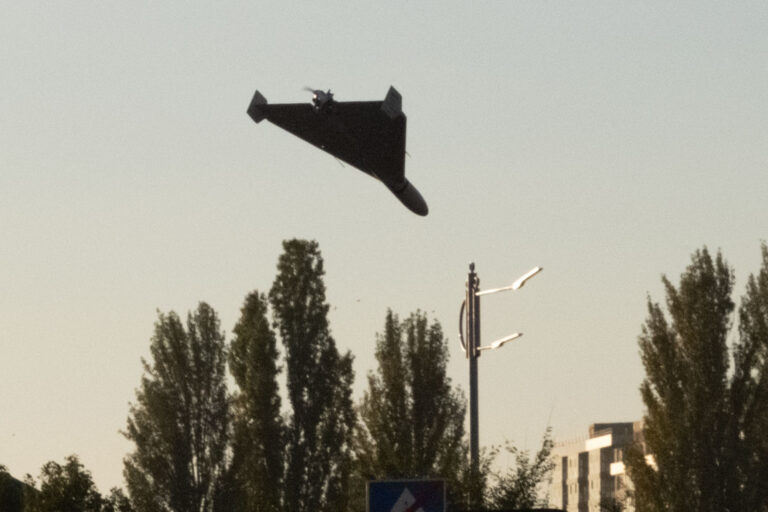
Central to this new spending spree is a heavy investment in unmanned systems. The Ministry of National Defense has outlined plans to procure nearly 50,000 domestically produced drones by 2027. These are not merely surveillance tools; they are kinetic weapons.
Among the most notable acquisitions is the so-called “Overkill” drone program. These First-Person View (FPV) strike systems, similar to those that reshaped the battlefields of Ukraine, are designed for precision attacks against armored vehicles and landing craft. Additionally, the budget allocates significant funds for uncrewed surface vessels (USVs)—suicide boats packed with explosives intended to swarm and disable Chinese amphibious transport ships in the Taiwan Strait.
By flooding the battlespace with thousands of autonomous threats, Taiwan aims to saturate the PLA’s defensive systems, creating a “kill zone” in the littoral waters that would be nightmare for any invasion fleet to traverse.
The “Taiwan Dome”
Perhaps the most ambitious component of the new plan is the development of the “T-Dome,” a multi-layered air defense network inspired by Israel’s Iron Dome but adapted for the massive scale of a potential cross-strait conflict.
Defense Minister Wellington Koo explained that the T-Dome will integrate existing Patriot missile batteries with new, locally developed Sky Bow systems and future directed-energy weapons. Crucially, the system will be underpinned by advanced Artificial Intelligence (AI) battle-management modules. These AI systems will be tasked with real-time threat forecasting and target prioritization, allowing Taiwanese commanders to manage the complex aerial picture of a mass missile strike. The goal is to create a defensive bubble capable of intercepting not just aircraft, but the waves of ballistic and cruise missiles that would likely precipitate a Chinese attack.
The Trump Factor and the 5% Target
The timing of this announcement is inextricably linked to the political climate in Washington. With the return of Donald Trump to the U.S. presidency, pressure on American allies to increase defense spending has ramped up significantly.
Reports indicate that the Trump administration has pushed Taipei to raise its defense spending to as much as 5% or even 10% of its GDP—a figure that far exceeds the NATO standard of 2%. While the current core defense budget hovers around 3.5% of GDP (approximately $19 billion), this supplemental $40 billion package is a direct response to those demands. It signals to Washington that Taiwan is willing to pay the price for its own survival and is not merely a “free rider” on American security guarantees.
Beijing’s Fury
As expected, the response from across the strait was swift and vitriolic. The Taiwan Affairs Office in Beijing condemned the budget as a “waste of money” and accused the ruling Democratic Progressive Party (DPP) of “squandering the hard-earned money of the Taiwan people to buy weapons from external forces.”
Chinese officials warned that no amount of weapons could stop the “historical trend” of reunification. To underscore this point, the PLA has continued its pattern of “Joint Sword” exercises, simulating blockades and quarantine operations around the island. However, for Taiwan’s planners, these threats only validate the necessity of the new budget.
A New Strategic Reality
As 2026 approaches, the Taiwan Strait is becoming one of the most heavily militarized strips of water on Earth. This $40 billion investment ensures that if conflict does come, it will not be a walkover. Taiwan is digging in, wiring its coastlines with sensors, and filling its skies with drones. The message to Beijing is clear: the island may be small, but its spikes are sharp, and it intends to make any attempt to swallow it a fatal mistake.
About The Author