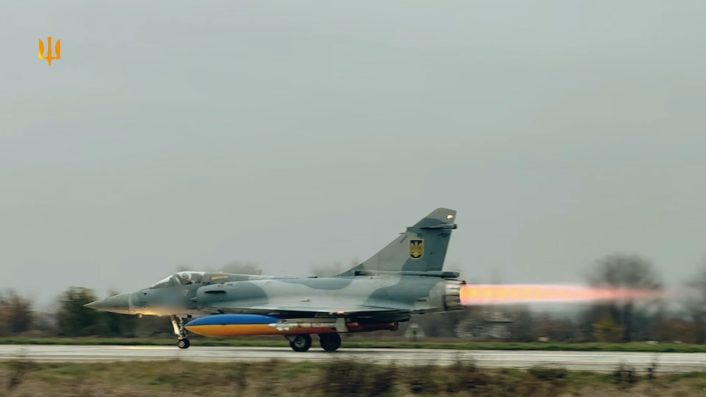
In the high-stakes game of aerial warfare over Ukraine, survival often depends on constant movement. In a rare and revealing glimpse behind the curtain, the Ukrainian Air Force has released footage of a French-supplied Mirage 2000 operating from a forward airfield. The video offers a candid look at the men keeping these machines in the sky—pilots and technicians living on the razor’s edge to protect their assets from Russian targeting.
While the F-16 has dominated much of the media conversation regarding Western aid, this footage highlights the quiet but deadly effectiveness of the Mirage 2000. Operating out of makeshift bases and utilizing “shoot-and-scoot” tactics, these jets are racking up impressive numbers against Russian cruise missiles and drones.
From Flanker to Mirage: A Pilot’s Transition
The primary voice in the video belongs to a seasoned pilot who previously cut his teeth on the Soviet-era Su-27 Flanker. His transition to Western aviation involved a rigorous six-month training program in France. The curriculum began with the twin-seater Mirage 2000B to master flight dynamics and weapon employment, before graduating to the single-seater Mirage 2000-5 used in combat today.
His verdict on the French delta-wing fighter is glowing. “My impressions of this aircraft are extremely positive,” he states early in the footage.
But it is his claim regarding combat efficiency that has turned heads in the defense community. According to the pilot, the Mirage 2000 boasts a staggering 98% effectiveness rate when intercepting enemy drones and missiles. While independent data to verify this specific percentage is currently unavailable, the visual evidence provided in the video suggests the jet is indeed a formidable interceptor.
The Story Behind the Kill Markings
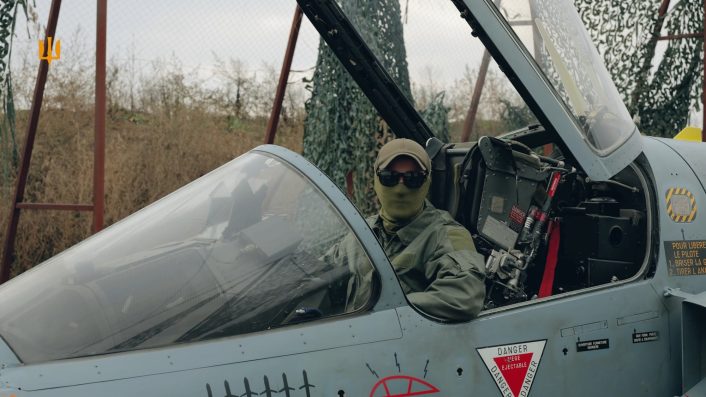
The fuselage of the aircraft tells its own story. The video zooms in on a Mirage 2000 sporting six distinct cruise missile kill markings. Analysts have identified these silhouettes as representing the Kh-101, a stealthy Russian air-launched cruise missile.
The pilot confirms these markings are for Kh-101 intercepts but adds a gritty detail about life at a forward operating base: the tally on the jet is incomplete. He claims there are six additional confirmed kills that haven’t been painted on yet. “We don’t always have stencils at forward airfields,” he explains, painting a picture of a crew prioritizing combat sorties over ceremonial record-keeping.
Life on the Run: The “Nomadic” Air Force
The video sheds light on the immense logistical pressure facing the Ukrainian Air Force. To prevent their precious aircraft from being destroyed on the ground by Russian missiles, the units are in a state of perpetual migration.
One technician revealed that the unit had relocated three times in a single week. This nomadic existence is fraught with danger. The crew described a recent harrowing incident where their position came under fire from Shahed loitering munitions and missiles. Despite the chaos, the team managed to evacuate the airfield without suffering any losses—a testament to their discipline and rapid reaction times.
The “Magic” Weaponry and Its Limitations
A significant portion of the video focuses on the Mirage’s armament. Contrary to some expectations of long-range loadouts, it appears France has supplied the Magic 2, an infrared-guided short-range air-to-air missile.
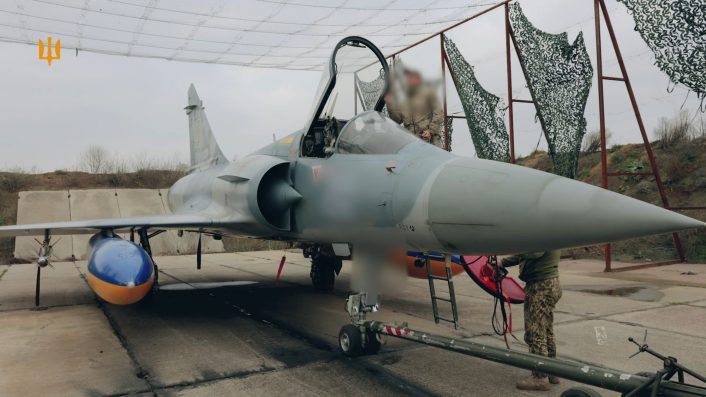
A technician on the ground praised the missile’s reliability, calling it the “main part” of the jet’s arsenal with a kill probability “practically at 100%.” He also clarified a common public misconception regarding the aircraft’s appearance. The Mirage is fitted with external fuel tanks painted in the vibrant blue and yellow of the Ukrainian flag. “Many people think it’s some sort of large bomb, but no—it’s just a standard fuel tank,” he notes with a smile.
However, the pilot was frank about the platform’s limitations compared to the threats they face. While the Magic 2 is excellent for close-range defense against drones and cruise missiles, it lacks the reach needed to challenge Russian aircraft at a distance.
“In my opinion—and in the opinion of my fellow pilots—this aircraft lacks longer-range air-to-air weapons,” the pilot admitted. He emphasized the need for a “middle ground between efficiency and cost” to handle the sheer volume of aerial threats. While the Mirage 2000-5 is technically capable of carrying the newer MICA IR and RF missiles, the current loadouts appear restricted to the older Magic 2s, limiting the jet primarily to air defense roles rather than air superiority.
Dreaming of the Rafale: The Future of Ukrainian Air Power
As the video concludes, the conversation shifts to the future. The pilot reflects on what platform he would choose if given the option to upgrade. His answer is pragmatic: the Dassault Rafale.
“It’s from the same country, and retraining for Rafale would be much faster than transitioning to aircraft from other nations,” he reasons. He specifically highlights the Rafale’s ability to carry the Meteor, a beyond-visual-range air-to-air missile that would significantly extend Ukraine’s reach.
This preference aligns with recent diplomatic moves. Ukraine and France have signed a Letter of Intent for a potential acquisition of up to 100 Rafales, though deliveries wouldn’t likely begin until 2029.
The pilot also gave a nod to other Western platforms, stating he would “without hesitation” transition to the F-35 or the Swedish JAS 39 Gripen. The Gripen remains a strong contender for Ukraine’s near-future fleet, with defense agreements between Kyiv and Stockholm potentially paving the way for the transfer of legacy Gripen C/D airframes as early as 2026.
For now, however, the pilots of the Ukrainian Air Force continue to squeeze every ounce of performance out of the Mirage 2000, moving from base to base, and keeping the skies clear of Russian missiles.
About The Author