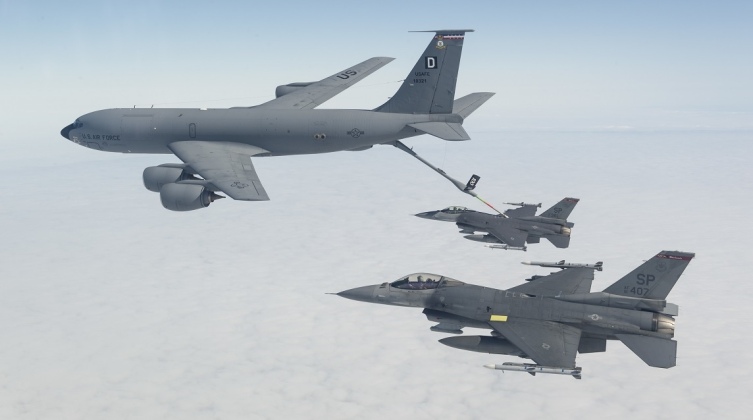
On December 1, 2025, a long-awaited milestone in the defense of the Taiwan Strait was finally reached when the Republic of China Air Force (RoCAF) confirmed that test flights for its newly built F-16V fighter jets would commence this month. The announcement, delivered to parliament by Air Force Chief of Staff Lee Ching-jan, marks a critical turning point for an $8 billion acquisition program that has faced years of frustration, production delays, and complex software hurdles. For Taipei, the roar of these engines is more than just a technical success; it is a sigh of relief. With 54 of the 66 ordered aircraft now sitting on Lockheed Martin’s assembly lines—an increase from 50 just months prior—industrial output is finally beginning to align with Taiwan’s urgent operational timelines. Approved by Washington back in 2019, this deal is set to expand Taiwan’s F-16 inventory to over 200 aircraft, cementing the “Viper” as the absolute backbone of the island’s air defense. This development arrives at a moment of heightened tension, unfolding against a backdrop of sustained naval and air activity by the People’s Liberation Army (PLA) and the rapid expansion of China’s stealth capabilities, granting these test flights a geopolitical weight that far exceeds a standard certification campaign.
The aircraft preparing to take to the skies is not the F-16 of the Cold War era; the F-16V Block 70/72 is a thoroughly modernized predator, re-engineered for the digital age. At the very core of this transformation is Northrop Grumman’s AN/APG-83 SABR, an active electronically scanned array (AESA) radar that serves as the jet’s all-seeing eye. This system offers a generational leap in capability, providing longer-range detection, superior resistance to electronic jamming, and the ability to track low-flying or low-observable targets—features that are indispensable for countering modern cruise missiles and strike aircraft. Inside the cockpit, the pilot interacts with a digitized environment centered around a large display that fuses data from the radar, targeting pods, and secure datalinks, while a modern mission computer connects the jet to Taiwan’s broader air-defense network via Link-16. These avionics are housed within an airframe featuring structural reinforcements designed to extend service life and support heavier fuel and weapons loads. In practical terms, these new-build jets will operate seamlessly alongside Taiwan’s 141 older F-16A/Bs, which have already been upgraded to the Viper standard, creating a massive, standardized fleet that simplifies logistics and training for a military facing a numerically superior foe.
However, the path to this moment has been paved with difficulties. Taiwan’s “Phoenix Rising” program, which upgraded the older fleet, concluded in late 2023, making Taiwan the first operator in the world to field a fully combat-capable Viper fleet derived from legacy airframes. Yet, the parallel effort to acquire new-build Block 70 aircraft stumbled. The production line was relocated, supply chains fractured, and software integration issues plagued the timeline, forcing Taiwan’s defense ministry to admit that the original delivery targets for 2026 were slipping. Lockheed Martin’s response—shifting to extended work hours and ramping up throughput—appears to be working, as evidenced by the start of test flights “earlier” than the revised expectations for late December 2025. While a backlog remains, the initiation of flight trials is a tangible signal that the recovery plan is taking effect and that the jets are moving from factory floors to the flight line.
Tactically, the arrival of these jets fundamentally alters the equation in the skies over the Taiwan Strait. Equipped with AESA radar and secure communications, the F-16V can fuse sensor data with ground-based surface-to-air missile batteries, creating a dense, integrated kill web. Their armament suite is equally formidable, boasting anti-ship Harpoon missiles, stand-off precision munitions like the JSOW and SLAM-ER, and anti-radiation weapons designed to hunt enemy radar. This flexibility allows Taipei to contest PLA air operations, threaten amphibious invasion fleets, and strike key infrastructure necessary to sustain a blockade. Furthermore, the planned addition of infrared search-and-track (IRST) pods will give these fourth-generation fighters a fighting chance against fifth-generation stealth platforms by allowing them to detect heat signatures without relying solely on radar. To ensure these assets survive an opening missile salvo, Taiwan is investing in hardened shelters and highway-strip dispersal tactics, intending to preserve a “fleet in being” that can continue to fight even after airbases are targeted.
From a strategic vantage point, the commencement of these test flights represents a vital effort to narrow the widening qualitative gap with China’s air forces. Beijing is currently fielding hundreds of J-20 stealth fighters and aggressively developing the J-35, meaning that even a fully equipped F-16V fleet will be operating in a fiercely contested environment. Yet, the value of the F-16V lies in deterrence. By raising the cost and uncertainty of any potential air campaign against the island, and by integrating closely with U.S.-supplied systems like the Patriot missile defense, the Viper fleet underpins a “porcupine” strategy designed to make rapid coercion impossible. The delays in the program have also highlighted the fragility of U.S. defense supply chains, serving as a test case for Washington’s ability to support allies like Bahrain, Slovakia, and Bulgaria, who are waiting for similar aircraft. Ultimately, while the regional balance of power remains precarious, the sight of new F-16Vs in the air underscores a shared determination between Taipei and Washington to turn bureaucratic planning documents into fully armed, combat-ready aircraft before the decade is out.
About The Author