Introduction
The Caribbean Sea, long a hotspot for geopolitical tensions, is witnessing a significant escalation as the United States ramps up its campaign against narcotrafficking near Venezuela’s shores. What began as targeted maritime interdictions has evolved into a broader military standoff, with the U.S. deploying advanced naval and air assets, including Aegis destroyers and F-35B stealth fighters, while Venezuela responds with a wartime alert, repositioning its sophisticated air defense systems along its coastline. This confrontation raises critical questions about U.S. operational freedom in the region, the risks of miscalculation, and the broader implications for military balance in the Americas. As both sides flex their capabilities, the Caribbean is becoming a theater of high-stakes posturing, where advanced technology, strategic positioning, and political brinkmanship collide.
Escalation of U.S. Operations in the Caribbean
The U.S. has significantly bolstered its presence in the southern Caribbean, moving beyond routine Coast Guard patrols to a robust military posture. Following a series of strikes on suspected drug trafficking vessels in September 2025, the U.S. Navy deployed Arleigh Burke–class destroyers, such as USS Stockdale, to the region after transiting the Panama Canal. These destroyers, equipped with the SPY-1D(V) radar and Mk 41 Vertical Launch System (VLS), are capable of carrying a versatile arsenal, including SM-2 and SM-6 air defense missiles, ASROC anti-submarine munitions, and Tomahawk cruise missiles for long-range precision strikes. This configuration provides a multi-domain superiority bubble, enabling both defensive and offensive operations across air, sea, and potentially coastal targets.
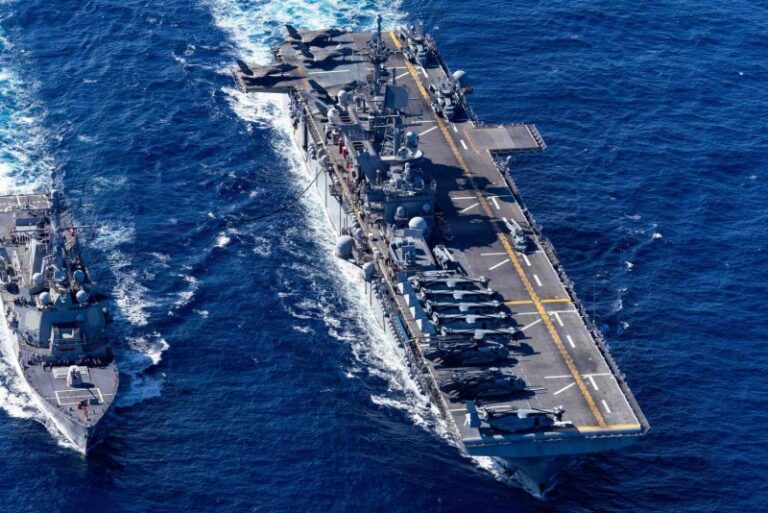
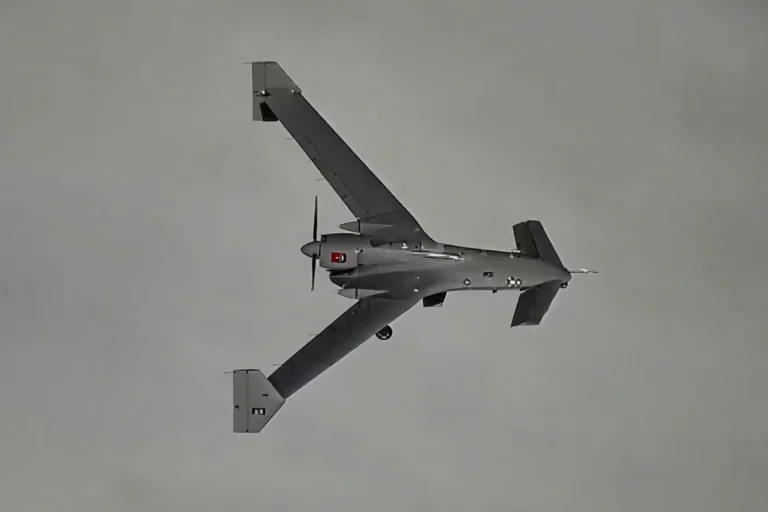
Complementing the naval presence, the U.S. has enhanced its air operations. F-35B Lightning II aircraft, deployed to Ceiba, Puerto Rico, bring stealth capabilities and high-resolution intelligence, surveillance, and reconnaissance (ISR) to the theater. These jets, operated by the U.S. Marine Corps, are supported by P-8A Poseidon maritime patrol aircraft and MQ-9 Reaper drones, creating a networked ISR architecture that enables near-real-time targeting of mobile assets. This setup shortens the kill chain for maritime interdictions, ensuring persistent pressure on trafficking routes near Venezuela’s coast. Additionally, an amphibious assault ship group provides helicopter mobility, drones, and close reconnaissance, maintaining the option for limited-objective operations if politically authorized.
The U.S. strategy appears to prioritize maritime interdiction to minimize direct exposure of personnel while leveraging advanced sensors and precision munitions. However, the proximity of these assets to Venezuela’s coastline—within Tomahawk range of approximately 1,000 nautical miles—introduces a new level of strategic risk, as operations now encroach on areas heavily defended by Venezuela’s air defense network.
Venezuela’s Response: A Fortified Coastal Defense
In response to the U.S. buildup, Venezuela has declared a state of external emergency and placed its forces on wartime alert. Caracas has undertaken significant defensive measures, including reinforcing maritime surveillance, expanding coastal troop deployments, and repositioning air defense systems along key strategic axes. A notable development is the movement of an S-125 Pechora-2M surface-to-air missile (SAM) battery to the La Cabrera axis along the Autopista Regional del Centro, a critical corridor linking the Carabobo coast to the ports of Puerto Cabello and Valencia. The modernized Pechora-2M, with its digital fire control, electro-optical targeting, and rapid setup capabilities, poses a significant threat to medium-altitude ISR assets and complicates low-level flight profiles near the shoreline.
At the core of Venezuela’s air defense is the S-300VM, a long-range SAM system designed to counter aerodynamic targets and theater ballistic missiles. This is supplemented by medium-range Buk-M2E systems, refurbished S-125 batteries, and a mix of short-range SAMs and man-portable air-defense systems (MANPADS). This layered defense network emphasizes mobility, redundancy, and low-emission tactics, such as shoot-and-scoot operations and pre-surveyed firing positions. By integrating radar, optical sensors, and point defenses around critical infrastructure like oil facilities and ports, Venezuela creates a formidable anti-access/area denial (A2/AD) environment. This setup forces U.S. forces to expend significant resources on suppression of enemy air defenses (SEAD), electronic warfare, and decoy operations to maintain operational freedom.
Venezuela’s air forces, led by Su-30MK2 fighters equipped with R-77 air-to-air missiles and supported by a limited number of aging F-16A/B aircraft, provide a credible interception capability, though logistical constraints reduce their operational readiness. The combination of mobile SAMs, coastal defenses, and air assets ensures that U.S. operations face a complex and dynamic threat environment, where every incursion risks escalation.
Comparative Analysis: Capabilities and Tactical Implications
U.S. Capabilities
The U.S. holds a clear qualitative edge in the Caribbean theater. Arleigh Burke–class destroyers are equipped with multi-function SPY-1D(V) radars capable of tracking numerous targets simultaneously, resilient data links for networked operations, and a flexible VLS loadout that supports air defense, anti-submarine warfare, and long-range strikes. The integration of P-8A Poseidon and MH-60R helicopters enhances maritime domain awareness, while F-35B stealth fighters provide unmatched ISR and penetration capabilities. The MQ-9 Reaper drones ensure persistent surveillance, feeding real-time data to surface and air units. This networked approach allows the U.S. to maintain pressure on trafficking routes while minimizing exposure to Venezuelan defenses.
Tactically, the U.S. prefers long-range strikes and maritime interdictions to neutralize fast boats used by cartels, avoiding the complexities of land-based operations. However, any shift to limited strikes ashore would require extensive preparation, including emitter mapping, electronic neutralization, and kinetic suppression of radar and SAM sites. The presence of advanced SAM systems like the Pechora-2M and S-300VM complicates these operations, forcing reliance on stealth, jamming, and stand-off munitions.
Venezuelan Capabilities
Venezuela’s defense strategy hinges on its layered SAM network and mobile assets. The S-300VM provides a long-range engagement bubble, capable of forcing U.S. aircraft to alter routes and rely on high-end jamming. The Pechora-2M, though shorter in range, is effective in cluttered coastal environments, where its digital fire control and electro-optical modes mitigate jamming attempts. The Buk-M2E and MANPADS further enhance point defense, particularly around critical infrastructure. The mobility of these systems, combined with low-emission radar tactics and pre-surveyed positions, creates a resilient A2/AD network that challenges U.S. operational tempo and increases the cost of sustained operations.
In the air, Venezuela’s Su-30MK2 fighters, though limited in number, pose a credible threat with their R-77 missiles, particularly for intercepting non-stealth assets like P-8A or MQ-9 platforms. The combination of air and ground-based defenses ensures that U.S. forces must carefully manage their approach, slowing their operational tempo and increasing the complexity of coordinated strikes.
Strategic and Regional Implications
The escalating standoff in the Caribbean has far-reaching implications. In the near term, the region is shifting toward a high-alert regime characterized by frequent interceptions, sensitive overflights, and increased risks of radar lock-ons or miscalculations. The U.S.’s use of high-end military assets for what is ostensibly a counter-narcotics mission raises questions about proportionality and the blurring of lines between law enforcement and military operations. Critics argue that the scale of the U.S. deployment—featuring Aegis destroyers and F-35s—exceeds the requirements of maritime interdiction, potentially signaling broader strategic objectives.
Internationally, the confrontation has drawn varied responses. Some regional actors view the U.S. buildup as a necessary response to transnational crime, while others, particularly Venezuela’s political allies, condemn it as an infringement on sovereignty. The risk of spillover into neighboring countries, such as Colombia or Guyana, remains a concern, particularly as Venezuela’s partners, including Russia and China, provide technical and material support to bolster its defenses. The presence of advanced systems like the S-300VM, reportedly maintained with external assistance, underscores the growing influence of extra-regional powers in the Americas.
In the medium term, the U.S.’s approach to targeting cartels as a quasi-military threat could set a precedent for other nations to justify extraterritorial strikes, raising complex legal and ethical questions. Debates over proportionality, target qualification, and evidentiary standards are likely to intensify, particularly as civilian vessels and infrastructure come under scrutiny. Over the long term, Venezuela’s reliance on low-cost A2/AD tools, combined with external support, suggests that the Caribbean will remain a contested space, where technological superiority alone may not guarantee U.S. dominance.
Conclusion
The U.S.’s intensified campaign against cartels near Venezuela has transformed the Caribbean into a theater of military brinkmanship. With Aegis destroyers, F-35B fighters, and a robust ISR network, the U.S. maintains a qualitative edge, but Venezuela’s layered SAM network and mobile defenses pose significant challenges. The standoff underscores the complexities of operating in a contested maritime environment, where advanced technology, tactical innovation, and political calculations intersect. As both sides continue to reinforce their positions, the risk of miscalculation grows, with potential consequences for regional stability and the broader military balance in the Americas. The Caribbean, once a secondary theater, is now a critical arena where the limits of power projection and defense are being tested.
About The Author