In the unforgiving vastness of the Arctic, where subzero temperatures can turn even the toughest gear into brittle relics and vast expanses of ice challenge the limits of human endurance, a groundbreaking initiative is underway. The Ted Stevens Center for Arctic Security Studies, based out of Joint Base Elmendorf-Richardson in Alaska, has just wrapped up its inaugural “NATO in the North” virtual course. Held from September 16 to 18, 2025, this innovative program was co-hosted with Norway’s prestigious NATO Centre of Excellence for Cold Weather Operations. Designed specifically for mid- to senior-level military practitioners, the course dives deep into the intricacies of Arctic domain awareness and the unique demands of NATO operations in this increasingly strategic region. As global tensions rise and the northern flank of the alliance gains unprecedented importance following the recent accessions of Finland and Sweden, this training couldn’t come at a more critical time. It’s not just about theory; it’s about equipping warfighters with the practical skills needed to navigate, survive, and succeed in one of the planet’s most hostile environments.
This pioneering course represents a milestone in international collaboration, marking the first time the Stevens Center has jointly designed and delivered a program with an overseas partner. With 117 participants hailing from 17 different nations, the event fostered a truly multinational dialogue. The curriculum was meticulously structured to blend expert-led panels, engaging interactive breakout sessions, and a high-stakes scenario-based capstone exercise that simulated a realistic crisis in the High North. Throughout the sessions, discussions repeatedly circled back to the nitty-gritty of equipment selection and performance under extreme cold conditions. From command and control (C2) platforms that must function flawlessly in blizzards to mobility solutions that conquer snowdrifts and sustainment strategies that keep troops operational amid limited daylight and plummeting temperatures, every aspect was scrutinized. The goal? To ensure that NATO forces aren’t just present in the Arctic but are fully capable of executing missions when the stakes are sky-high.
To understand the significance of this partnership, it’s essential to appreciate the distributed nature of cold-weather expertise across Europe. Nations like Norway, Sweden, and Finland have long honed their skills in winter warfare, making routine what others might consider extreme: advanced infantry tactics in deep snow, specialized mobility across frozen terrains, and austere air operations that defy the elements. The course featured an impressive lineup of speakers, including high-ranking NATO officials, seasoned general officers, and the Stevens Center’s National and Arctic Interest Chairs representing Norway, Sweden, and Canada. Their insights painted a vivid picture of the northern area of responsibility (AOR), emphasizing the harsh realities of operating in an environment where mistakes aren’t forgiven lightly. The Arctic’s climate acts as a relentless adversary, turning logistics into a puzzle that must be solved before any human threat even materializes. This educational push aims to map out these challenges clearly, fostering a shared understanding of deterrence and defense strategies tailored to a region that punishes unpreparedness with brutal efficiency.
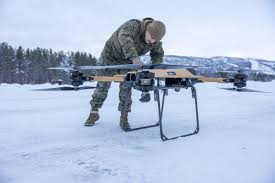
Delving deeper into the technical side, the course highlighted how cold regions demand an entirely specialized toolkit. Mobility, for instance, is a make-or-break factor. Traditional wheeled vehicles often falter in the soft, uneven tundra and muskeg, sinking into the mire where snow and ice dominate. That’s why tracked carriers like the advanced BvS10-class vehicles or the reliable older BV206 models are indispensable. These articulated beasts distribute weight across a broad footprint, allowing seamless traversal over challenging landscapes that would immobilize lesser platforms. On the infantry level, personal gear adaptations are equally crucial. Soldiers must layer up with high-performance cold-weather clothing systems that wick away moisture while providing insulation, paired with vapor-barrier boots to prevent frostbite and specialized face protection that doesn’t impede handling rifles or optics. Even mundane details like weapon lubricants and propellants are reformulated to remain effective in subzero conditions, and troops are trained to manage condensation meticulously when transitioning between heated shelters and the biting outdoor air.
The challenges extend to heavier weaponry and support systems. Artillery crews grapple with issues like propellant sensitivity to temperature fluctuations and the reliability of fuzes in freezing conditions, requiring precise calibration and storage protocols. Command posts, often the nerve centers of operations, must combat moisture buildup and battery degradation, incorporating redundant power sources, integrated heaters, and creative insulation techniques to maintain functionality. Communication radios and broader power systems, if not properly hardened, can fail spectacularly in the cold, underscoring the non-negotiable need for backups and environmental protections. Aviation operations introduce yet another layer of complexity. Helicopters demand specialized procedures for cold engine starts, active blade de-icing systems to prevent catastrophic buildup, and heightened awareness of whiteout conditions that can disorient pilots in seconds. Fixed-wing intelligence, surveillance, and reconnaissance (ISR) aircraft, along with maritime patrol planes like the Boeing P-8 Poseidon, contend with airframe icing, extended overwater flights that test fuel reserves, and a scarcity of emergency diversion airfields scattered across remote Arctic outposts. The overarching message from the course was crystal clear: equipment alone isn’t enough; robust sustainment practices are what keep it all within operational parameters, ensuring missions don’t grind to a halt.
At the heart of Arctic operations lies the triad of command, control, and sensing – elements that were given prime focus throughout the program. The Arctic’s sheer scale, coupled with prolonged winter darkness and sparse population, makes situational awareness a formidable challenge. Achieving it requires a sophisticated web of technologies: over-the-horizon radars that peer beyond visible limits, satellite-based surveillance and communications networks that bridge vast distances, maritime patrol aircraft for real-time ocean monitoring, and airborne early warning systems that operate when weather windows allow. Participants explored how NATO’s evolving command systems – a blend of legacy setups and cutting-edge upgrades – integrate under the constraints of low-bandwidth connections and high-latitude interference, where geostationary satellites hover low on the horizon and signal reliability wanes. The core dilemma is straightforward yet daunting: limited line-of-sight communications, magnetic disturbances that skew navigation tools, and immense distances that force meticulous fuel management and safety margins. This is precisely why prepositioned supply stocks, secure fuel distribution methods, and resilient airfields built to endure extreme thermal expansions and contractions are vital. The capstone exercise thrust students into these realities, compelling them to balance trade-offs like expansive coverage against asset survivability, or rapid response times against the imperative to preserve equipment integrity in the face of unrelenting cold.
Zooming in on tactical and operational insights, the course drove home lessons that are as practical as they are profound. Any unit eyeing High North deployments must prioritize training in basic movement and survival skills above all else – before delving into advanced marksmanship or intricate air tasking orders. Patrol speeds inevitably slacken in deep snow, medical evacuations stretch into hours rather than minutes, and elements like white camouflage for blending into snowy vistas or strict light discipline to avoid detection become as critical as any battle plan. Interoperability in this context transcends mere equipment compatibility; it encompasses standardized cold-weather standard operating procedures (SOPs), shared meteorological data and mapping resources, mutually compatible fuels and de-icing agents, and a unified operational picture that holds firm even when satellite links flicker. For air and maritime components, coordination hinges on exploiting fleeting weather opportunities while vigilantly tracking icing risks. Ground forces, meanwhile, benefit from well-rehearsed vehicle recovery drills for scenarios like breaking through thin ice, relying on combat engineers skilled in forging paths, bridging frozen waterways, and identifying dynamic hazards influenced by seasonal freeze-thaw patterns. These aren’t flashy tactics, but they transform abstract deterrence concepts into tangible, deployable capabilities that can hold the line.
The broader geopolitical backdrop adds urgency to these efforts. Russia’s ongoing aggression in Ukraine has fundamentally altered European defense postures, spotlighting Moscow’s robust Arctic military footprint – complete with fortified bases, layered air defenses, and a naval fleet boasting icebreaker-capable vessels. Meanwhile, China positions itself as a “near-Arctic” stakeholder, channeling investments into polar research, commercial shipping routes, and under-ice exploration programs that carry potential dual-use military applications. The integration of Finland and Sweden into NATO has fortified the alliance’s northern perimeter, providing deeper strategic depth and enhanced anchoring points, yet it also amplifies vulnerabilities tied to extended distances, climatic extremes, and infrastructural gaps.
In this landscape, educational initiatives like “NATO in the North” serve as powerful multipliers. By cultivating a network of Arctic-savvy professionals, the program harmonizes doctrines, standardizes cold-weather protocols, and instills realistic benchmarks for performance in mid-winter conditions north of the Arctic Circle. The Stevens Center’s commitment to running the course biannually, in ongoing collaboration with the Norwegian Centre of Excellence, signals a sustained transatlantic commitment to knowledge-sharing rather than sporadic events. For American audiences, there’s a compelling domestic tie-in: Alaska isn’t merely a scenic training ground; it’s a cornerstone of U.S. homeland defense. Linking local expertise with European cold-weather mastery underscores the interconnected nature of global security, turning isolated drills into a cohesive shield against emerging threats.
As the Arctic heats up in strategic terms amid climate change and great-power competition, programs like this are more than academic exercises – they’re the bedrock of readiness. By honing domain awareness and operational prowess, NATO is ensuring that its northern flank isn’t just a line on a map but a fortified frontier ready for whatever the future freezes in store.
About The Author