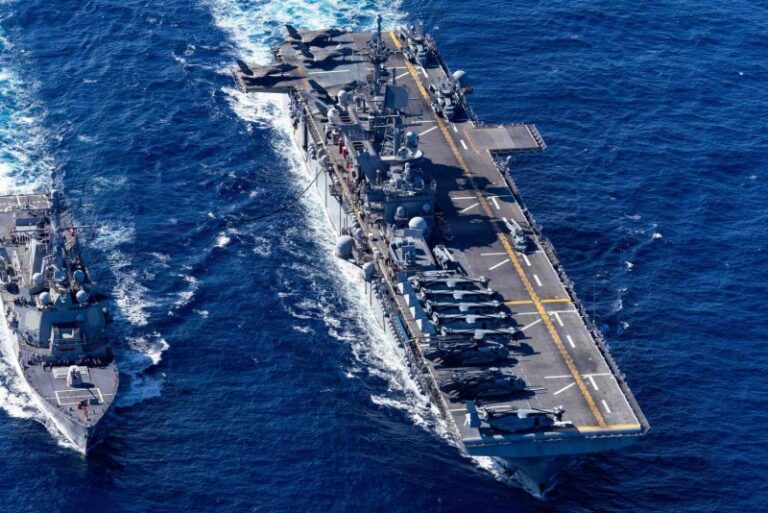
If you stand on the flight deck of a U.S. Navy aircraft carrier today, the silhouette you are most likely to see roaring off the catapult is the F/A-18E/F Super Hornet. It is the undisputed backbone of American naval power. But if you rewind the clock three decades, the existence of this aircraft was anything but guaranteed.
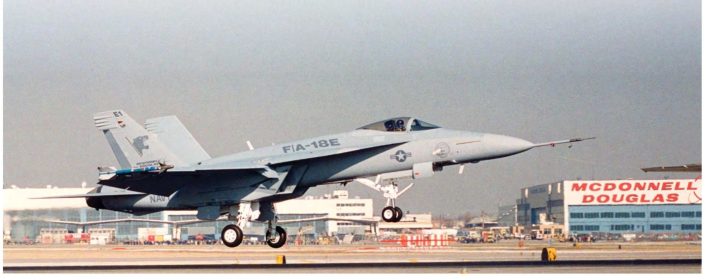
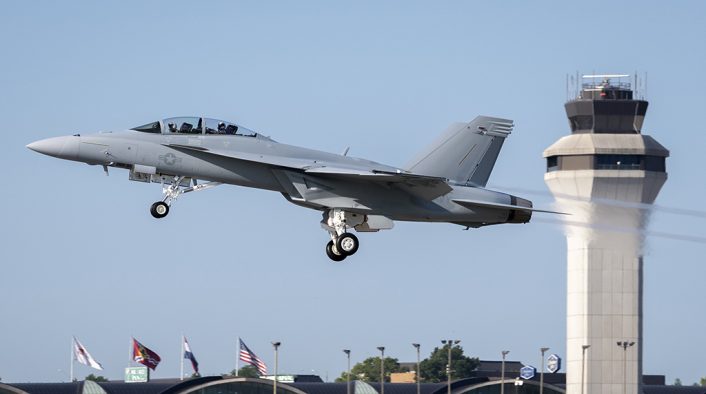
Recently, the Super Hornet celebrated a massive milestone. On November 29, 2025, the aviation world marked the 30th anniversary of the jet’s first flight. It was on that crisp autumn day in 1995 that the prototype first lifted off from McDonnell Douglas’ St. Louis facility. That single flight kicked off a program that would not only survive a tumultuous era of budget cuts but would go on to reshape carrier aviation for the next thirty years.
Here is the story of how the Super Hornet went from a concept on paper to the most widely used strike fighter in the U.S. Navy.
Born from Chaos: The Origins of the “Rhino”
To understand the success of the Super Hornet, you have to understand the chaos of the early 1990s. The Cold War was ending, and defense budgets were being slashed. The Navy was in a tight spot; the A-12 Avenger II “flying wing” stealth bomber program had just been canceled in 1991 due to cost overruns and technical failures.
The Navy was staring at a dangerous capability gap. They needed a replacement for the aging A-6 Intruders, and they needed it fast. They couldn’t afford another risky, “clean-sheet” design that might take decades to build.
Enter McDonnell Douglas (now Boeing) with a brilliant proposal. They pitched an aircraft that looked like the existing F/A-18 Hornet—allowing them to use existing maintenance crews and pilot training—but was radically redesigned on the inside and outside. Originally dubbed “Hornet 2000,” this proposal offered the Pentagon exactly what they needed: low risk, predictable costs, and massive capability.
Despite skepticism from Congress and die-hard fans of the F-14 Tomcat, the Navy went all in. By 1992, other competitors like the naval variant of the F-22 and the A-X program were scrapped. The Super Hornet was the last plane standing.
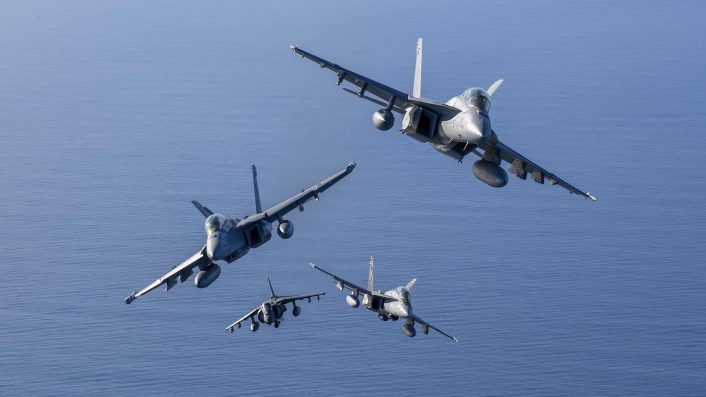
More Than Just a Facelift
A common misconception is that the Super Hornet is just a slightly bigger version of the “Legacy” Hornet (the F/A-18A/C). In reality, the two aircraft share the same name and general shape, but little else.
The “Rhino,” as it is affectionately known by deck crews to distinguish it from the smaller Hornets, is a beast. The redesign resulted in an aircraft that was 25% larger than its predecessor. It carried 33% more internal fuel, offering a 50% increase in range—a critical factor for projecting power across vast oceans. It featured entirely new rectangular air intakes, a larger wing surface area, and a completely overhauled avionics suite.
When test pilot Fred Madenwald took that first prototype into the sky in November 1995, he wasn’t just flying an upgrade; he was flying a new class of dominance.
Overcoming Turbulence
No aircraft development is without its headaches, and the Super Hornet was no exception. During early flight tests, engineers encountered a scary phenomenon known as “wing drop.” At high angles of attack, the airflow would separate from the wing unpredictably, causing the jet to roll uncommanded by up to 40 degrees.
For a carrier-based fighter that needs to dogfight and land on a pitching deck, this was a dealbreaker. However, the engineering team worked tirelessly, solving the issue through a mix of aerodynamic tweaks—like stall strips on the wing—and flight control software updates.
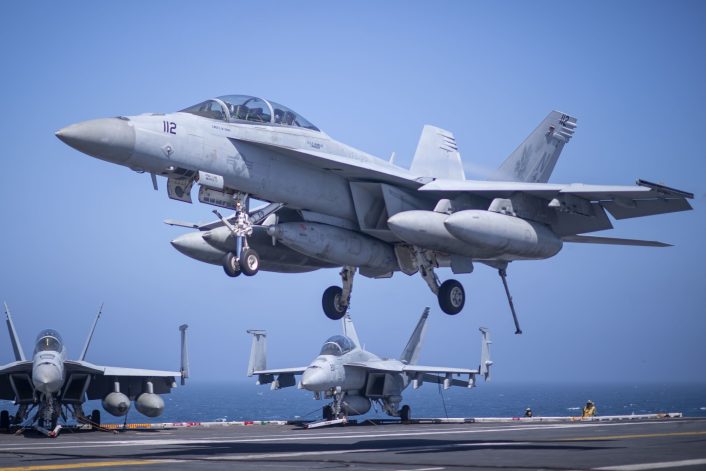
They also had to redesign the weapon pylons, canting them outward by 3.5 degrees to ensure that when bombs were dropped, they wouldn’t strike the aircraft or interfere with the engine intakes. By 1997, the Super Hornet was landing on carriers, proving its critics wrong.
Combat Debut and the Global War on Terror
The Super Hornet hit the fleet at a pivot point in history. The first operational squadron, VFA-115 “Eagles,” was combat-ready in September 2001, just as the world changed following the 9/11 attacks.
By November 2002, the Super Hornet made its combat debut, striking hostile targets in Iraq’s no-fly zone during Operation Southern Watch. When the Global War on Terror fully commenced, the Super Hornet was there. As the legendary F-14 Tomcat, A-6 Intruder, and S-3 Viking were retired, the Super Hornet took on all their roles. It became the fleet’s bomber, dogfighter, reconnaissance platform, and even aerial tanker.
Evolution of a Predator: Block II and The Growler
The Super Hornet’s longevity comes from its ability to evolve. In the mid-2000s, the introduction of Block II turned the jet into a networked supercomputer. The addition of the AN/APG-79 AESA radar allowed pilots to track targets from further away and with greater precision than ever before.
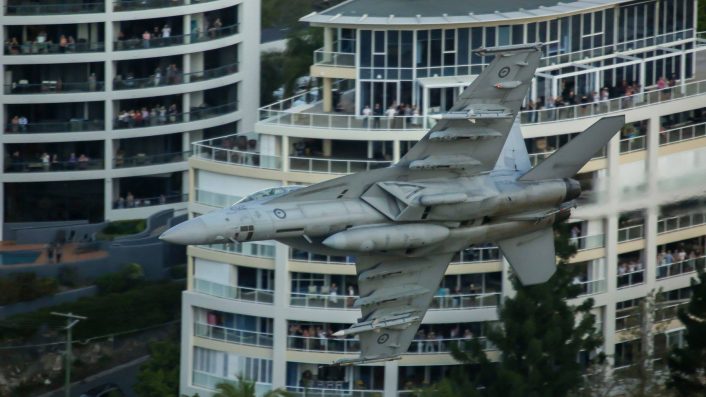
Perhaps the most significant spinoff of the program was the EA-18G Growler. First flown in 2006, this variant replaced the nose gun with electronics and added jamming pods to the wings. It became the world’s premier electronic attack platform, capable of blinding enemy radar and air defense systems. Today, the Growler protects the entire strike group, ensuring other planes can make it to the target and back.
The Future is Block III
Even after 30 years, the Super Hornet isn’t slowing down. To keep the jet relevant into the 2040s, Boeing and the Navy initiated the Block III upgrade.
This isn’t just a maintenance patch. Block III brings:
- The Advanced Cockpit System: A massive 10×19 inch touchscreen that replaces old dials and gauges, giving pilots iPad-like control.
- Networking: Improved distributed targeting that lets the jet “talk” to other assets on the battlefield faster.
- Lifespan: Structural reinforcements that extend the airframe life from 6,000 to 10,000 flight hours.
While the initially proposed Conformal Fuel Tanks were shelved, the Block III ensures that the Super Hornet remains a lethal partner alongside the stealthy F-35C Lightning II.
A Global Legacy
The Super Hornet’s success has gone international. Australia became the first export customer, using the Super Hornet and Growler to bridge the gap between their F-111 retirement and the arrival of the F-35. Kuwait also ordered 28 aircraft, further validating the platform’s capabilities in the Middle East.
30 Years and Counting
On August 1, 2025, the Navy announced that the F/A-18 family had surpassed a staggering 12 million flight hours.
From a “Plan B” budget compromise in the 90s to the iron fist of U.S. naval diplomacy today, the Super Hornet has exceeded every expectation. As the Navy looks toward sixth-generation fighters (F/A-XX), the Super Hornet remains on the deck, ready to launch. It is a testament to evolutionary engineering—a machine that reshaped what it means to be a carrier-based fighter.
About The Author