In a significant stride for the Japan Self-Defense Forces (JSDF), the Acquisition, Technology & Logistics Agency (ATLA) has successfully concluded a series of high-profile autonomous flight and Manned-Unmanned Teaming (MUM-T) trials. Conducted in collaboration with Subaru Corporation, these tests mark a pivotal moment in Japan’s roadmap toward next-generation air superiority, validating technologies that will likely underpin the country’s future combat strategies, including the Global Combat Air Programme (GCAP).
A New Era for Japanese Aviation
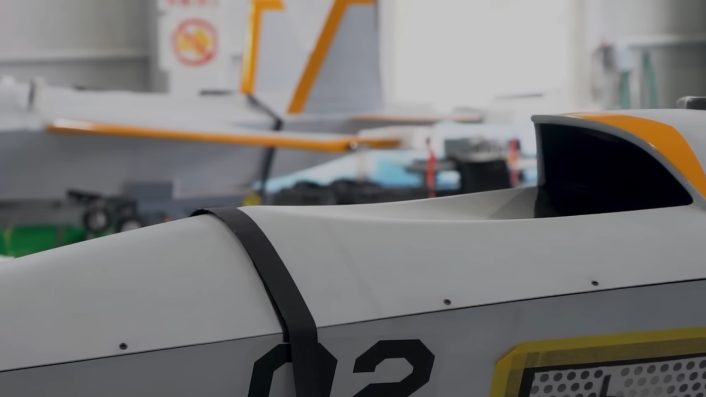
The trials, which took place earlier this week at a testing facility in Northern Kyushu, involved a highly modified version of the Subaru Bell 412EPX (the commercial baseline for the JGSDF’s UH-2 utility helicopter) acting as the command ship. It operated in tandem with Subaru’s newly developed Experimental Unmanned Aerial Vehicle (UAV), a platform delivered to ATLA earlier this year in July.[1]
While Japan has been experimenting with remote-controlled assets for decades, this specific trial focused on the “holy grail” of modern air combat: Level 4 Autonomy. The UAV wasn’t just being flown via a joystick from the helicopter’s back seat; it was given mission-type orders. The drone autonomously generated its own flight path, reacted to simulated threats, and maintained formation with the manned helicopter without constant human input.
The “Flying Wingman” in Action
According to reports from the test site, the demonstration highlighted two critical capabilities:
- Autonomous Flight-Path Generation: The Subaru UAV successfully navigated a complex obstacle course. Instead of following pre-programmed waypoints rigidly, the aircraft’s onboard AI calculated optimal routes in real-time to avoid “pop-up” threats and terrain obstacles, adjusting its speed and altitude dynamically.
- In-Flight Remote Control (MUM-T): The crew aboard the Bell 412EPX demonstrated the ability to hand off control and designate targets. The interface allowed the co-pilot to designate a point of interest, prompting the UAV to break formation, investigate, stream sensor data back to the helicopter, and then autonomously rejoin the formation—a maneuver known as “re-joining.”
“The latency and decision-making speed observed during the trials exceeded our initial benchmarks,” an ATLA spokesperson noted. “This proves that our indigenous algorithms are maturing fast enough to support the aggressive timeline of the GCAP support fighter program.”
Subaru’s Role and Technical Mastery
Subaru Corporation (formerly Fuji Heavy Industries) has long been a titan in Japan’s aerospace sector, but their pivot to high-end autonomous systems is a relatively new strategic focus. The experimental UAV used in these trials is a testament to that shift.
Derived from technologies refined during the “Flying Test Bed” program initiated in 2020, the drone features a modular airframe.[2] It allows for the swapping of sensor payloads and even wing configurations.[2] For this test, it was equipped with a suite of electro-optical/infrared (EO/IR) sensors and a datalink pod designed to communicate directly with the manned helicopter’s tactical computer.
Subaru’s engineers have focused heavily on collision avoidance protocols. In a congested airspace—a likely scenario in any defense of the Japanese archipelago—the ability of a drone to “see and avoid” friendly aircraft while maneuvering aggressively is non-negotiable. These trials confirmed that the collision avoidance logic (originally tested in 2021 against simple drones) has matured into a combat-ready safety net.
Why This Matters: The Strategic Context
Japan’s push for automation is driven by two existential factors: demographics and defense.
With a shrinking population and a recruitment crisis in the JSDF, Japan simply cannot field as many human pilots as its potential adversaries. The solution is the “force multiplier” effect. If one pilot can control three or four “loyal wingmen,” the JSDF can project power far beyond its actual headcount.
Furthermore, these helicopter-based MUM-T trials are a stepping stone. The logic and software architecture being perfected on rotary-wing platforms are platform-agnostic. They are intended to migrate directly to the JASDF’s future fighter jets, specifically the 6th-generation aircraft being developed with the UK and Italy under GCAP. The “Combat Support Unmanned Aircraft” envisioned for the 2035 timeframe will rely on the exact autonomous pathing and teaming behaviors demonstrated in Kyushu this week.
What’s Next?
Following this success, ATLA plans to expand the flight envelope. The next phase, scheduled for early 2026, involves multi-agent coordination, where a single manned asset will control multiple UAVs simultaneously. There is also speculation about weaponized trials, though ATLA has remained tight-lipped regarding live-fire integration.
For now, the message from Tokyo is clear: Japan is no longer just buying off-the-shelf drones. It is building the brainpower to fly them.
About The Author