The late autumn chill in northeastern Poland is unforgiving, a damp cold that seeps through layers of uniform and settles into the bones, but for the crews of the M1A2 Abrams tanks at the Bemowo Piskie Training Area, the weather is just another adversary to be outmaneuvered. On November 23, 2025, the roar of Honeywell gas turbine engines pierced the grey, misty air as heavy armor from the U.S. Army’s 3rd Battalion, 66th Armored Regiment, 1st Armored Brigade Combat Team, 1st Infantry Division, churned through water obstacles and deep, sucking mud. These maneuvers, captured in gritty detail by military imagery, were not merely a display of horsepower but a critical component of the Forward Land Forces expansion exercise. This latest rotation has brought together armored forces from across the Polish countryside, consolidating them in a region that sits uncomfortably close to the geopolitical fault lines of Eastern Europe. As the tanks maneuvered through the sludge, they were doing more than rehearsing tactical movements; they were testing the very limits of NATO’s ability to fight and win in the notoriously difficult terrain of the eastern flank.
The timing and location of these drills are anything but accidental, as the exercises are designed to mirror the exact environmental conditions that would define a conflict in this part of the world. By choosing to operate in late November, command elements forced their units to contend with the reality of the European theatre, where saturated ground can immobilize even the most advanced vehicles and where freezing temperatures wreak havoc on hydraulic systems and logistics chains. The soldiers of the “Burt’s Knights” battalion had deployed their Abrams tanks into prepared fighting positions just days prior, on November 18, after a complex logistical ballet that saw equipment moved by rail from various training nodes across Poland. This practice of rapid massing followed by tactical dispersal is a core tenet of NATO’s modern regional defense plans, a direct response to the need for agility in the face of potential aggression. The mud at Bemowo Piskie is more than a nuisance; it is a simulation of the geography surrounding the Suwałki Gap, the narrow and strategically vital corridor that connects the Baltic states to the rest of NATO territory, a strip of land that analysts have long identified as the Alliance’s Achilles’ heel.
At the heart of this display of force is the M1A2 Abrams, a platform that has served as the backbone of American armored dominance since the 1980s, yet finds itself adapting to a role that feels both familiar and entirely new. For the better part of two decades, the Abrams was the icon of expeditionary warfare in the Middle East, prowling the dry deserts of Iraq and the urban centers of the region, where the challenges were improvised explosive devices and asymmetrical ambushes. However, the geopolitical pivot back to great power competition has seen the U.S. Army refocus its attention on high-intensity, large-scale combat operations in Europe. The variants of the Abrams currently fielding in Europe, including the SEPv3, are significantly upgraded beasts, boasting advanced composite and reactive armor, digital fire-control systems, and power generation capabilities designed to support a suite of electronic warfare defenses. Yet, despite these technological marvels, the tank is ultimately a machine that must conquer the ground beneath it. The sight of these seventy-ton monsters navigating the sodden Polish forests serves as a stark reminder that in a potential conflict with a peer adversary, the environment itself is a combatant, and high-tech sensors are of little use if the vehicle is mired in a swamp.
This shift in focus is driven by the overarching security environment that has taken shape since Russia’s full-scale invasion of Ukraine in 2022. The ongoing aggression, coupled with periodic missile strikes near borders and airspace violations, has galvanized NATO into hardening its posture from the Baltic Sea down to the Black Sea. The presence of combat-ready American armor in northeastern Poland is a deliberate signal of deterrence, intended to demonstrate that the Alliance is not just relying on air power or light infantry tripwires, but is prepared to commit heavy mechanized forces to the fight. The exercises at Bemowo Piskie underscore the reality that defending NATO soil means being able to operate in forests, cross swollen rivers, and maintain momentum in freezing rain—conditions that historically have stalled invasions and broken armies. By placing American crews in this environment, the Army is ensuring that the muscle memory of cold-war style maneuver warfare is not only revived but modernized for a battlefield now dominated by drones and top-attack munitions.
Poland’s role in this equation extends far beyond simply hosting the war games, as the nation has evolved into the indispensable logistical hub of NATO’s eastern front. The Polish Armed Forces were instrumental in coordinating the rail transport that brought the 1st Infantry Division’s equipment to the staging grounds, a task that highlights the strategic importance of Poland’s infrastructure. Moving a heavy armored brigade is a nightmare of physics and bureaucracy; it requires rail lines capable of bearing immense weight, tunnels with sufficient clearance, and a synchronized timetable to prevent bottlenecks. Recent assessments have pointed out vulnerabilities in European military mobility, noting that civilian infrastructure is not always built to military specifications. Therefore, every rail journey undertaken by these Abrams tanks is a live test of the “military Schengen” concept, identifying weak bridges or administrative hurdles that could slow a deployment during a crisis. The successful movement of the 3rd Battalion to the training area proves that while challenges remain, the logistical arteries of the Alliance are pumping effectively, turning Poland into a fortress of forward-deployed capability.
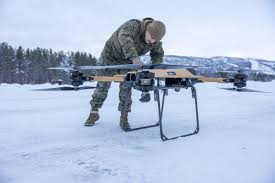
The operational value of the Forward Land Forces expansion exercise is threefold for NATO planners, providing data that computer simulations simply cannot replicate. First, it verifies the sheer physical capacity of U.S. heavy forces to deploy from bases in the United States, cross the Atlantic, traverse the European continent, and arrive ready to fight. Second, it drastically improves interoperability between American and Polish troops. When a tank throws a track in deep mud or requires a bridge to cross a river, the procedures for recovery and engineering support need to be seamless between allied nations. There is no time to exchange business cards or debate protocols when artillery is falling. Third, these exercises act as an operational laboratory for integrating new technologies, such as small tactical unmanned aerial systems used for route reconnaissance, directly into the armored formations. Seeing how a drone operator coordinates with a tank commander to spot an ambush in a dense Polish forest is the kind of practical experience that rewrites doctrine and saves lives.
Ultimately, the imagery of M1A2 Abrams tanks caked in mud and maneuvering through the gloom of a Polish November tells a story of resolve that goes deeper than the metal of the vehicles. It illustrates a massive, coordinated effort to ensure that the trans-Atlantic link remains unbroken and capable of projecting power to the very edge of the Alliance’s territory. From the rail yards where the tanks are offloaded to the muddy firing points overlooking the training area, every step is a rehearsal for a scenario everyone hopes will never happen. The exercise demonstrates that deterrence is not just about having the weapons, but about the logistics, the training, and the sheer endurance required to use them. As the engines wind down and the crews scrub the mud from their tracks, the message sent to any potential adversary watching from across the border is clear: NATO’s heavy armor is here, it is mobile, and it is ready to fight in the rain, the snow, and the mud to defend every inch of allied ground.
About The Author