Tensions in East Asia reached a fever pitch earlier this week following a sharp diplomatic rebuke from Beijing, sparked by Japan’s latest military maneuvering just a stone’s throw from Taiwan. As reported by Reuters on November 24, 2025, Chinese officials issued a scathing condemnation of Tokyo’s decision to deploy a medium-range surface-to-air missile unit to Yonaguni Island. Situated a mere 110 kilometers east of Taiwan’s coast, Yonaguni has become the focal point of a geopolitical storm, with Beijing accusing the Japanese government of deliberately stoking confrontation and warning that “right-wing forces” are steering the region toward a potential disaster. However, to view this merely as a dispute over a single island outpost is to miss the forest for the trees; this deployment is the tip of the spear in Japan’s most significant military transformation since the Second World War.
The arrival of missile batteries on Yonaguni is the visible manifestation of a profound strategic shift anchored in Japan’s 2022 National Security Strategy and Defense Buildup Program. For decades, Japan’s Self-Defense Forces were structured around a strictly defensive posture—shielding the homeland from direct invasion. That era is effectively over. Tokyo is now openly embracing a “counterstrike” architecture, a doctrine designed to reach out and strike adversary bases and command centers if Japan is threatened. This new posture is rapidly turning the “first island chain”—the string of archipelagos running from Japan through Taiwan to the Philippines—into a formidable, prickly barrier that fundamentally alters the calculus of the People’s Liberation Army (PLA).
The backbone of this new aggressive defense is a comprehensive overhaul of Japan’s long-range strike capabilities. Central to this is the evolution of the Type 12 surface-to-ship missile. Once a modest coastal defense weapon with a range of roughly 200 kilometers, the upgraded “Type 12 Kai” is a different beast entirely. With a redesigned, stealthy body and a range extended to 900 kilometers—and eventually 1,200 kilometers—this system allows dispersed mobile launchers hidden across Kyushu or the Nansei islands to threaten Chinese warships deep in the East China Sea. When coupled with the pending acquisition of up to 400 U.S.-made Tomahawk land-attack cruise missiles, which can strike targets 1,600 kilometers away, Japanese destroyers suddenly possess the ability to hit coastal nodes and naval concentrations that Beijing previously considered safe from Japanese reach.
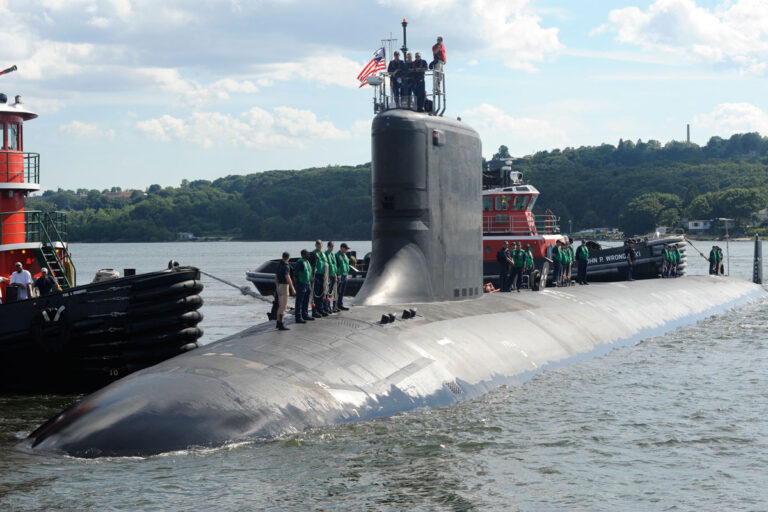
While the missiles on the surface garner headlines, a perhaps more lethal transformation is occurring beneath the waves. The introduction of the Taigei-class attack submarines represents a qualitative leap in undersea warfare. Displacing roughly 3,000 tons, these vessels discard traditional lead-acid batteries for massive banks of lithium-ion technology. This innovation allows the Taigei boats to remain submerged for extended periods while maintaining higher speeds and drastically reducing their acoustic signature. Armed with the new Type 18 heavyweight torpedoes and capable of launching UGM-84 Harpoon missiles, these submarines are designed to be silent hunters.
From a tactical perspective, the Taigei-class creates a nightmare scenario for PLA planners. These submarines can sit silently in the deep-water choke points of the Miyako Strait, the Luzon Strait, or the open expanses of the Philippine Sea. In the event of a conflict involving Taiwan, Chinese carrier groups and amphibious task forces attempting to “break out” into the Pacific would have to navigate through these predictable corridors. Japanese submarines could effectively lie in wait, forcing the PLA Navy to either accept a high risk of attrition or divert precious resources—escorts and anti-submarine aircraft—away from offensive operations to protect their convoys.
This brings us back to Yonaguni Island and why its fortification has struck such a nerve in Beijing. The deployment focuses on the Type 03 Chu-SAM medium-range air defense system. This isn’t just a defensive shield; it is a sensor and interception node placed almost directly inside the Taiwan Strait’s operational theater. The system’s truck-mounted AESA radar can track a hundred targets simultaneously and engage a dozen at once with Mach 2.5 interceptors. By placing this bubble over Yonaguni, Japan effectively extends its surveillance and denial capabilities over the primary air and sea routes Chinese forces would utilize in a Taiwan contingency. It creates a “tripwire” that is backed by the heavy firepower of the broader fleet.
Chinese military analysts have been vocal in state media, describing this combination of Taigei submarines, long-range Type 12s, Tomahawks, and forward-deployed air defense as a “continuous counterstrike belt.” They argue that this setup fractures the longstanding assumption that the PLA could seize the initiative quickly in a regional conflict. To counter this, China faces the expensive and technologically demanding task of developing a blue-water anti-submarine warfare force capable of hunting quiet Japanese boats in the deep Pacific, while simultaneously figuring out how to target elusive, mobile missile launchers scattered across hundreds of Japanese islands.
Ultimately, the strategic implications of this buildup are reshaping the Asian security architecture. A conflict over Taiwan can no longer be viewed strictly as a binary contest between the United States and China. Japan is inserting itself as a third, independent power capable of threatening Chinese assets across the theater. These are not abstract political signals; they are concrete military realities defined by seeker ranges, battery capacities, and radar horizons. As Japan’s undersea and missile forces grow more credible, the cost for Beijing to use force in the region skyrockets, ensuring that the waters of the first island chain will remain the stage for a tense, high-stakes duel for years to come.
About The Author