The crates arrived under canvas tarps, no ceremony, just the low rumble of KamAZ trucks grinding to a halt behind a line of frost-rimed 2S19 Msta-S howitzers. Inside each wooden box sat rows of Krasnopol-M2 shells, their olive drab casings still warm from the factory, serial numbers freshly stenciled. On November 7, 2025, TASS let the world know what the gunners already suspected: Rostec’s High Precision Systems had pushed another batch to the front. Not a headline weapon, not a hypersonic gimmick, but a quiet, lethal upgrade to the oldest game in land warfare—artillery.
Think of it as a sniper round for a cannon. You don’t spray and pray. You paint and slay.
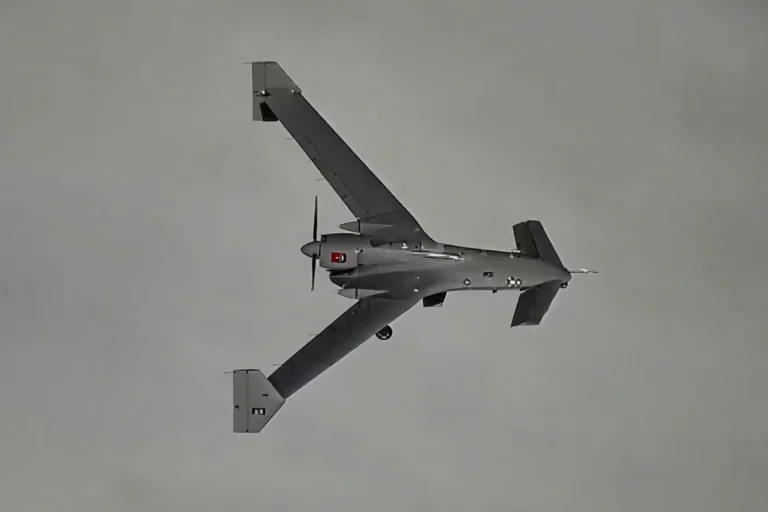
A drone operator hovers five kilometers back, maybe a ZALA Lancet or a cheap commercial quadcopter with a laser pod jury-rigged beneath. He finds a Ukrainian M777 unlimbering near a copse of birch, thumbs the designator, and a thin, invisible beam kisses the howitzer’s barrel. Thirty kilometers away, a Msta-S crew slams a Krasnopol into the breech, yanks the lanyard, and is already hooking up the tow bar before the shell clears the muzzle. Forty seconds later, the M777 is scrap metal and the Russian battery is gone, vanished into the next tree line. One round. One kill. Zero exposure.
That’s the promise, and after three years of war, it’s no longer theory.
The Krasnopol-M2 is the latest in a family that began in the 1980s, but don’t let the vintage fool you. This isn’t your grandfather’s dumb iron. It’s a 152 mm laser-homing dart with pop-out fins, a seeker head that locks onto reflected light in the final seconds, and a warhead tuned to punch through armor, concrete, or command bunkers. Russian sources claim CEP under three meters—meaning half the shells land inside a pickup truck’s footprint. From a standard Msta-B or Akatsiya, that’s 20–25 km. From the new Malva wheeled gun or the long-barreled Giatsint-B, push it to 30–40 km. And when the Koalitsiya-SV finally rolls out in numbers? 50 km isn’t fantasy.
No GPS. No GLONASS. Just light and line of sight. In a sky thick with Krasukha jammers, Tor-M2 SAMs, and Ukrainian EW teams, that’s a superpower. Excalibur rounds falter when satellites go blind. SMArt 155 submunitions drift off course. But as long as a drone can hold a beam—or a forward observer can keep a handheld designator steady—the Krasnopol flies true.
Of course, nothing is perfect. Fog scatters the beam. Smoke obscures the target. A well-placed Stinger or FPV kamikaze can swat the spotter drone before the laser fires. And you still need eyes on target—no shooting through hills or deep forest.
But Russia has adapted. FPV racers now carry micro-lasers. Ground scouts use backpack designators from drainage ditches. Relay drones loiter high, passing the beam like a baton. The system isn’t invincible—but it’s good enough, often enough, and getting better.
The real story isn’t the shell. It’s the doctrine.
Russia used to win with volume—100 rounds to kill one tank. Now? One round to kill one tank. That flips the math.
- Less ammo hauled = smaller logistics tail
- Shorter firing windows = harder counter-battery hits
- Lower signatures = longer gun life
Every Ukrainian battery now lives under a 30-second death clock: detect, designate, destroy. Move or die. Dig or die. Emit or die.
And the factories keep churning. Rostec isn’t delivering prototypes—they’re delivering batches. The state defense order has shifted: precision is now standard. Every artillery brigade trains on Krasnopol. Every new platform—Malva, Koalitsiya, even upgraded Akatsiyas—is built to fire it. This isn’t a luxury. It’s the new normal.
For Ukraine, the pressure is relentless. A fuel truck parked too long? Gone. A command post in a farmhouse? Gone. A bridge repair crew at dawn? Gone.
The counter? Disperse. Decoy. Jam. Shoot the spotter. But Russia has more guns, more shells, and now—more eyes in the sky.
This isn’t about winning with one wonder weapon. It’s about making survival expensive. Every minute a Ukrainian unit spends relocating, camouflaging, or silencing radios is a minute not spent firing. That’s attrition by precision.
The Krasnopol-M2 won’t end the war. But it’s changing how Russia fights it—one laser beam, one crater, one less target at a time.
And the trucks? They’re already loaded for the next run.
About The Author