The roar of jet engines is once again echoing off the calm waters of the Caribbean, but this time, the stakes are far higher than a routine training exercise. As of November 30, 2025, the USS Gerald R. Ford (CVN-78), the United States Navy’s most advanced and formidable aircraft carrier, has intensified its flight operations just north of the Venezuelan coast. What began earlier this year as “Operation Southern Spear”—a broad counter-narcotics initiative—has rapidly morphed into one of the most significant concentrations of American naval power in the Western Hemisphere since the Cold War. With tensions between Washington and Caracas reaching a fever pitch, the Ford’s presence serves as a floating fortress and a blunt diplomatic instrument, signaling that the U.S. is prepared to shift from interdiction to intervention if necessary.
Life on the flight deck of the Gerald R. Ford has settled into a relentless, high-octane rhythm. Throughout the day and deep into the humid Caribbean nights, the electromagnetic aircraft launch system (EMALS)—the carrier’s signature technology—is firing F/A-18E/F Super Hornets into the sky with punishing frequency. Defense Department imagery released this week captures the intensity of these sorties: afterburners glowing against the dark sea as jets launch to patrol the airspace near the Venezuelan Exclusive Economic Zone (EEZ). These are not merely navigational drills. According to observers, the air wing is conducting complex strike simulations, maritime interdiction rehearsals, and air dominance patrols designed to test the reaction times of Venezuelan air defense sensors. The message is clear: the flight deck never sleeps, and neither does the surveillance net being cast over the southern approaches.
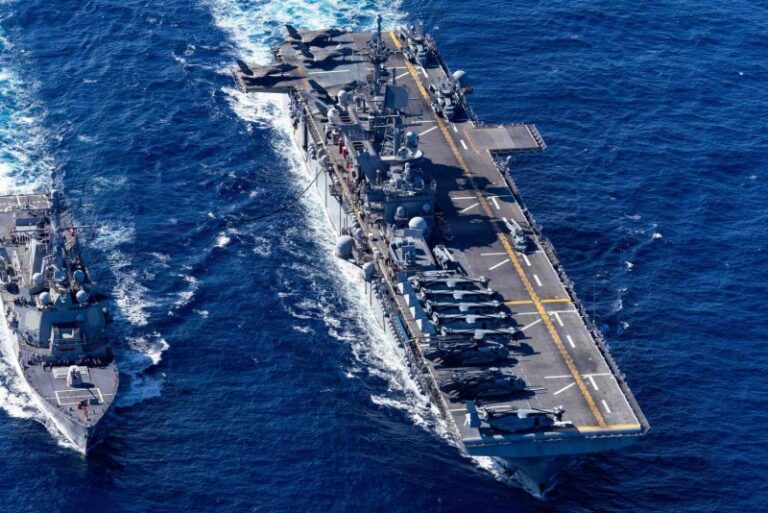
The strategic context for this surge in activity is the deteriorating relationship with the Maduro regime. Following the U.S. administration’s designation of the “Cartel de los Soles” as a Foreign Terrorist Organization earlier in November, the rules of engagement have subtly shifted. The Ford, supported by a full carrier strike group including Arleigh Burke-class destroyers like the USS Bainbridge, is ostensibly there to cut off the flow of narcotics—a mission that has already seen nearly two dozen smuggling vessels neutralized. However, military analysts point out that you don’t need a supercarrier to sink a drug submarine. The deployment of the Ford, moving from its previous post in the Mediterranean, is a calculated show of overwhelming force intended to rattle the leadership in Caracas. By parking 100,000 tons of diplomacy just over the horizon, the Pentagon is forcing Venezuela’s military to keep its radar hot and its personnel on high alert, creating a pressure cooker environment designed to fracture regime cohesion.
The atmosphere within the strike group is one of controlled anticipation. While official statements from U.S. Southern Command emphasize “regional stability” and “counter-trafficking,” the sailors and pilots aboard the Ford are training for a high-end fight. The air wing is integrated with E-2D Advanced Hawkeyes, providing a “God’s-eye view” of the entire theater, ensuring that no movement—whether by a go-fast boat or a Venezuelan Su-30 fighter—goes unnoticed. This integration extends beyond the sea; reports indicate that the naval presence is being coordinated with land-based assets, including bomber sorties that have been tracked in the region. This “system of systems” approach ensures that the U.S. retains absolute domain awareness, effectively locking down the Caribbean basin.
For the international community, the Ford’s operations are a litmus test for the future of U.S. engagement in Latin America. Critics warn that the militarization of the Caribbean could spark an accidental conflict or destabilize the region further, while proponents argue that the unchecked flow of illicit drugs and the influence of external actors in Venezuela necessitate a heavy hand. As the sun sets over the Atlantic, the silhouette of the USS Gerald R. Ford remains the dominant feature of the seascape—a steel promise of American resolve. Whether this deployment ends in a diplomatic breakthrough or a kinetic engagement remains to be seen, but for now, the thunder of Super Hornets over the Caribbean serves as a daily reminder that the U.S. Navy has returned to its backyard in force.
About The Author