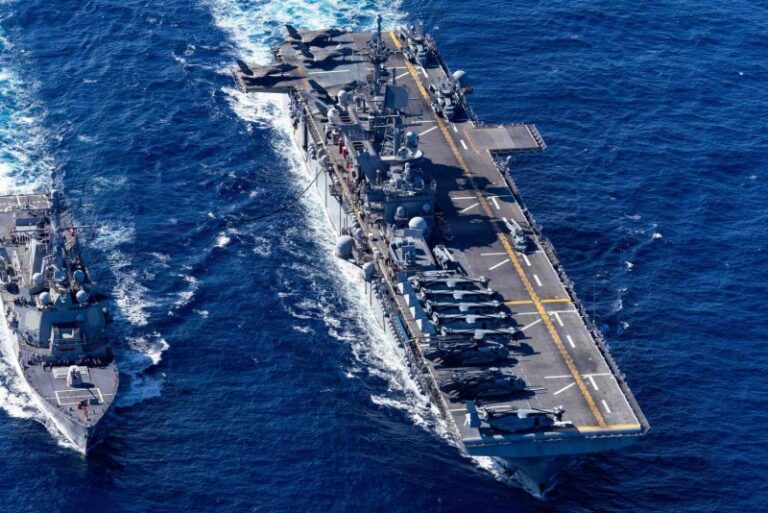
The year 2025 is shaping up to be a monumental one for the Royal Navy and UK defence capabilities. A recent announcement has confirmed that HMS Prince of Wales, one of the nation’s two Queen Elizabeth-class aircraft carriers, will be equipped with a formidable air wing of 24 F-35B Lightning II stealth fighters. This significant uplift in capacity marks a pivotal moment, solidifying the UK’s commitment to maintaining a robust and globally capable carrier strike force.
For years, the ambition of operating these cutting-edge fifth-generation jets from the Royal Navy’s new carriers has been a cornerstone of UK defence strategy. The F-35B, with its unique short take-off and vertical landing (STOVL) capabilities, is perfectly suited for carrier operations, offering unparalleled versatility and strike power. The decision to allocate 24 of these advanced aircraft to a single carrier is a clear statement of intent, signaling a substantial enhancement of the UK’s ability to project power and respond to evolving threats across the globe.
A Deeper Dive into the F-35B’s Impact
The F-35B isn’t just another fighter jet; it’s a game-changer. Its stealth characteristics allow it to operate undetected in highly contested airspace, while its advanced sensor fusion provides pilots with an unprecedented level of situational awareness. This means the HMS Prince of Wales, with its complement of 24 F-35Bs, will not only be a potent offensive platform but also a critical intelligence-gathering and command and control hub.
Consider the operational advantages:
- Enhanced Strike Capability: The ability to deploy a squadron of 24 F-35Bs significantly increases the volume and persistence of air strikes that the UK can conduct. This translates to more targets engaged, greater reach, and a more sustained presence in any operational theatre.
- Improved Air Superiority: With their stealth and advanced avionics, the F-35Bs will be at the forefront of securing air superiority, protecting the carrier group and enabling other assets to operate safely and effectively.
- Interoperability with Allies: The F-35B is a multinational project, and its deployment by the UK reinforces interoperability with key allies like the United States, who also operate the jet. This commonality streamlines joint operations, training, and logistical support, making future coalition efforts more seamless and effective.
- Strategic Deterrence: A carrier strike group with 24 F-35Bs acts as a powerful deterrent. Its sheer capability and flexibility send a clear message to potential adversaries about the UK’s readiness and resolve to protect its interests and those of its allies.
The Journey to 2025: A Story of Investment and Training
Reaching this milestone by 2025 is not a simple feat. It represents years of substantial investment in defence infrastructure, cutting-edge technology, and, crucially, the rigorous training of personnel. From the highly skilled pilots who will fly these advanced jets to the dedicated engineers and support staff who will maintain them, every aspect of this capability requires significant human capital and commitment.
The Royal Navy has been steadily building its experience with carrier operations and the F-35B. Both HMS Queen Elizabeth and HMS Prince of Wales have already conducted numerous exercises and deployments, demonstrating their ability to operate the jets effectively. The increase to 24 aircraft per carrier underscores a maturing capability and a growing confidence in the operational readiness of the UK’s carrier strike force.
A Broader Context: UK’s Role on the Global Stage
The decision to equip HMS Prince of Wales with 24 F-35Bs by 2025 should be viewed within the broader context of the UK’s renewed focus on its role as a global maritime power. In an increasingly complex and unpredictable world, the ability to project power from the sea remains a vital component of national security and international influence.
The carrier strike group, spearheaded by the Queen Elizabeth-class carriers and their F-35B air wings, provides the UK with unparalleled flexibility. It can be deployed for a variety of missions, from humanitarian aid and disaster relief to high-intensity combat operations. This adaptability ensures that the UK can respond effectively to a wide spectrum of challenges, upholding its commitments to NATO and contributing to global stability.
As 2025 approaches, anticipation will undoubtedly build for this new chapter in UK defence. The sight of HMS Prince of Wales sailing with a full complement of 24 F-35B Lightning IIs will be a powerful symbol of the Royal Navy’s resurgence and the UK’s unwavering commitment to securing its place as a leading maritime nation. This significant upgrade in capability promises to usher in a new era for UK carrier strike, ready to meet the demands of the 21st century.
About The Author