The geopolitical landscape of East Asia is in a constant state of flux, characterized by rapidly evolving military capabilities and a palpable arms race, particularly in the naval domain. Against this backdrop, Japan, a nation with a meticulously maintained and highly effective conventional submarine fleet, is now openly discussing a dramatic shift in its strategic posture: the potential acquisition of nuclear-powered submarines (SSNs). This revelation, spurred by recent remarks from Defense Minister Shinjiro Koizumi, signals a profound re-evaluation of Japan’s defense strategy as the regional balance of power demonstrably tilts towards nuclear-armed and nuclear-powered fleets.
Defense Minister Shinjiro Koizumi’s comments on November 7, 2025, confirmed that while no definitive decision has been made regarding the propulsion system for Japan’s next generation of submarines, he strongly urged for an “open debate” on the matter. His remarks followed a candid national television appearance on November 6, where he stated, “There are new developments, and all the surrounding countries are set to possess nuclear submarines,” adding, with a notable nonchalance, that nuclear submarines are “nothing particularly unusual.” He framed the choice starkly, emphasizing the severity of Japan’s security environment: “The environment surrounding Japan has become so severe that we need to discuss whether to continue using diesel power for submarines as before, or to switch to nuclear power.”
Koizumi’s pointed observations were made in direct reference to reports from the APEC leaders’ discussions held in Gyeongju on October 29, where the United States reportedly gave its approval for South Korea to develop its own SSNs. This regional trend is undeniable. In East Asia, China is aggressively expanding its fleet of attack submarines and significantly enhancing its SSBN (Ship Submersible Ballistic Nuclear) operations, projecting increasing power across the Pacific. Simultaneously, North Korea has explicitly declared its intent to field nuclear-powered submarines as part of its ambitious 2021 five-year defense plan. The trajectory of naval development in the region is clear, and Tokyo’s strategic calculus is demonstrably shifting in response to these formidable developments. Despite the public debate, Koizumi reiterated the formal position at his November 7 press conference: “At this point, nothing has been decided regarding the next generation of propulsion systems for submarines.”
The political climate within Japan is mirroring these external security pressures. A blue-ribbon panel, convened by the Ministry of Defense in September, specifically recommended exploring “next-generation propulsion systems” for VLS (Vertical Launch System)-equipped submarines. These vessels would be capable of firing long-range missiles and sustaining extended submerged patrols. During the subsequent press briefing, officials cautiously cited solid-state batteries and advanced fuel cells as primary candidates, while notably refusing to outright dismiss nuclear propulsion. Further solidifying this direction, a coalition agreement on October 20 between the ruling Liberal Democratic Party and Nippon Ishin committed the government to pursue VLS-equipped boats powered by “next-generation power.” This carefully worded formulation keeps nuclear propulsion firmly within the scope of consideration without prematurely declaring it the default choice.
Should Japan decide to move from exploratory study to a firm requirement for nuclear propulsion, three credible pathways emerge, each with distinct advantages and challenges:
The UK-Designed SSN AUKUS Solution: This pathway would seamlessly integrate Japan into a rapidly maturing allied enterprise. It would likely center on a compact hull incorporating the latest British reactor technology and U.S. combat systems. The benefits would be substantial: common training, shared stewardship, and established safety templates. Such integration would maximize allied interoperability for patrols across the Philippine Sea and along the critical first island chain. However, this option would entail heavy constraints related to access, timing, and technology transfer, given the highly sensitive nature of nuclear technology.
A French Barracuda Derivative Route: This option would revolve around a variant of the acclaimed French Barracuda-class SSN. This sophisticated design offers a remarkably quiet pump-jet platform, boasting a submerged displacement of approximately 5,300 tons. It would leverage the proven K15 reactor lineage, providing impressive sprint capabilities and long on-station endurance. Its armament would include advanced F21 torpedoes and tube-launched cruise missiles. An attractive feature of this route is the potential for deep industrial workshare within Japanese shipyards, fostering domestic expertise. However, Paris has no precedent for exporting naval nuclear propulsion technology, meaning the safeguards regime would be exceptionally complex and require groundbreaking international agreements.
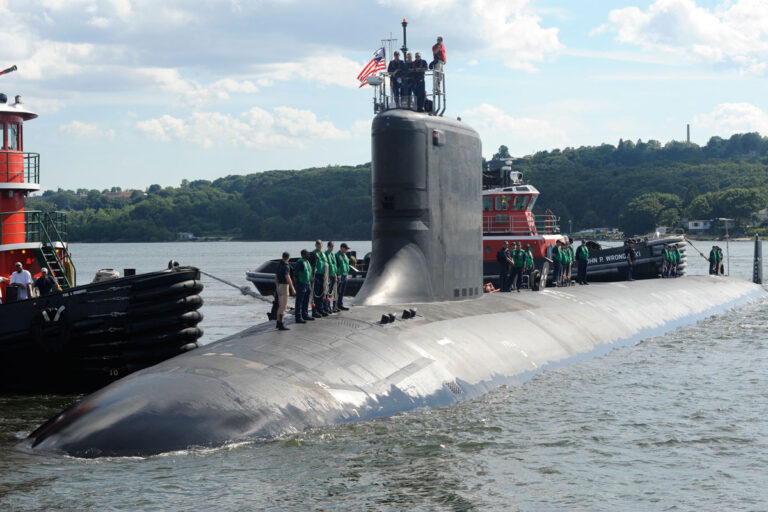
A U.S. Virginia-Class Option: Centered on the formidable U.S. Virginia class, particularly the Block V variant with its integrated Virginia Payload Module (VPM), this option would bring unparalleled theater-wide strike capabilities, advanced ISR (Intelligence, Surveillance, and Reconnaissance), and the highest level of immediate interoperability with existing U.S. naval networks. However, this path would undoubtedly face the most stringent export control barriers and significant challenges related to U.S. shipyard capacity, which is already strained by domestic demand.
The operational gains for Japan’s Maritime Self-Defense Force (JMSDF) would be straightforward and transformative. Today’s Taigei-class lithium-ion SSKs (diesel-electric submarines) are rightly considered among the quietest conventional boats afloat, offering impressive underwater endurance for days at a time, rapid battery recharge cycles, and exceptional coastal denial performance. Yet, they still require snorkeling to generate power and cannot sustain high submerged speeds for prolonged transits or multi-axis tasking. In stark contrast, a nuclear-powered submarine can remain submerged for months, sustain speeds of 25 knots or more for as long as the mission demands, and conduct a diverse range of missions within a single patrol cycle – shadowing adversary surface groups, hunting other submarines, and posturing for land attack. In essence, nuclear propulsion fundamentally transforms episodic presence into continuous, undeniable pressure across vast maritime theaters.
While nuclear propulsion might be perceived by some as a 20th-century technology, its current discussion under the banner of “next-generation power” reflects a significant paradigm shift. The frontier in nuclear technology has advanced considerably, moving towards microreactors and small modular reactors (SMRs). These innovations promise intrinsic safety, flexible basing options, and significantly simplified logistics. Japanese industry is already highly active in this space, with microreactor concepts under development that could form the bedrock of a domestic nuclear stewardship pipeline. On the British side, the Rolls-Royce SMR ecosystem is rapidly advancing, and the technologies matured through such initiatives would naturally overlap with any allied naval nuclear program. The clear direction of travel is towards safer, smaller, and more efficient reactors, which fundamentally reframes nuclear propulsion as a forward-leaning, cutting-edge option rather than a legacy one.
Despite the compelling strategic rationale, the obstacles to Japan adopting nuclear submarines remain significant. The deeply ingrained “Atomic Energy Basic Act” and the enduring legacy of the “Three Non-Nuclear Principles” heavily shape public attitudes, which were further hardened by the devastating Fukushima disaster. Any decision touching nuclear technology in Japan faces rigorous scrutiny from regulators and, crucially, from local communities hosting naval bases. Industrially, both Mitsubishi Heavy Industries and Kawasaki Heavy Industries – Japan’s leading submarine builders – would require substantial new nuclear infrastructure, alongside the establishment of a national training pipeline for nuclear-qualified officers and engineers, and the implementation of a comprehensive “cradle-to-grave” safety regime for nuclear materials and waste. Minister Koizumi’s overarching message, however, is that Japan must critically weigh these significant costs against a rapidly accelerating and increasingly severe strategic environment. The core of the debate is not whether nuclear propulsion is unusual; it is whether Japan, as a major maritime power in a highly contested region, can truly afford to remain without it.
Ultimately, an SSN AUKUS solution offers the clearest path to deep allied integration, while a French Barracuda derivative presents the most compact and potentially sovereign industrial development route. A U.S. Virginia-class option, on the other hand, would deliver the highest immediate interoperability with existing U.S. strike and ISR architecture. Regardless of the chosen pathway, any of these three options would fundamentally shift Japan’s Maritime Self-Defense Force from being primarily a coastal denial specialist to an undersea force capable of continuous, theater-wide presence. This is the profound change that nuclear submarines bring – not just a single performance metric, but an entirely different and more potent way of fighting and deterring at sea, crucial for navigating the complex geopolitical currents of the 21st century
About The Author